
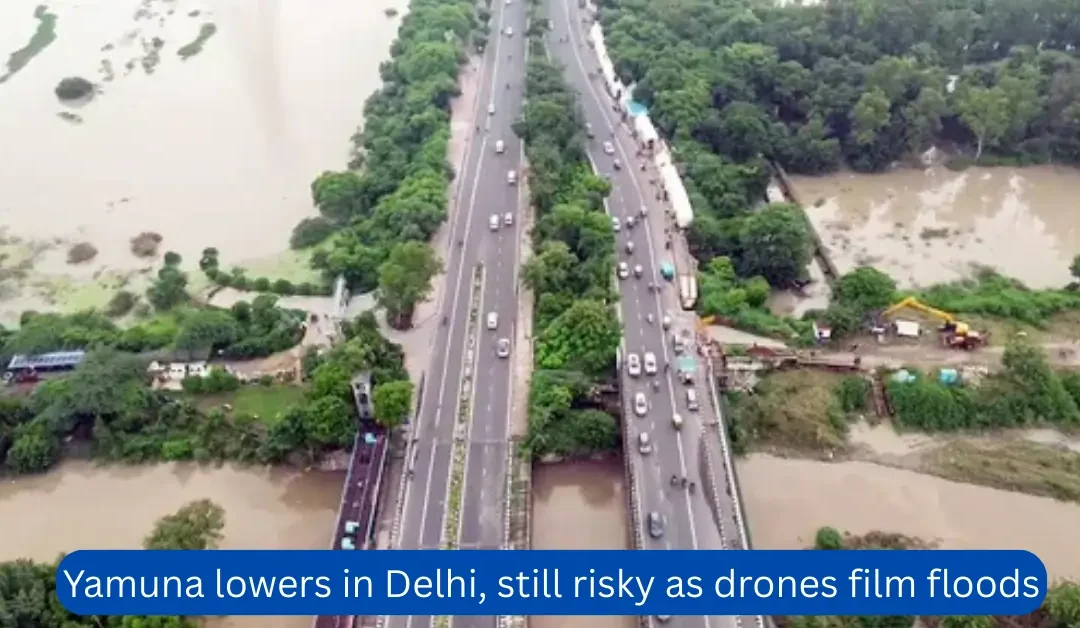
The Latest News from Delhi shows that the water level of the Yamuna river has fallen a little but is still above the danger mark, keeping several parts of the city in a flood-like condition. On Saturday, the water level at the Old Railway Bridge (ORB), also known as Loha Pul, was recorded at 206.47 metres, slightly lower than the 207-metre mark seen earlier this week.
Even with this marginal drop, many areas remain underwater, and people continue to face serious difficulties. Drone footage captured on Saturday showed large stretches along the Yamuna still flooded, with homes, markets, and roads submerged.
Why the Situation Remains Serious
- The warning level for Yamuna in Delhi is 204.50 metres.
- The danger level is set at 205.33 metres.
- Authorities begin evacuation when water crosses 206 metres.
Since the river rose above these marks earlier this week, thousands of people had to be shifted to relief camps. The flood is already being called one of the worst in recent years, as the Yamuna touched 207.41 metres on September 3, the third-highest level ever recorded.
Key Areas Affected in Delhi
Many prominent locations of the city continue to face problems as the river flows above the danger mark.
- Civil Lines: Known for its posh homes, this area has seen water entering streets and homes.
- Monastery Market: Shops and stalls remain closed due to waterlogging.
- Kashmere Gate ISBT: A major bus terminal affected by flooding, causing travel disruptions.
- Yamuna Bazaar: Roads here resemble river channels, with residents struggling to move around.
Officials say that continuous monitoring is underway, and all emergency services are on flood alert to prevent further loss.
Why the Yamuna is Rising
The flood control department shared fresh details on Saturday about the water discharge that is making the Yamuna swell.
- At Hathnikund barrage, 50,629 cusecs of water was released at 9 am.
- From the Wazirabad barrage, about 1,17,260 cusecs were discharged.
This massive release of water from upstream takes 48 to 50 hours to reach Delhi, but even smaller discharges are enough to push the water back above warning levels during heavy monsoon rains.
Drone Cameras Reveal the Extent of Flooding
The use of drone cameras has given a clear picture of the crisis. Visuals show flooded roads, stranded vehicles, and submerged colonies near the riverbanks. Entire stretches look more like rivers than city streets.
These drone visuals are now being used by the authorities to:
- Track the worst-hit areas.
- Plan rescue and evacuation drives.
- Keep people updated with real-time Breaking News alerts.
The Bigger Picture – A Struggle That May Continue
While the Daily news highlights show a slight drop in the Yamuna’s water level, experts warn that the situation may remain tense in the coming days.
- More water may still come downstream from the barrages.
- Low-lying areas will take time to dry, even after levels recede.
- Families in relief camps face challenges like lack of sanitation and proper food.
The memories of last year’s flood, which caused similar destruction, are still fresh in people’s minds. Many fear that rebuilding their homes and shops will once again be a long, painful process.
Conclusion
This is a moment of serious worry for Delhi as the River Yamuna continues to flow above the danger mark. While the water has receded slightly, relief remains far away for thousands of people affected by the floods. The government, along with disaster response teams, is keeping a close watch.
For now, Delhi residents can only hope that the water level continues to drop and no further monsoon rains worsen the situation. The next 48 hours will be critical in deciding how fast normal life can return to the capital.


