
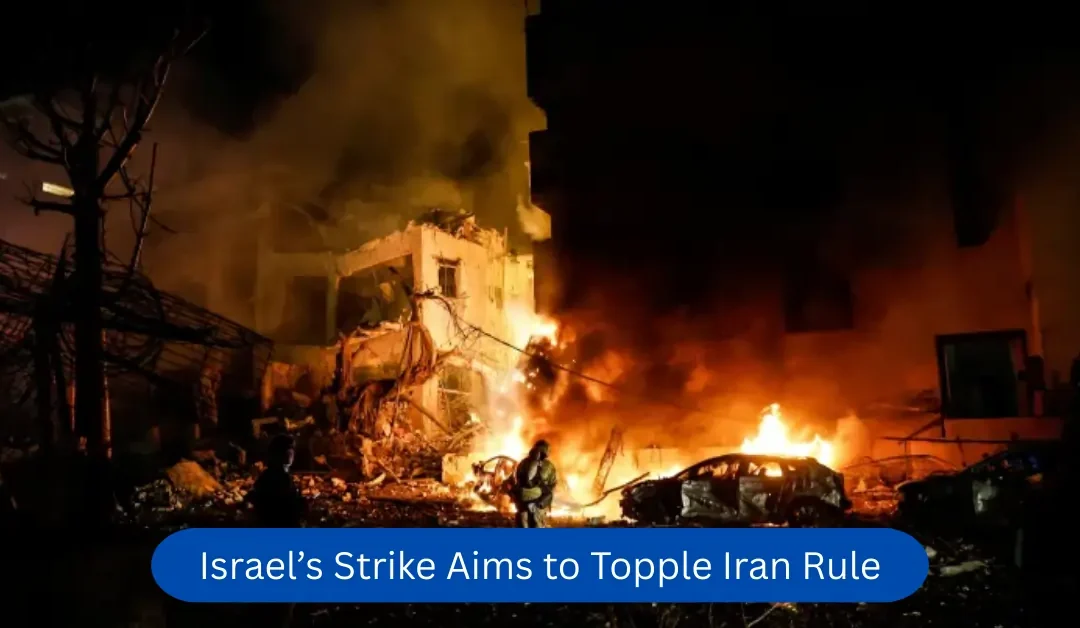
In the Latest News from the Middle East, Israel’s military campaign against Iran is entering a new and serious phase. As joint airstrikes by Israel and the United States continue, many experts believe Israel’s main goal has become clear: bringing political change inside Iran.
Although Israeli leaders have not officially announced “regime change” as their objective, their statements and actions suggest that they want Iran’s current leadership removed from power. The situation has now become one of the biggest Breaking News stories in global politics.
Netanyahu’s Direct Message to Iranians
After the reported killing of Iran’s Supreme Leader, Ayatollah Ali Khamenei, Israeli Prime Minister Benjamin Netanyahu made a direct appeal to the Iranian people.
Speaking in Farsi, he asked citizens to come out into the streets in large numbers and rise against their government. He said their suffering would not be wasted and that help had finally arrived through the US-Israeli airstrikes.
These attacks have already caused heavy damage. Reports say more than 555 people have been killed across Iran, including many civilians. One tragic incident involved the deaths of 180 students at a girls’ school in southern Iran.
Netanyahu’s message was clear — he believes this is a moment for Iranians to remove their leadership from within.
What Experts Are Saying
Many political analysts believe Israel’s long-term aim is to weaken or collapse Iran’s current system of government.
Ahron Bregman, a senior teaching fellow at King’s College London, said that although Israeli officials do not openly say “regime change,” it appears to be their real goal. According to him, many Israelis strongly support the war, believing that removing Iran’s leadership would improve the entire Middle East.
However, Bregman disagrees with this idea. He argues that simply toppling a government does not automatically bring peace or stability. History has shown that sudden political collapse can create chaos instead of progress.
Key Questions About Israel’s War Goals
There are still many unanswered questions about Israel’s true intentions. Experts are raising concerns in today’s Daily news highlights, including:
1. Does Israel Care About a Smooth Transition?
Some former officials believe Israel may not be very concerned about what happens after Iran’s leadership falls.
Daniel Levy, a former Israeli government adviser, said that Israel might not be interested in an orderly political transition. Instead, he suggested that some leaders may prefer Iran’s system to completely collapse, even if that leads to instability in the region.
This raises fears that the conflict could spread to nearby countries such as Iraq and Gulf nations.
2. Division Inside Iran
Iran itself is not united in one direction.
In recent months, large protests have taken place against the government. Some protesters want democracy, others want the return of the monarchy, and some simply want economic reforms.
At the same time, after the foreign airstrikes and the killing of Khamenei, many Iranians have shown support for their government. In times of external attack, people often unite behind their leaders.
This makes the situation more complex. It is not clear whether foreign military action will actually lead to internal political change.
3. The Role of the United States
The United States is playing a major role in this conflict. Much of Israel’s military funding comes from Washington. Without American support, Israel’s long-term military operations would be difficult.
However, the war is not very popular among American citizens. In US politics, many people are questioning why America is involved in another overseas conflict.
President Donald Trump has his own priorities. While he has supported Israel strongly, some analysts believe he may not fully share Israel’s long-term goals. If political pressure increases at home or from US allies, Trump could reduce involvement.
If that happens, Israel might be left to handle the consequences alone.
4. Regional and Global Impact
The war is already affecting the wider region.
Iran has threatened to disrupt the Strait of Hormuz, a key route for global oil shipments. Any disruption there could cause a sharp rise in global oil prices, which would affect economies around the world.
Airspace across parts of the Middle East has also been closed, leading to flight cancellations and travel problems.
Gulf countries had earlier warned against military escalation. Now they must deal with the risk of Iranian retaliation on their own territory.

Growing Anti-Turkiye Rhetoric
Another concern being discussed in Breaking News coverage is rising tension between Israel and Turkiye.
Some Israeli politicians have started describing Turkiye as a “new Iran,” increasing political tensions. Analysts warn that if the current conflict expands, it could create even wider regional instability.
Public Support in Israel
Inside Israel, many citizens appear to support the military action. The timing of the conflict during the Jewish holiday of Purim has added emotional meaning for some, as the holiday remembers an ancient Persian threat to the Jewish people.
Former Israeli Prime Minister Ehud Barak said that fighting alongside the United States — the world’s most powerful nation — is something unprecedented in Israel’s history. However, he also admitted that predicting the final outcome is difficult.
What Happens Next?
The biggest question now is how long the war will continue.
If Iran’s leadership weakens or collapses, there could be major political changes. But there is also a risk of chaos, power struggles, and regional conflict.
If the United States reduces support, Israel may face new challenges. If Iran blocks oil routes, the global economy could suffer.
Right now, this remains one of the top Latest News stories worldwide. Governments, markets, and citizens are closely watching every development.


