
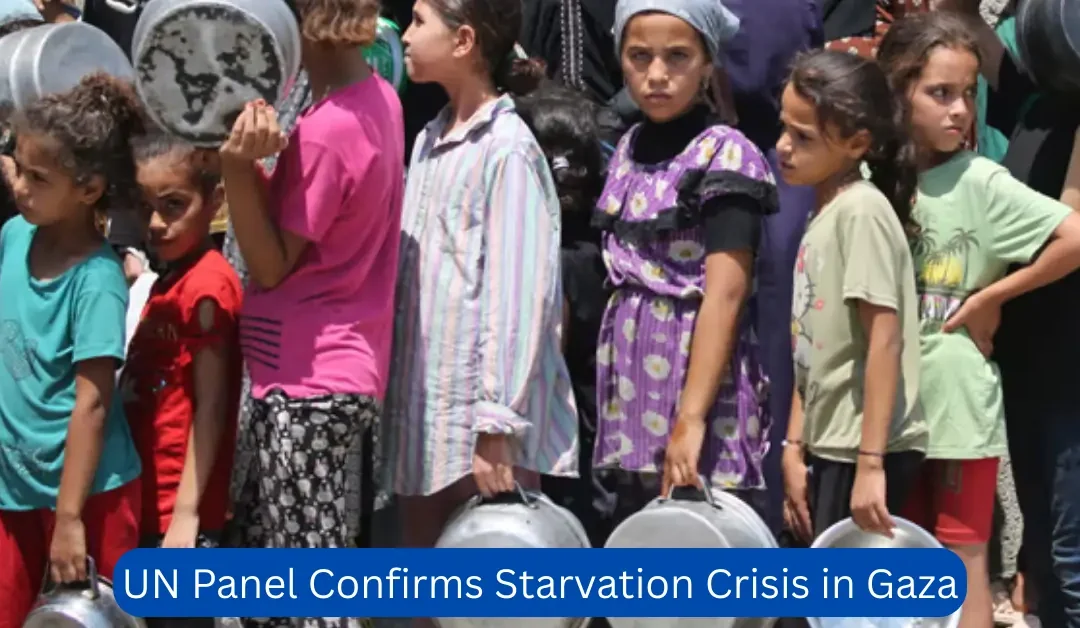
In the Latest News, UN-backed experts have declared that an “entirely man-made” famine is happening in Gaza City and nearby areas. This shocking development marks one of the worst stages in the territory’s long-running humanitarian crisis.
The declaration comes from the Integrated Food Security Phase Classification (IPC), a trusted global body that monitors hunger levels. According to their report, Gaza has now crossed three key thresholds that define famine:
- More than 20% of households have no food at all.
- Over 30% of children are suffering from severe malnutrition.
- At least two people out of every 10,000 are dying each day due to hunger.
Experts say this famine is not a natural disaster but the direct result of war, blockades, and restrictions on aid.
Why This Matters Globally
This declaration is only the fifth famine identified by the IPC since it was formed in 2004. The most recent one before this was in Sudan. That comparison shows how serious the situation in Gaza has become.
The IPC report states:
- Starvation is already spreading quickly.
- Further delays in aid, even by a few days, will lead to higher death tolls.
- Only an immediate and large-scale humanitarian response can reverse the disaster.
The experts added that unless a ceasefire is agreed to, aid supplies of food, clean water, and medical care cannot reach everyone in need.
Hunger Expands Beyond Gaza City
The famine declaration currently covers Gaza City, where between 500,000 and 800,000 people live, many of them displaced from their homes. However, the IPC also warned that two other towns — Deir al-Balah and Khan Younis — are at high risk of famine in the coming weeks.
Key points from the report:
- Northern Gaza may be even worse, but limited access prevents experts from confirming famine there.
- Aid officials say conditions in the north are “the harshest yet,” with no full humanitarian assessment possible.
- Unless urgent help arrives, deaths will keep rising in these areas too.
This escalation has now become a central topic in Daily news highlights around the world.
Voices From Gaza and Israel
People inside Gaza say they are at their breaking point. Amjad Shawa, head of the Gaza NGOs Network, said:
“This is the worst and most critical stage in Gaza’s history. We are sick, we are tired, and we need food immediately. Otherwise, we cannot imagine what will happen.”
At the same time, Israeli officials continue to deny that famine exists. They argue that deaths reported by Gaza’s health ministry are caused by other medical issues. Israel says aid trucks — around 220 on Thursday — have been entering Gaza through Kerem Shalom and Zikim crossings.
But humanitarian groups disagree, saying:
- Many food deliveries are blocked or delayed.
- The new Gaza Humanitarian Foundation, backed by Israel, is failing to deliver enough supplies.
- Looting and chaos on the ground make aid distribution nearly impossible.
- Damage to infrastructure and ongoing fighting also prevent help from reaching people.
Rising Deaths From Starvation
The numbers tell a grim story. According to Gaza’s health ministry, confirmed by the World Health Organization:
- In the 22 months since the October 7 attacks, 89 people, mostly children, died from hunger.
- In just the first 20 days of August, another 133 people have died, including 25 children.
These figures highlight the food shortage crisis facing families every day. Aid workers warn that without urgent action, the death toll will climb much faster.
What Needs to Happen Next
The UN report ends with a strong message: famine in Gaza can be stopped if world leaders take immediate action. The calls include:
- A full ceasefire to allow humanitarian access.
- Restoring basic services like water, sanitation, and healthcare.
- Better monitoring of food distribution to prevent corruption and chaos.
- More international support and resources to meet the scale of the disaster.
The situation in Gaza is now part of Breaking News across global outlets. For many, this famine is not just a local tragedy but a test of how the world responds to human suffering during conflict.
The famine in Gaza is not caused by nature but by decisions and policies. With the Israel Gaza conflict continuing, the lives of hundreds of thousands hang in the balance. Whether governments act quickly will decide if more children starve or if hope can return to Gaza.


