
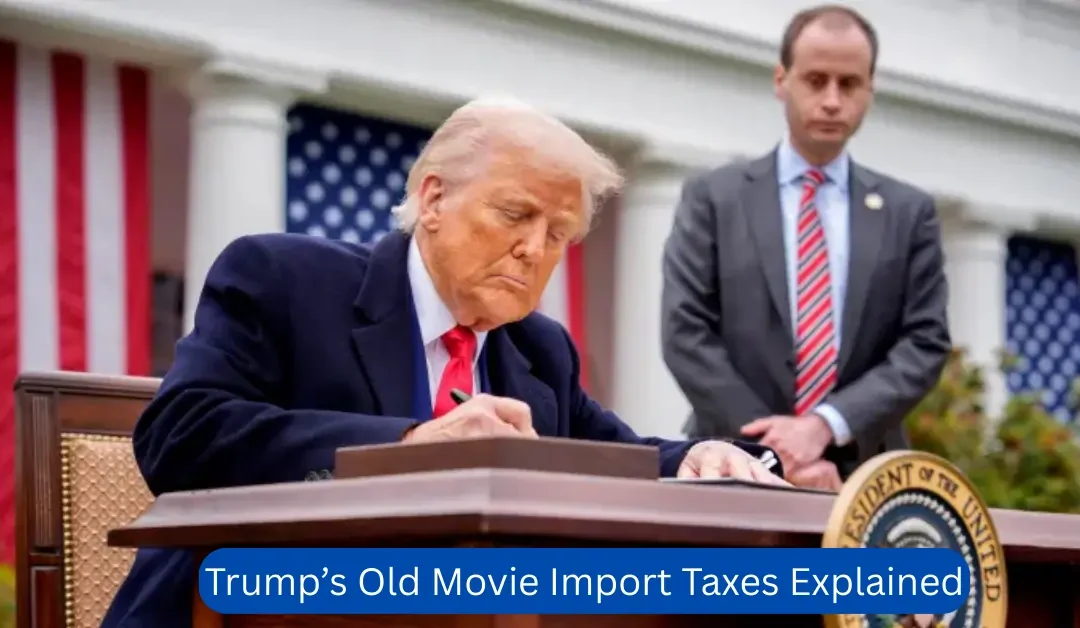
When it comes to trade, former U.S. President Donald Trump made headlines with many threats of tariffs on countries and products. From cars to steel, from pharmaceuticals to oil, Trump’s promises often grabbed attention. But some tariffs, like the one on movies, never actually happened. Let’s explore the tariffs Trump talked about but didn’t fully implement.
Latest News shows that many of these tariffs are still unclear, leaving businesses and international partners guessing.
1. The Movie Tariff That Never Came
In May, Trump announced he would place a 100% tariff on foreign-made movies. He explained on social media that “The Movie Industry in America is DYING a very fast death. Other Countries are offering all sorts of incentives to draw our filmmakers and studios away from the United States.”
Experts were confused because movies are digital products, not physical items that cross borders in boxes. So far, no tariff on foreign films has been applied. This proposed tariff remains one of Trump’s most unusual trade threats in recent history.
2. BRICS and Global Trade Tensions
Trump also targeted the BRICS countries — Brazil, Russia, India, China, and South Africa. He threatened a 100% tariff if these countries tried to reduce their dependence on the U.S. dollar. Later, he added the possibility of a 10% tariff for “anti-American” policies.
While Trump hasn’t fully imposed these tariffs, he did place a 50% tariff on Brazil, citing restrictions on U.S. social media companies. Many experts believe these threats were meant to pressure BRICS nations rather than fully enact trade barriers.
3. Canadian Dairy, Lumber, and Agricultural Products
Trump also turned his attention to Canada. He threatened to match what he called Canada’s “250% tariff” on U.S. dairy and lumber. Currently, a 35% tariff exists, but many products are exempt under the USMCA trade agreement, which runs until 2036.
Agriculture was another focus. In March, Trump warned that tariffs on imported agricultural products would start soon, urging U.S. farmers to prepare. While some reciprocal tariffs were applied to trading partners, a broad agriculture-specific tariff never came into effect.
4. Oil, Gas, and Tech Products
Trump promised tariffs on oil and gas starting in early 2025. No such tariffs have been enforced yet, leaving energy markets uncertain. Similarly, in February, he ordered the U.S. Trade Representative to investigate countries like France, Italy, Spain, Turkey, Austria, and the UK for unfair tech laws.
Though these investigations could have led to tariffs, many of these countries later signed trade agreements with the U.S., fixing tariffs at 15% for EU members and 10% for the UK.
Other products Trump investigated for potential tariffs included planes, jet engines, drones, cranes, polysilicon (used for computer chips and solar panels), and critical minerals. These investigations added more layers of uncertainty for businesses.
The Main Takeaway
Trump’s tariff threats often made headlines, but the reality is that very few were fully implemented. White House officials stated that “all options” remain on the table, but no updates have clarified the status of many proposals.
Daily news highlights show that businesses, farmers, and international partners had to plan around these threats even when they weren’t enforced. This unpredictability affected everything from movie studios to tech companies and energy producers.
- Many proposed tariffs, like those on movies or agriculture, were more talk than action.
- Some tariffs, like Brazil’s 50% duty, were enforced selectively.
- Global markets reacted to both implemented and threatened tariffs, creating uncertainty.
- Businesses had to adjust strategies even for tariffs that were never applied.
Breaking News: The legacy of Trump’s tariffs shows how trade policies can impact industries long after they are announced, even if they are never enforced. While some were acted on, many remain promises or threats, leaving their exact effects open to interpretation.


