
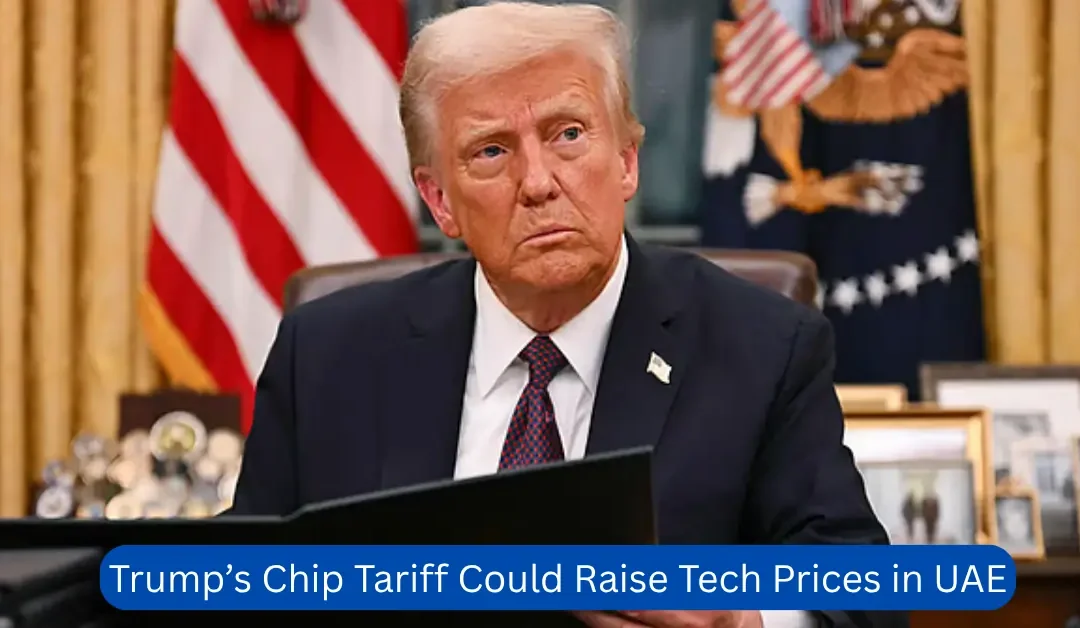
Daily news highlights reveal that U.S. President Donald Trump has proposed a new trade policy that could change the global electronics market. His plan includes tariffs of up to 100% on imported computer chips and semiconductors. This could make smartphones, laptops, cars, and even household appliances more expensive in many countries, including the UAE.
What Trump Announced
During a meeting with major U.S. technology leaders—such as Apple CEO Tim Cook and Nvidia CEO Jensen Huang—Trump explained that the tariffs would only apply to foreign-made chips. Any company producing chips inside the United States would not have to pay these extra charges.
Trump’s statement was clear:
“If you’re building in the United States, there’s no charge. But foreign-made chips will face tariffs of up to 100%.”
Who Could Avoid the Tariffs
Some companies may escape these high import duties because they already have chip production inside the U.S. These include:
- Taiwan Semiconductor Manufacturing Co. (TSMC)
- Samsung Electronics
- SK Hynix
- U.S. chipmakers like Intel and Nvidia
However, most electronic products are still assembled in Asia, using chips made in Taiwan, South Korea, or China. This means that even U.S.-based companies—like Apple, which assembles over 90% of its iPhones in China—might face higher costs unless they change their supply chains, which could take years.
Global Supply Chains Under Pressure
The semiconductor industry depends on a complex global network. Trump’s tariffs could:
- Disrupt global production – Manufacturers may have to find new suppliers, which could be more expensive or harder to work with.
- Increase production costs – Higher chip prices mean higher prices for the final product, whether it’s a smartphone, laptop, or home appliance.
- Create a ripple effect – Even countries not directly exporting to the U.S. could feel the impact. For example, a UAE electronics company might depend on chips from tariff-affected countries, leading to higher local prices.
Impact on the UAE
While the UAE does not export semiconductors directly to the U.S., it is a major re-export hub for electronics. This means:
- If chip prices rise globally, import costs into the UAE could go up.
- Retailers may have to charge more for tech products like laptops and mobile phones.
- Businesses in the UAE that assemble or sell electronics may face higher expenses and tighter profit margins.
A Shift in U.S. Trade Policy
This move is different from the U.S. government’s earlier approach, which focused on supporting domestic production through subsidies like the CHIPS Act. Now, Trump is taking a more aggressive protectionist path.
Critics warn:
- Tariffs usually lead to higher prices for consumers, not necessarily for foreign suppliers.
- Building new chip factories takes years and billions of dollars, so short-term production changes are unlikely.
- Companies might move their manufacturing to other countries, not just the U.S.
Global Economic Stakes
The global semiconductor market grew nearly 20% year-on-year through June, showing how important chips are for the modern economy. Tariffs on such a crucial product could affect:
- Technology companies around the world
- Automobile manufacturers
- Home electronics brands
Trump’s plan for a 100% tariff on imported chips is meant to protect U.S. production, but it will likely lead to higher tech prices globally. For the UAE, the effects may be indirect but still serious, impacting trade, retail prices, and consumer spending in electronics.


