
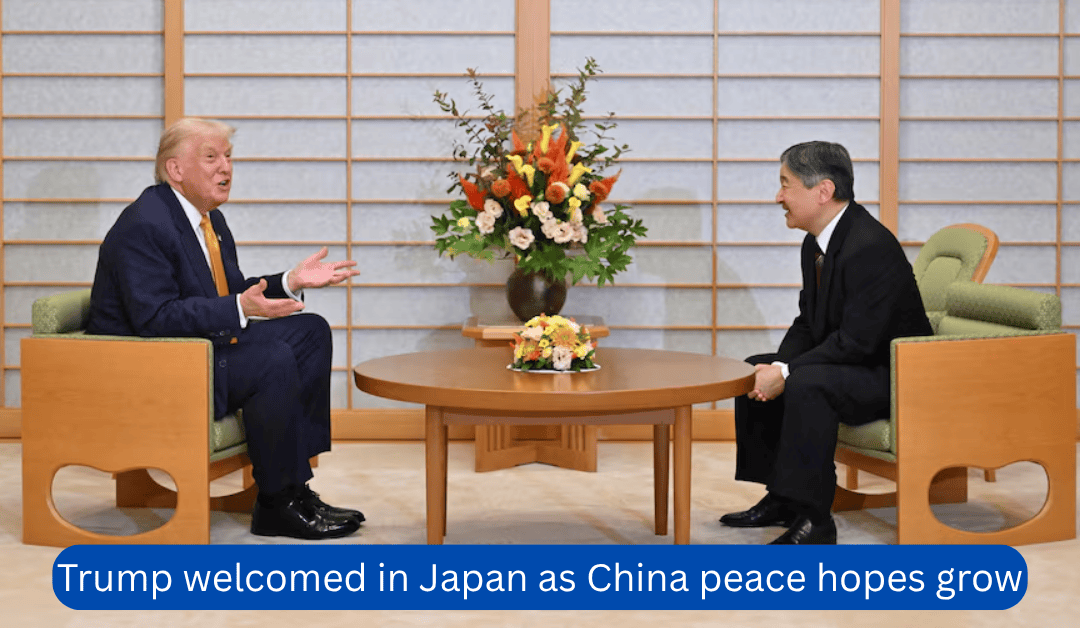
U.S. President Donald Trump received a royal welcome in Tokyo, Japan, on Monday during his Asia tour, which has captured global attention. This visit, part of his five-day trip across Asia, is seen as an important step toward easing global trade tensions. Trump hopes to end the ongoing U.S.-China trade war with a new understanding during his expected meeting with Chinese President Xi Jinping later this week in South Korea.
Warm Welcome and Big Deals
Trump’s arrival in Japan followed a busy stop in Malaysia, where he announced several economic agreements with four Southeast Asian nations. These deals focus on trade, investment, and manufacturing partnerships.
- Asian stock markets surged after reports emerged that the U.S. and China had reached a basic framework to pause further tariff increases and reduce tensions.
- Trump expressed optimism, saying he has “great respect” for President Xi and is confident that both sides could reach a temporary trade truce.
- U.S. officials shared that negotiators have been working on a plan to balance export controls, particularly on rare earth minerals—materials crucial for technology and defense industries.
Meeting Japan’s Emperor and Prime Minister
After landing in Tokyo, Trump was greeted by Japanese officials and later taken to the Imperial Palace, where he met Emperor Naruhito. The meeting was symbolic, highlighting the close ties between the two nations. Trump previously met Naruhito in 2019, becoming the first foreign leader to do so after his coronation.

- Japan has pledged a $550-billion investment plan to strengthen economic cooperation with the U.S.
- Prime Minister Sanae Takaichi, Japan’s first female leader, hopes to deepen the alliance through new agreements, including shipbuilding investments and increased imports of U.S. agricultural goods like soybeans and gas.
- Trump praised Takaichi, calling her “a great leader” and a worthy successor to his late friend, former Prime Minister Shinzo Abe.
Security in Tokyo is tight during Trump’s visit, with thousands of police deployed. Authorities confirmed the arrest of a man armed with a knife outside the U.S. Embassy last Friday, and anti-Trump protests are planned in downtown Shinjuku.
Strengthening Economic and Security Ties
Trump’s visit to Japan isn’t only about trade—it also highlights security cooperation in the Indo-Pacific region. Japan is home to the largest U.S. military base overseas, and Trump has long urged Tokyo to take on a greater share of defense costs.
- Takaichi has announced plans to increase Japan’s defense budget to 2% of GDP, the biggest buildup since World War II.
- She aims to assure Trump that Japan will continue to play a larger role in regional security, especially in response to China’s growing military presence.
- However, with limited political control in Japan’s parliament, it may be challenging for her to commit to Trump’s expectations for further increases.
Preparing for the Xi Meeting
Trump will leave Japan on Wednesday for South Korea, where he is set to meet President Lee Jae Myung. According to U.S. Treasury Secretary Scott Bessent, most of the work on a deal with South Korea is complete, but final details will likely wait until Trump’s next trip.
The much-anticipated meeting with President Xi Jinping will take place on Thursday. Both sides are preparing for difficult discussions over tariffs, technology restrictions, and rare earth exports.
- Neither Washington nor Beijing expects a full resolution of their trade disputes.
- The talks are focused on reducing escalation and managing future disagreements.
- Officials from both sides have described this phase as one of “stabilization, not settlement.”
Despite the cautious tone, Trump’s administration hopes this series of meetings will bring a calmer tone to global markets and set the stage for a more comprehensive deal when he visits China early next year.
Global Impact and Reactions
Trump’s Asia trip has already made headlines in global media. Market analysts say even small steps toward peace between the world’s two biggest economies could have major benefits for trade, jobs, and supply chains.
- Asian and U.S. stock markets have shown optimism, with investors hoping for a de-escalation.
- Energy and tech industries are watching closely, as both rely heavily on materials and trade routes affected by the ongoing tariff war.
- The White House has described Trump’s Asia trip as part of a “strategic reset” aimed at ensuring fair trade and strong alliances in the region.
As Trump continues his journey through Asia, expectations are high for meaningful progress in U.S.-China relations. His warm reception in Japan reflects the region’s hope for renewed cooperation and stability. While challenges remain, both Washington and Beijing seem ready to take small but important steps toward peace.


