
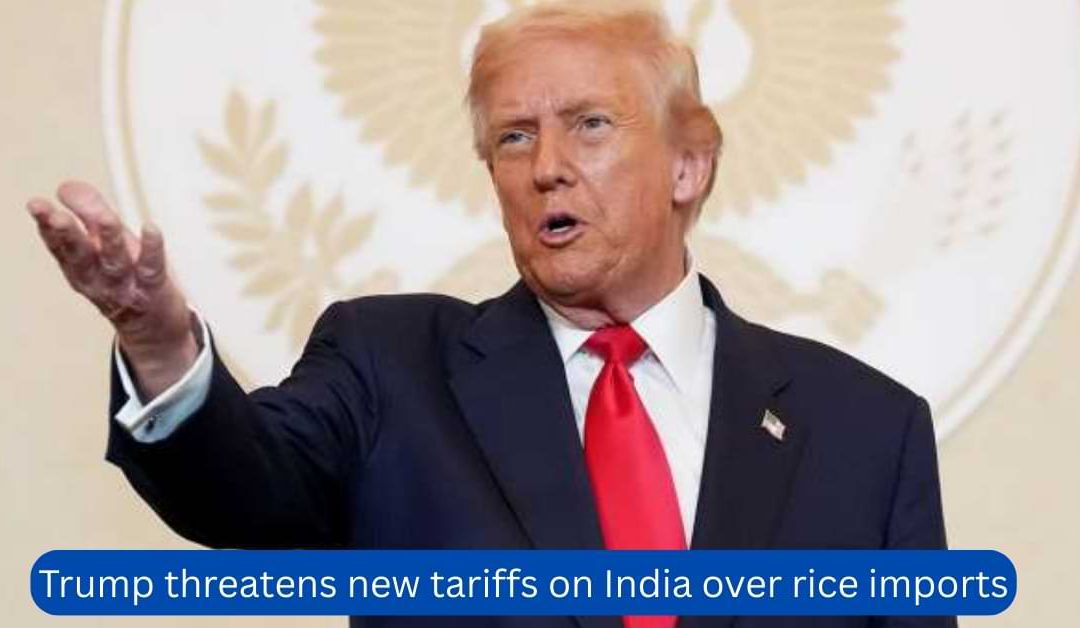
In Breaking News today, U.S. President Donald Trump said he might impose new tariffs on agricultural imports — especially rice from India. He also warned he could tax fertilizer from Canada. This comes as trade talks with both countries remain slow and tense.
Trump made the announcement at the White House while unveiling a large farm support plan for American farmers. His tone was strong: he accused foreign suppliers — especially in Asia — of hurting U.S. producers.
Why Trump Is Pushing Tariffs
Here’s what Trump said and why some U.S. farmers are cheering:
- Trump argued that foreign rice imports are undercutting American growers. He used India as a key example and said such imports amount to “dumping” — selling at cheap prices that local farmers cannot compete with.
- He claimed that the U.S. will send USD 12 billion in economic aid to American farmers, funded by the extra revenue from new tariffs. According to him, protecting farmers is part of rebuilding the backbone of America.
- His goal: use tariff power to revive U.S. agriculture, balance trade, and shield domestic producers from what he calls unfair competition.
How India’s Rice Exporters Are Responding
For Indian exporters, this is a serious warning sign — but they are trying to stay calm. Some in the industry view tariffs as a temporary setback, not a permanent barrier.
What exporters are saying:
- Export bodies argue that the U.S. still isn’t India’s biggest basmati-rice market, and overall global demand remains strong.
- Some suggest Indian exporters can adapt by diversifying their markets beyond the U.S. — sending rice to other regions where demand remains healthy.
- But others warn that repeated tariff threats can harm the confidence of buyers abroad and increase uncertainty about future deals.
Despite this, many exporters and experts say India still retains a pricing advantage over other rice-exporting countries, thanks to lower production costs and competitive pricing compared with, for example, Vietnam or Pakistan.

What This Means for Global Trade and Farmers
The issue isn’t just between India and the U.S. It speaks to bigger challenges in global politics, international diplomacy, and world economy — all trending topics in today’s news cycle.
- If the U.S. imposes high tariffs on Indian rice (or other agricultural imports), global trade patterns may shift. Countries may look for new trade partners or alternative suppliers.
- For U.S. farmers, tariff protection and government support might offer a lifeline now — but foreign trade tensions may also trigger retaliation or deeper supply-chain disruptions abroad.
- For Indian farmers and exporters, it means uncertainty. Lower demand from a big market (the U.S.) could push them to seek other buyers — or absorb losses in price or volume.
- The move could also spark heated diplomacy between the two countries, since agricultural trade often involves national pride, food security, and economic livelihoods.
In Daily news highlights, this story mixes global politics, agriculture trade, economic policy, and international diplomacy — all under one unfolding narrative.
What Comes Next — What to Watch
- Whether the tariff plan will pass into law, and how high the duties will be.
- How Indian exporters – especially smaller producers — handle potential loss of U.S. demand.
- Whether other countries will gain from this trade shift, or if global rice prices will change.
- How trade talks between U.S. and India evolve — whether someone can push for a fair agreement.
In these shifting times, this story becomes more than about rice. It’s about trade, global food supply, diplomacy, and how nations protect their farmers.
For anyone following international diplomacy news, global trade updates, or world economy stories, this situation between the U.S. and India will likely remain a key headline.


