
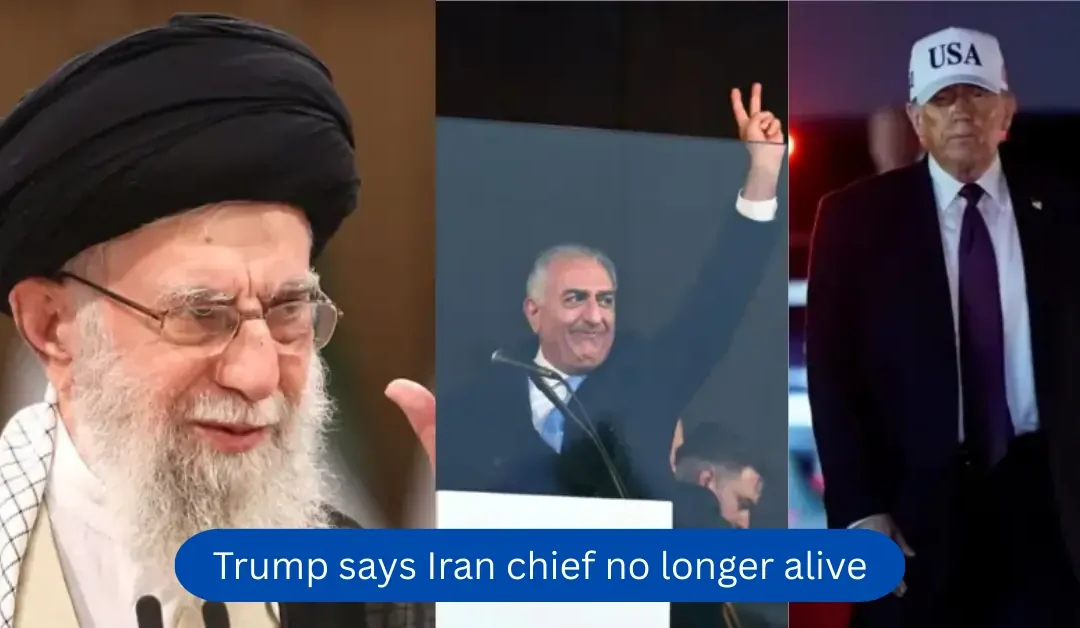
In today’s Latest News, videos from Iran are spreading quickly on social media after reports claimed that Iran’s Supreme Leader, Ayatollah Ali Khamenei, was killed in military strikes by the United States and Israel. While official confirmation is still being discussed internationally, some people in Iran were seen celebrating in the streets.
According to BBC Verify, two separate videos have been confirmed as real. These clips show celebrations in the cities of Karaj and Tehran. The footage began circulating online shortly after early reports suggested that Khamenei had died.
This development has become major Breaking News around the world, as it could mark a turning point in Iran’s political history.
Verified Videos Show Public Celebrations
BBC journalists carefully checked the viral clips to confirm whether they were real.
1. Celebrations in Karaj
One video was filmed in a residential area near the city of Karaj. In the clip:
- People can be seen dancing on the street.
- Residents are cheering loudly.
- Cars are honking their horns in celebration.
The atmosphere appears energetic and emotional. Some people seem excited, while others are simply watching from nearby buildings.
2. Cheering in West Tehran
Another video was recorded from inside an apartment building in the Ekbatan district in west Tehran. In that clip:
- Residents are clapping from their windows.
- Some are shouting and cheering.
- The sounds of celebration echo through the building complex.
BBC Verify said that reverse image searches found no older versions of the videos. Technical checks also showed no signs of artificial intelligence or digital editing. This confirms that the clips are recent and authentic.
These scenes quickly became part of global Daily news highlights, as they show how deeply divided opinions are inside Iran.
Who Was Ayatollah Ali Khamenei?
Ayatollah Ali Khamenei had been Iran’s Supreme Leader since 1989. He was one of the most powerful figures in the country for more than three decades.
1. Early Life and Rise to Power
- Born in 1939 in the city of Mashhad.
- Son of a religious scholar.
- Joined the opposition movement led by Ayatollah Khomeini in 1962 against Shah Mohammad Reza Pahlavi.
After the Islamic Revolution in 1979, Khamenei became deputy defence minister. He also helped organize the Islamic Revolutionary Guard Corps (IRGC), which later became one of the most powerful military forces in Iran.
When Ayatollah Khomeini died in 1989, Iran’s Assembly of Experts selected Khamenei as the new Supreme Leader. At that time, he did not hold the highest religious rank required by the constitution. To allow his appointment, the constitution was amended.
2. His Leadership Style
During his long rule:
- He kept strong control over Iran’s political system.
- He had authority over the armed forces.
- He suppressed protests and opposition movements, sometimes using force.
Khamenei also took firm positions against the United States and Israel. He often criticized Western governments and strongly opposed closer ties with them.
There were seven Iranian presidents during his time as Supreme Leader. He is survived by six children.
Donald Trump Announces Khamenei’s Death
In a dramatic statement posted on Truth Social, US President Donald Trump announced that Khamenei had been killed.
Trump described Khamenei as “one of the most evil people in history” and said his death was justice not only for Iran but also for Americans and others around the world.
In his post, Trump claimed that US intelligence and advanced tracking systems helped locate Khamenei. He also said that military operations would continue if necessary to ensure peace in the Middle East.
Trump further suggested that members of Iran’s military and security forces may now have a chance to change sides. He described this moment as an opportunity for the Iranian people to “take back their country.”
His announcement quickly became global Breaking News, with media outlets around the world reporting on the statement.

Reaction from Iran’s Exiled Crown Prince
Reza Pahlavi, the exiled son of Iran’s last Shah, also reacted strongly to the reports.
Currently living in the United States, Pahlavi welcomed the news of Khamenei’s reported death. On social media, he described it as the beginning of a “great national celebration.”
He urged Iranian officials not to appoint a new Supreme Leader. He also called on military and police forces to support the people instead of continuing loyalty to the current system.
However, he said that this moment is “not the end of the road,” suggesting that political change in Iran would still take time.
What This Could Mean for Iran
If the reports are confirmed officially, this could be one of the most important political events in Iran since the 1979 revolution.
Possible outcomes include:
1. Political Uncertainty
Iran’s leadership system depends heavily on the Supreme Leader. A sudden change could create instability.
2. Military Reactions
The IRGC and other security forces may play a key role in what happens next.
3. Public Response
As seen in the verified videos, some people are celebrating. Others may be worried about future uncertainty.
4. Global Impact
The Middle East situation could change dramatically. International relations, oil markets, and security policies may all be affected.


