
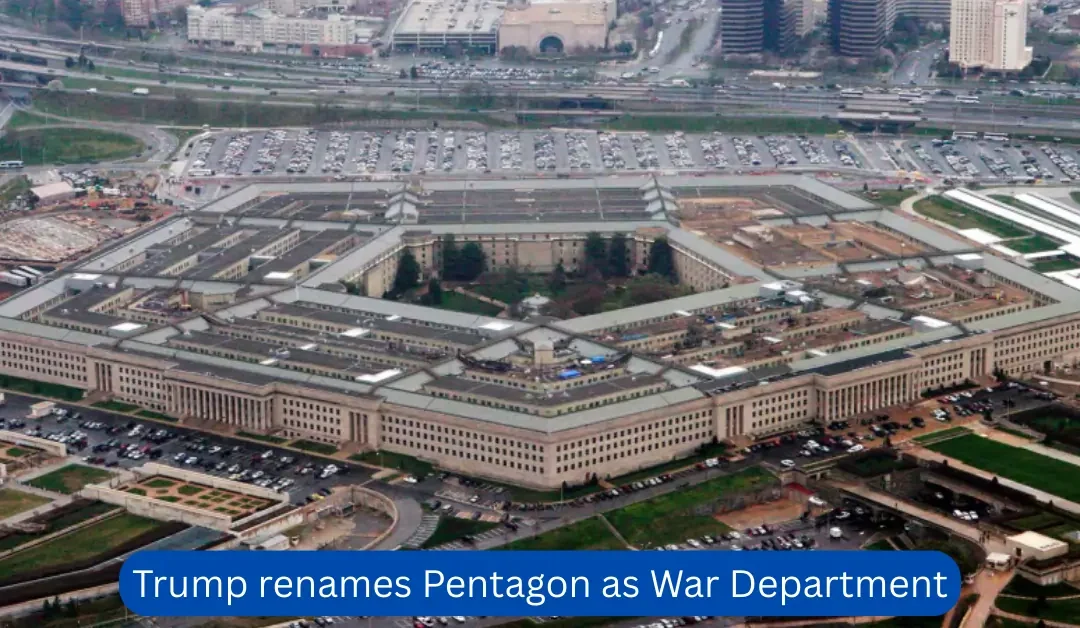
In a move that has surprised many across the world, President Donald Trump signed an executive order on Friday to officially rebrand the Pentagon as the “Department of War.” Speaking from the Oval Office, Trump said the new name reflects the current global situation more accurately.
“I think it’s a much more appropriate name, especially in light of where the world is right now. We have the strongest U.S. Military in the world,” Trump told reporters before putting his signature on the order.
This decision marks a major change in America’s defense identity and has already started creating strong debates both inside the United States and internationally.
Key Details of the Executive Order
The order gives authority to the Secretary of Defense and Pentagon officials to start using new secondary titles such as:
- Secretary of War
- Deputy Secretary of War
- Department of War in official letters, press releases, public appearances, and ceremonial contexts.
According to a fact sheet obtained by CNN, the order is effective immediately. Within hours of the announcement, Pentagon staff began updating signs and websites.
- The Defense Secretary’s office already had new signage installed.
- The official Pentagon website was shifted from defense.gov to war.gov.
- The traditional acronym DOD (Department of Defense) has now been replaced with DOW (Department of War).
These changes have shocked many Americans who are used to the Pentagon’s long-standing identity under its previous name.
Pentagon Leaders React
Defense Secretary Pete Hegseth, who joined Trump during the Oval Office ceremony, welcomed the decision. He explained that the move was “not just about renaming, but about restoring” America’s fighting spirit.
Hegseth added:
- The U.S. military will focus on offense, not only defense.
- The new name highlights raising up warriors, not just defenders.
This shift in language shows a more aggressive tone from Washington when it comes to global conflicts.
Will Congress Approve the Change?
The executive order also instructs all government agencies to recognize and use the new titles in their internal and external communication. However, the big question remains whether Congress needs to pass legislation to make the change permanent.
- The Last official name change for the Pentagon came in 1949 during President Harry Truman’s administration.
- Truman signed the National Security Act in 1947, merging the Army (then called the Department of War), the Navy, and the newly created Air Force into one structure called the Department of Defense.
- At that time, it required Congressional approval.
When asked about this, Trump said: “I don’t know, but we’re going to find out. I’m not sure they have to.” This statement has left constitutional experts debating whether Trump’s action will face legal or political challenges in the coming weeks.
Historical Background
The Department of War was originally created by George Washington in the 18th century when he set up the U.S. Army. It kept that name until after World War II, when America reorganized its forces to create a modern defense structure.
By reviving this older title, Trump’s administration is signaling a return to traditional, more forceful military language. Critics argue this could send the wrong message to allies and rivals, making the U.S. appear more focused on conflict than peacekeeping.
Recent Military Naming Controversies
This decision follows other Breaking News changes made by Defense Secretary Hegseth:
- He reversed a Biden-era policy that had renamed bases previously honoring Confederate-era generals. Bases like Fort Bragg and Fort Hood have now been restored to their original titles, though officially tied to different figures.
- In June, Hegseth also ordered the renaming of a Navy ship previously named after Harvey Milk, a gay rights activist and Navy veteran.
These actions show a clear shift in how the Pentagon — now the Department of War — wants to present itself to the public and the world.
Why This Matters Globally
- The U.S. military plays a central role in international affairs, and even a symbolic name change carries heavy meaning.
- Some analysts warn that using “Department of War” could increase tensions with rivals like China, Russia, and Iran.
- Supporters, however, believe it demonstrates strength at a time when the world is facing new security threats.
For now, this Latest News story remains one of the most talked about developments in U.S. politics, featuring strongly in Daily news highlights across global media.


