
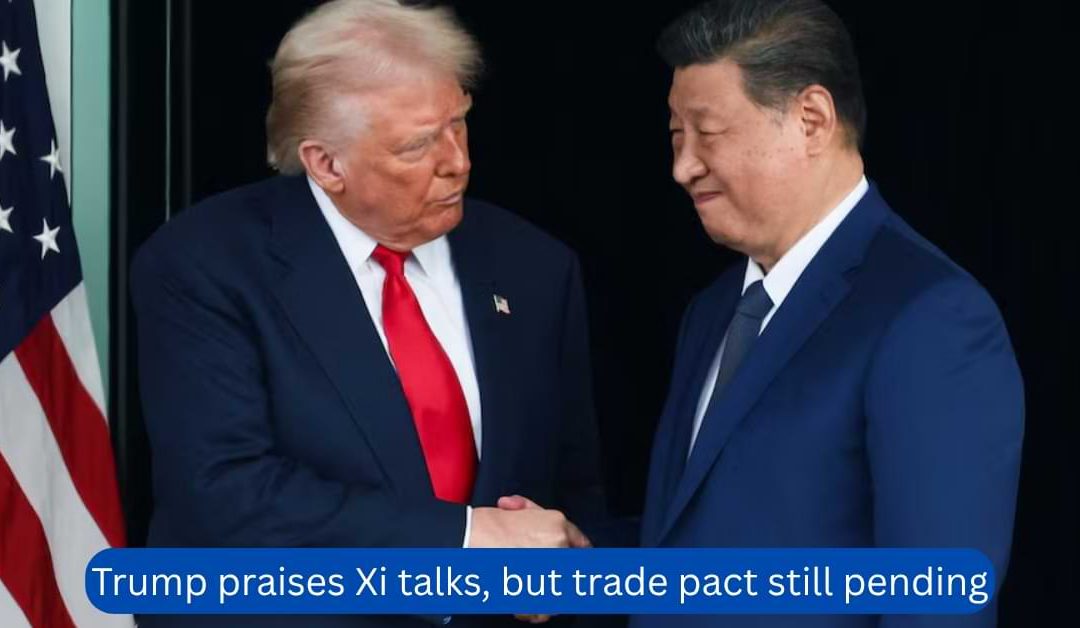
In Breaking News, U.S. President Donald Trump and Chinese President Xi Jinping met for the first time in six years, sparking hopes that the long trade tension between the world’s two largest economies may finally calm down. The meeting, which took place in South Korea, is being seen as a possible turning point in US-China relations.
A Meeting Filled with Expectations
According to Trump, the discussion with Xi was “amazing.” He said both sides shared ideas to fix “major trade problems” that have created stress in global markets for years. Beijing also confirmed that both leaders reached a “common understanding” on several key points, showing that cooperation may be possible again.
However, no formal trade deal was signed. Both countries are still working on a detailed agreement after months of private talks. Despite this, the meeting is being described as “a strong step forward.”
Key Highlights from the Talks
- Trade Tensions May Ease Soon
The meeting comes after years of tariff wars that began during Trump’s first term. The U.S. had imposed high import taxes on Chinese products, and China had retaliated with its own. Although both sides agreed to a temporary truce earlier this year, relations remained uneasy. - China to Lift Restrictions on Rare Earths
One positive outcome is China’s promise to suspend export restrictions on rare earth materials — elements used in smartphones, electric cars, and fighter jets. This move is seen as a victory for Trump and a relief for industries dependent on advanced technology. - New Agricultural Deals for U.S. Farmers
Trump also announced that China would start buying large amounts of soybeans and other farm goods from American farmers. These purchases had stopped due to Chinese tariffs, hurting U.S. farmers — one of Trump’s key political supporters. - Invitation to Visit China
In another sign of warming relations, Xi Jinping invited Donald Trump to visit Beijing in April 2025. Analysts say this could be the start of a more stable trade relationship between the two countries.

Issues Still Unresolved
Even though there were positive signs, many issues remain unsolved. One of the biggest concerns is TikTok, the popular video app owned by China’s ByteDance. The U.S. wants TikTok’s American operations separated from its Chinese ownership, citing national security risks. Beijing, however, says it will continue negotiations on this matter.
There was also some progress regarding the U.S. tariffs linked to fentanyl ingredients, which are used in illegal drug production. Trump said that some of these tariffs might be removed to help cooperation on drug control. However, most trade taxes remain in place, and products from China will still face over 40% import tariffs in the U.S.
Technology and AI Tensions Continue
Another topic discussed was artificial intelligence chips. Trump said that China could now communicate with Jensen Huang, the CEO of U.S. chipmaker Nvidia. This company is central to the ongoing AI technology dispute — the U.S. wants to limit China’s access to advanced chips, while China is pushing to expand its tech capabilities.
Contrast in Leadership Styles
Observers noted a clear difference in how the two leaders handled the meeting:
- Xi Jinping was calm, careful, and very measured in his statements. He emphasized that China’s goal was to find peaceful and lasting solutions that would benefit both economies.
- Donald Trump, on the other hand, was more direct and emotional. He called the discussion “historic” and claimed that his “strong leadership” had brought China back to the table.
While Trump appeared more energetic in public, analysts said he looked tense during the meeting — showing how important the talks were for him politically and economically.
Behind Closed Doors
The meeting was held in a secured building near a South Korean airport, away from the media spotlight. There were no grand ceremonies or red-carpet welcomes — just a quiet but serious environment.
Still, experts believe those 80 minutes of talks could define the future of global trade.
Henry Wang, a former adviser to China’s State Council, told the BBC that the discussion was “very positive.” He added that while it wasn’t a complete trade deal, both sides had built a strong framework for future negotiations, calling it “a good beginning.”
The world will be watching closely in the coming months to see if the U.S. and China can turn this positive tone into real action. Economists say a solid deal could help stabilize the global economy, lower prices, and improve investor confidence.
For now, both countries seem willing to talk — and that itself is seen as progress after years of hostility.


