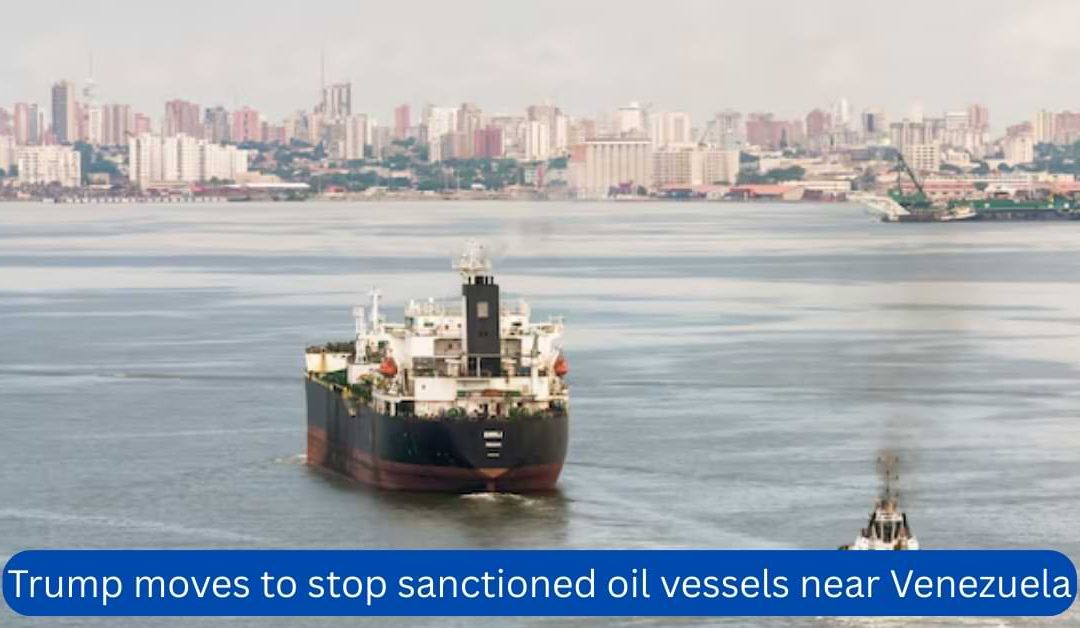
In Latest News from the United States and Latin America, U.S. President Donald Trump has ordered what he called a “total and complete blockade” of all sanctioned oil tankers going into and out of Venezuela. The decision is part of Washington’s latest effort to increase pressure on the government of Venezuelan President Nicolás Maduro, by targeting the country’s main source of income—oil.
The announcement has triggered strong reactions worldwide and has become major Breaking News, raising serious questions about global oil prices, international law, and rising military tensions in the region.
Trump’s Blockade Order Explained
On Tuesday, President Trump said the United States would block all oil tankers that are under sanctions from entering or leaving Venezuela. He made the announcement on his social media platform, Truth Social, using strong language.
Trump accused the Venezuelan government of crimes such as terrorism, drug trafficking, and human trafficking. He said that because of these actions, Venezuela’s leadership has been labelled a foreign terrorist organization. For this reason, he claimed the blockade was necessary.
However, it is still unclear how this blockade will be enforced. U.S. officials have not explained whether the Coast Guard or the Navy will stop and seize ships, or how far the action will go. This uncertainty has left oil markets and foreign governments watching closely.
Military Build-Up Raises Concerns
In recent weeks, the U.S. administration has already moved thousands of troops and several warships to the region. These include nearly a dozen naval vessels and even an aircraft carrier.
Last week, U.S. forces seized a sanctioned oil tanker near Venezuela. Since then, many oil ships have stayed in Venezuelan waters instead of leaving, fearing they may be captured. This has created what experts describe as an unofficial embargo.
Venezuela’s government strongly rejected Trump’s announcement, calling it a “grotesque threat” and accusing the U.S. of aggression.
Oil Prices React to the News
Following Trump’s statement, U.S. crude oil prices rose by more than 1% in Asian trading. This came after prices had already fallen to their lowest level since early 2021.
Oil traders say prices are increasing because of fears that Venezuelan oil exports could drop sharply. Venezuela normally exports close to one million barrels of oil per day. If these supplies are cut off for a long time, global oil prices could rise further.
At the same time, the market currently has large oil supplies, including millions of barrels stored on tankers near China. Because of this, some experts believe prices may not surge immediately unless the blockade continues for months.

Legal Questions and Political Debate
The blockade has also sparked serious legal debate inside the United States. Legal experts say American presidents have wide powers to deploy military forces abroad. However, a full blockade is usually seen as an act of war.
International law scholars warn that blockades are allowed only under very strict conditions. Some U.S. lawmakers have openly criticized the move. Congressman Joaquin Castro called the action an “act of war” that Congress never approved and that most Americans do not want.
These legal concerns add another layer of uncertainty to an already tense situation.
Impact on Venezuela’s Economy
Venezuela’s oil industry is already struggling. A recent cyberattack reportedly shut down key systems at the state-run oil company PDVSA, making it harder to manage exports and payments.
Since the U.S. imposed energy sanctions in 2019, Venezuela has relied on a secretive “shadow fleet” of tankers. These ships often hide their locations or switch off tracking systems. Many of them have also carried oil from Iran or Russia.
According to shipping data, more than 30 oil tankers near Venezuela are already under U.S. sanctions. Others, including ships used by companies like Chevron, operate under special permissions and are not currently targeted.
Rising Tensions Between the U.S. and Venezuela
President Trump has increased military pressure on Venezuela in recent months. U.S. forces have reportedly carried out multiple strikes on vessels near Venezuelan waters.
Trump has also suggested that land-based military action could begin soon. President Maduro has accused the United States of trying to overthrow his government and seize Venezuela’s massive oil reserves, the largest in the world.
Speaking recently, Maduro said Venezuela would defend its land and resources and promised that peace would prevail in the country.


