
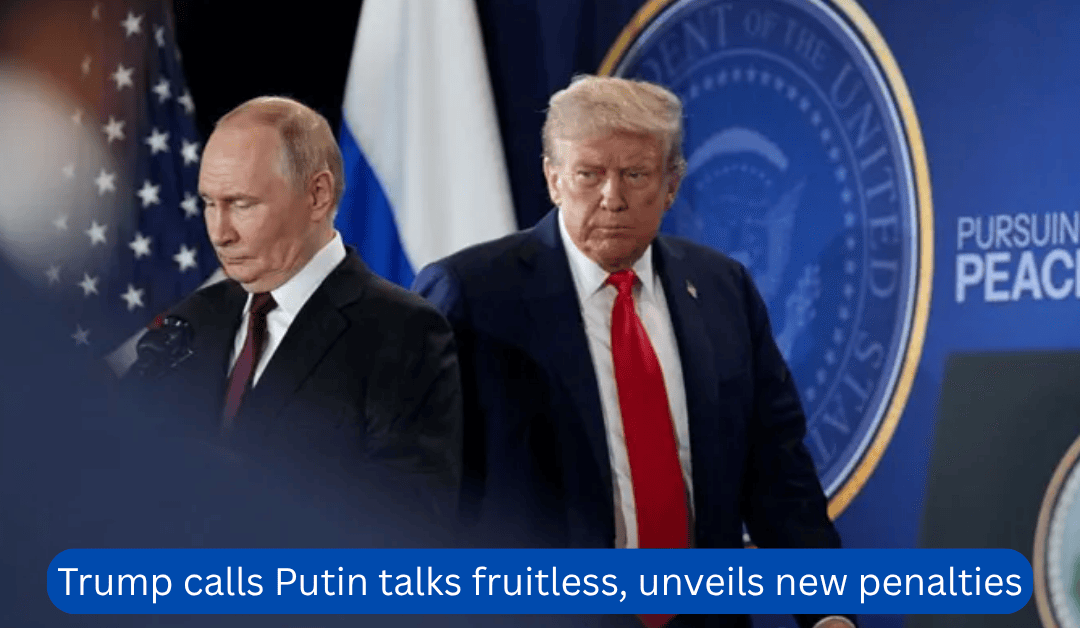
U.S. Imposes New Sanctions on Russia’s Oil Giants
In the Breaking News from Washington, the United States has introduced new sanctions on Russia’s two biggest oil companies — Rosneft and Lukoil. This move is part of a larger plan to pressure Moscow into ending its war in Ukraine.
President Donald Trump announced the decision during a meeting with NATO Secretary-General Mark Rutte. He said that although he often speaks with Vladimir Putin, their talks have not produced results. “Every time I speak to Vladimir, we have good conversations, but they don’t go anywhere,” Trump said.
The White House also confirmed that Trump’s expected meeting with Putin in Budapest had been postponed indefinitely, showing that tensions between the two sides remain high.
Sanctions Target Russia’s War Economy
The new sanctions mainly target Russia’s energy sector, which is the backbone of its economy and a key source of war funding. U.S. Treasury Secretary Scott Bessent said that these actions were necessary because of “Putin’s refusal to end this senseless war.”
“These oil companies are the financial engine behind the Kremlin’s military aggression,” Bessent said. “Now is the time for an immediate ceasefire and peace.”
Key points of the sanctions include:
- They target Rosneft and Lukoil, which together produce more than 3 million barrels of oil each day.
- The U.S. move mirrors similar actions by the United Kingdom, which has already sanctioned Russian oil companies.
- The main goal is to cut off Moscow’s revenue and push the Kremlin to stop its attacks on Ukraine.
Trump described the sanctions as “tremendous” and said they could be lifted quickly if Russia agrees to peace.
Peace Talks Continue Without Progress
Despite many attempts, peace negotiations between Washington and Moscow remain stalled. Trump said that Putin was not serious about peace, while NATO’s Rutte said that pressure through sanctions was the right path forward.
“You have to apply pressure, and that’s exactly what was done today,” Rutte said.
According to Daily news highlights, the main disagreement is about who controls the frontlines in Ukraine. Russia demands that Ukrainian forces retreat from the Donbas region, while the U.S. and its allies believe the fighting should stop where it currently stands.
Global Support and Strong Reactions
The European Union (EU) and the United Kingdom have both supported Trump’s latest move. EU Commission President Ursula von der Leyen said the sanctions send a “strong and united message” from both sides of the Atlantic.
The EU’s 19th sanctions package, approved this week, includes a ban on Russian liquefied natural gas imports, increasing economic pressure on Moscow. “Together, we are keeping up collective pressure on the aggressor,” von der Leyen wrote on X (formerly Twitter).
However, the Russian Embassy in London condemned the measures, saying they would hurt global energy markets and raise prices for developing countries. Russia also warned that continued sanctions would only “complicate peaceful dialogue.”
Even so, the West remains united. Trump called on China, India, and Turkey — Russia’s main oil buyers — to reduce imports and join global efforts to isolate Moscow.
Human Cost and Roadmap to Peace
Just hours before the new sanctions were announced, Russia carried out deadly airstrikes on Ukraine, killing at least seven people, including children. Ukrainian officials said these attacks prove that the Kremlin has no real interest in peace.
According to Ukraine conflict updates, Kyiv continues to request more U.S. military aid, including long-range missiles, though Trump denied approving Tomahawk missile use. Ukrainian President Volodymyr Zelensky said that stronger weapons could help push Russia toward negotiations.
Meanwhile, the White House and its allies have drafted a 12-point peace plan that includes:
- A ceasefire along current battle lines.
- The return of deported Ukrainian children.
- Prisoner exchanges between both sides.
- A war recovery fund to rebuild destroyed cities.
- A path for Ukraine’s EU membership.
Trump said he supports “cutting the war where it is and stopping the bloodshed.” However, Kremlin spokesperson Dmitry Peskov rejected this idea, saying Russia would not change its territorial demands.
As global tensions rise, experts warn that oil prices could increase if Russia retaliates. Still, Western nations believe economic pressure remains the most effective weapon to bring Putin to the negotiation table.


