
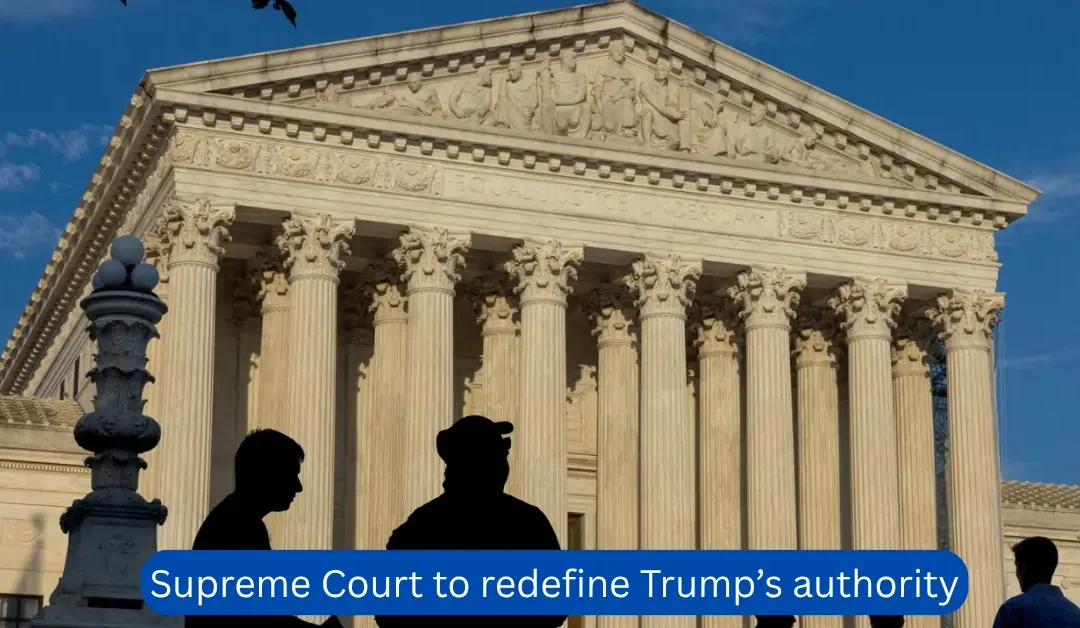
In Latest News, the U.S. Supreme Court is starting its new term on Monday. It has a busy schedule ahead. Many of the cases will test how much power President Donald Trump really has. This is one of the Daily news highlights people will watch closely.
Trump, in the eight months since returning to the White House, has pushed the limits of executive power. He has done things like:
- issuing policies on his own,
- cutting parts of federal budgets and government staff,
- trying to bring independent agencies under his control.
These moves have already sparked legal fights.
1. National Guard Deployment & State Authority
One heated issue is Trump’s attempt to order state National Guard troops into cities where he claims there is unrest or crime. Local and state leaders oppose it. In Oregon, a federal judge blocked Trump’s move to send troops into Portland. An appeals court will decide next. The judge said:
“This is a nation of constitutional law, not martial law.”
She warned that accepting Trump’s argument might blur the line between military power and civilian rule.
Because of social media trends and viral video clips, this standoff is already getting big attention on news portals.
2. Supreme Court’s “Shadow Docket” Power
If the appeals court can’t settle things, the Supreme Court might step in quickly using its “shadow docket.” These are usually fast rulings without full hearings. The court may use it to limit Trump’s military authority—or give him temporary freedom to act.
But this tool is under criticism:
- Some say it lacks transparency, giving decisions without full explanation.
- Critics argue it removes public oversight. Senator Cory Booker called it “shields from accountability.”
- Others believe the court must now give full reasoning if it’s expanding executive power.
What Else Is on the Court’s Plate
Beyond military authority, multiple major cases are expected:
- Removing agency officials: Can Trump fire members of agencies meant to be independent?
- Federal Reserve Board: He wants to fire Lisa Cook, a Fed governor. If the court allows it, he may gain more control over U.S. economic policy.
- Tariffs & trade: Are Trump’s import taxes legal, or should courts nullify them?
- Cutting federal spending & jobs: Are his unilateral decisions valid under the law?
- Immigration and deportation policies: Are his laws and executive orders constitutional?
- Birthright citizenship: He has expressed interest in ending automatic citizenship for U.S.-born children. The court might take that up.
One Harvard professor said: “They can’t get away with one-page orders this term. If they give more power to the executive, they must explain why.”
Cultural & Political Fights Also Await
Not all cases are about Trump’s power. Some are about social and political issues:
- Conversion therapy bans: The court will decide if banning this therapy (used to change someone’s sexual orientation) violates free speech.
- Transgender athletes in school sports: Two cases will test state laws that ban trans athletes from certain competitions.
- Mail-in ballots & election laws: A Republican lawmaker challenged a state rule about counting ballots after election day.
- Voting district rules: Conservatives in Louisiana want to strike down a rule protecting Black representation when drawing districts.
- Campaign coordination laws: There’s a push to remove limits that prevent candidates and parties from coordinating spending.
What It All Means
This Supreme Court term might deeply change how America’s government works. Some big ideas:
- Power balance: Will the court let a president extend executive power, or will it block overreach?
- Court legitimacy: Using secretive methods (like shadow docket) may hurt the public’s trust in the court.
- Partisan divide: The court already seems divided along political lines. Many see its decisions as politically loaded.
A recent poll by Pew showed Americans are sharply split on the court. Republicans tend to support it, Democrats largely criticize it. By next June, when final decisions are expected, the 6-3 conservative majority may rewrite key laws in the U.S.
The term will be watched closely by the public, scholars, and of course, news portals around the world.


