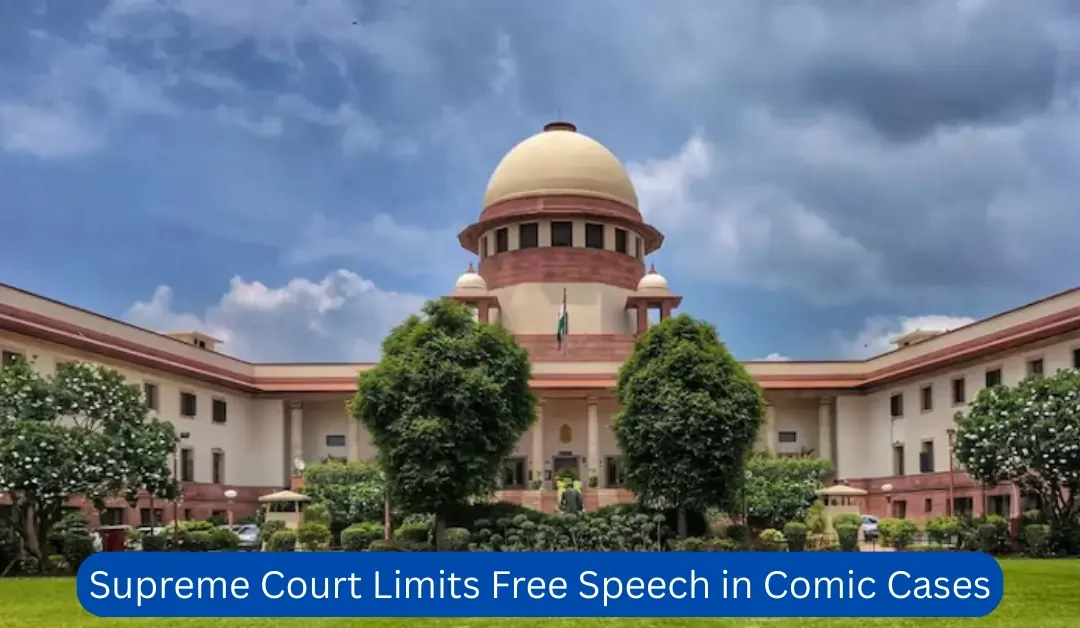
In a strong observation, the Supreme Court of India today reminded comedians and social media influencers that freedom of speech cannot be used in a way that hurts the feelings of vulnerable communities. The court was addressing a case involving stand-up comics like Samay Raina, Vipul Goyal, Balraj Singh Ghai, Sonali Thakkar, and Nishant Tanwar, who were accused of making offensive jokes about persons with disabilities.
This comes at a time when debates around free speech, social media influence, and digital accountability are dominating the Latest News and public discussions.
What the Case Was About
The matter was taken up after the Cure SMA Foundation of India, which supports patients living with spinal muscular atrophy (a rare and serious genetic condition), filed a petition. The Foundation argued that mocking people with disabilities is not just insensitive but deeply damaging, especially when done for commercial gain through shows, YouTube videos, or digital platforms.
- The petition was also linked to the India’s Got Latent controversy, where YouTuber Ranveer Allahbadia was charged in a similar case.
- Senior Advocate Aparajita Singh, appearing for the Foundation, said all the comics involved have already issued apologies.
- However, the court felt that apologies alone may not be enough to prevent future harm.
Supreme Court’s Stand
The bench of Justice Surya Kant and Justice Joymalya Bagchi made it clear that:
- Humour has boundaries – The judges noted that while jokes are an important part of life, mocking specific groups or disabilities crosses a line of sensitivity.
- Commercialisation matters – Justice Bagchi said that when comedians use jokes to earn money, they must act responsibly. Hurting a community in the name of entertainment is not acceptable.
- Balance of rights and duties – Justice Kant added that the Constitution gives the right to free speech, but it also comes with duties not to harm others.
The court further asked, “Today it is about disabled people, but what if tomorrow the same happens to women, children, or senior citizens? Where will this stop?”
Government’s Response
The Attorney General, R. Venkataramani, appearing for the Centre, told the court that the government will soon frame guidelines for comics, YouTubers, and influencers.
- He clarified that there cannot be a complete gag on comedians, as humour is also part of free expression.
- But at the same time, these guidelines will ensure that no community is targeted in a way that damages their dignity.
- The judges also said that guidelines must be broad and future-oriented, not just based on one incident.
This discussion is now a hot topic in Daily news highlights, as it impacts not just comedians but also digital creators across India.
What Happens Next
The court suggested that instead of paying fines, the comedians should contribute positively to the cause of disability awareness.
- Influence for good – The comics were asked to use their platforms to spread awareness about disabilities and rare diseases.
- Public apologies – They must post an official apology on their YouTube channels.
- Report to court – They need to inform the court about what penalty or contribution they are willing to make.
Senior Advocate Singh argued that this would be “the best form of apology” since it would turn a negative act into something constructive.
Why This Matters
This case is more than just about comedians. It highlights a much bigger debate in India today:
- Free speech vs. responsibility – How far should freedom of expression go, especially in a country as diverse as India?
- Digital influence – With millions of followers, comics and influencers have the power to shape opinions, which is why their responsibility is higher.
- Public sensitivity – In today’s era of viral videos and trending reels, one offensive joke can cause long-lasting harm.
This is now part of the Breaking News cycle because it shows how the law is trying to keep pace with the fast-changing world of online content and digital platforms.


