
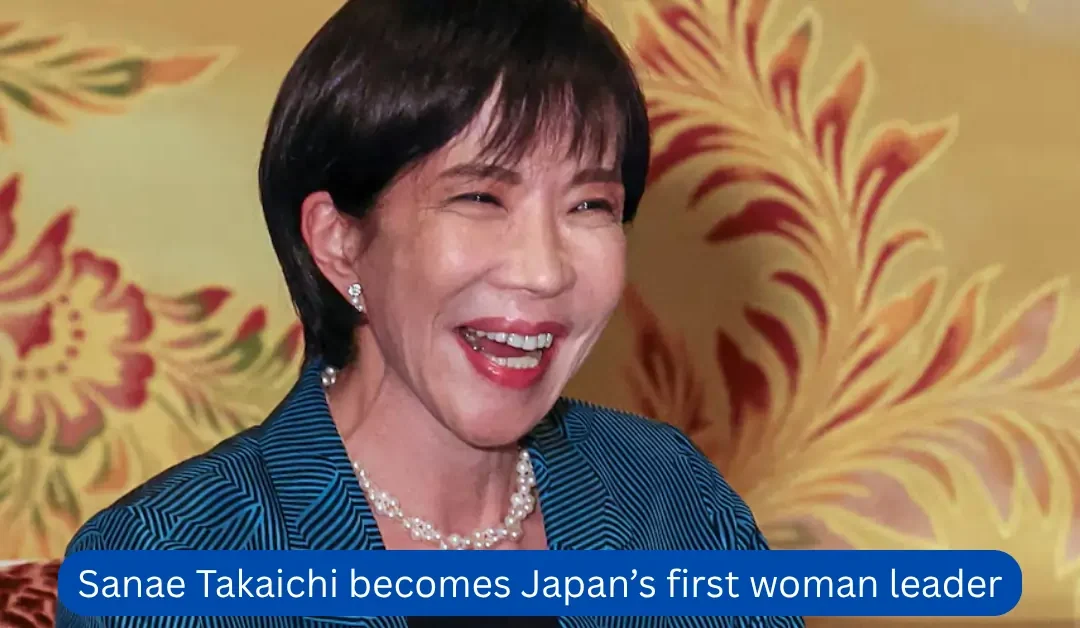
In a historic moment for Japan and global politics, Sanae Takaichi has officially become the first woman to serve as Japan’s Prime Minister. The 64-year-old conservative leader was elected by Japan’s parliament after winning a clear majority — 237 votes in the Lower House and 125 in the Upper House. This victory marks a major milestone in Japan’s political history and is being seen as a major turning point for women in leadership roles.
A Landmark Moment in Japanese Politics
Takaichi, known for her firm political style, won the leadership race of the Liberal Democratic Party (LDP) earlier this month. Her victory follows years of political uncertainty in Japan, where the country has seen four prime ministers in just five years.
- The country’s economy is currently struggling with rising living costs and public frustration over slow reforms.
- Takaichi’s strong-willed image, often compared to the late British leader Margaret Thatcher, has given her the nickname “Japan’s Iron Lady.”
- Her election brings new hope to Japan’s conservative voters who wanted stability and decisive leadership.
However, critics say that while her victory is symbolic, her traditional political beliefs might not bring the social change many hoped for.
Economic and Political Challenges Ahead
Japan’s economy — the world’s fourth-largest — is facing difficult times. From a growing cost-of-living crisis to youth unemployment and trade tensions, Takaichi inherits a heavy list of challenges.
- She must restore public trust in the LDP, which lost major ground after several scandals and financial controversies under her predecessor Shigeru Ishiba.
- There’s increasing public anger over rising food prices, including a record rice shortage that has hit households hard.
- Analysts say she needs to focus on economic revival, digital innovation, and energy reforms to stabilize Japan’s position in global markets.
Takaichi has also promised more support for women’s healthcare, improved working conditions, and greater recognition for household and care workers — issues that affect millions of families.
Managing Japan’s Global Relations
On the international front, Takaichi faces delicate diplomatic challenges.
- Relations with South Korea remain tense due to historical disputes and her nationalist leanings.
- Her stance on China is strong, echoing her mentor Shinzo Abe’s firm approach against Beijing’s growing regional power.
- The most immediate test, however, will come next week when she meets US President Donald Trump.
While the two countries share a long-standing alliance, Trump’s unpredictable policies and demands for higher defence spending from Tokyo could make the meeting challenging. Takaichi’s ability to maintain Japan’s security partnership while asserting independence will define her leadership in the months ahead.
The Iron Lady’s Political Journey
Sanae Takaichi has been in politics for decades. A loyal supporter of the late former PM Abe, she has held several important government posts. She also previously ran for prime minister but lost.
- She is known for her traditional family values and opposition to same-sex marriage and changing family surname laws — positions that have drawn criticism from younger and progressive voters.
- Many young women in Japan see her as a symbolic leader, but not necessarily one who represents modern feminism.
- “She’s the first woman prime minister, and that’s inspiring,” said 21-year-old student Ayda Ogura. “But her views still support old systems rather than challenge them.”
Despite the criticism, Takaichi remains focused on strengthening Japan’s economic and social foundation, saying she will prioritize the nation’s welfare above political debates.
Rebuilding Trust and Setting New Goals
One of her biggest challenges is to rebuild public faith in the LDP. Under Ishiba’s leadership, the party lost control of both houses for the first time in 15 years, following corruption scandals.
- To win back conservative voters, Takaichi has promised transparency and accountability.
- She may appoint Satsuki Katayama as Japan’s first-ever female Finance Minister — another possible historic first.
- Financial experts believe this move could inspire global confidence and signal a new era of women-led policy reforms in Japan.
Her leadership could also redefine Japan’s future — blending tradition with modern progress.
A New Chapter for Japan
As Japan enters this new era, the world is watching closely. Will Takaichi’s leadership bring the stability and strength Japan needs? Or will her conservative stance slow down social reform?
One thing is certain — her rise is a historic milestone for Asia’s oldest democracy.


