
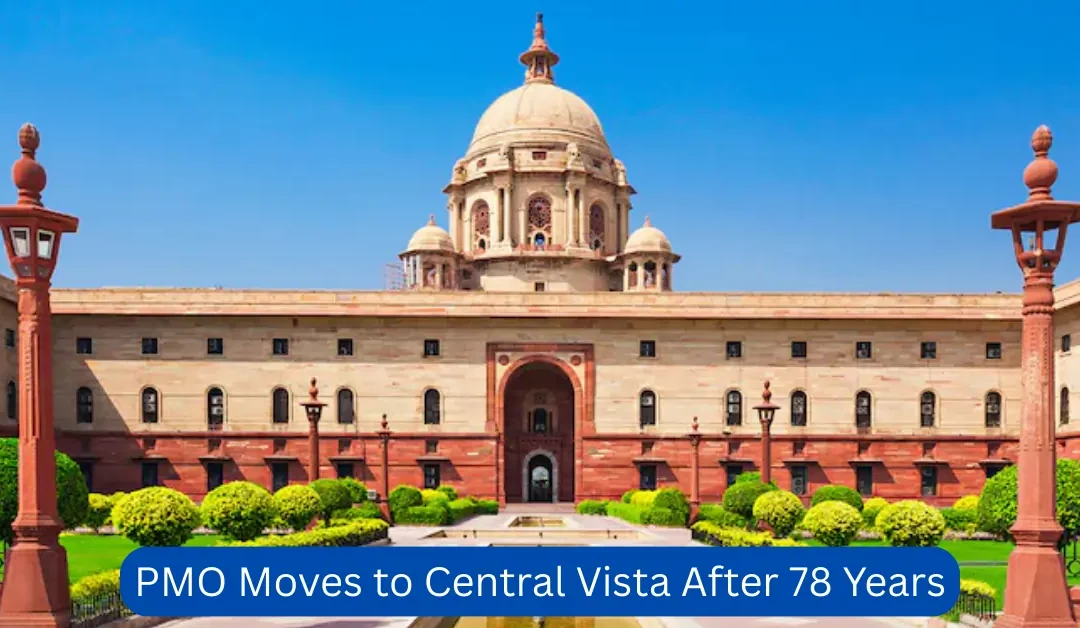
In one of the biggest changes in India’s administrative history, the Prime Minister’s Office (PMO) will soon leave its iconic home at the South Block and move to the brand-new Executive Enclave next month. This is a major step under the Central Vista project, which is redesigning India’s power corridor in New Delhi.
The Latest News about this move has caught national attention because the PMO has been based in the same historic building for almost 78 years. The new office is not just a change of address—it represents India’s growing confidence as a modern and emerging power in the global economy.
Why the Move Was Needed
Government officials explained that the shift was necessary for three key reasons:
- Space and Facilities: The old South Block building is almost a century old and has very limited space. Offices were crowded, and the design did not allow for modern communication and security needs.
- Modern Infrastructure: The new Executive Enclave has updated facilities, better lighting, more advanced security systems, and proper meeting spaces.
- Closer to the Prime Minister’s Residence: The new PMO is within walking distance of the Prime Minister’s house, making work smoother and more efficient.
This decision is not just about convenience. It is about creating a workplace that matches the image of India as a rising force in the world.
What the Executive Enclave Includes
The Executive Enclave is designed to be a high-tech hub of governance. Apart from the Prime Minister’s Office, it will also house:
- The Cabinet Secretariat, which manages coordination between ministries.
- The National Security Council Secretariat, responsible for key national security decisions.
- A state-of-the-art conferencing facility for domestic and international meetings.
Officials have also hinted that the new PMO might get a fresh name. The Prime Minister has already said he wants the office to be known as the “people’s PMO”, reflecting the spirit of sewa (service).
North Block and South Block to Become Museums
The shift of the PMO and other offices also changes the future of the historic North Block and South Block. These buildings, which have been the heart of Indian governance since independence, will soon be converted into a world-class museum called “Yuge Yugeen Bharat Sangrahalaya.”
- The museum will showcase India’s culture and history.
- It is being developed in partnership with France Museums Development.
- The goal is to present India’s proud past, explain its present, and inspire visitors to imagine its bright future.
This transformation will make the old colonial-era structures more accessible to the public while giving them new life as cultural spaces.
The Prime Minister’s Vision
Earlier this year, the Prime Minister inaugurated Kartavya Bhavan-3, where the Home Ministry and Personnel Ministry have already moved. In his speech, he emphasized that India’s administration has been working from outdated colonial buildings for far too long.
- Many of those old offices lacked proper ventilation and lighting.
- Important ministries were running in cramped conditions not suited for modern governance.
- The PM stressed that India needs offices that show its ambition, energy, and place in the global economy.
He also reminded everyone that the PMO should never be seen as a private office of the Prime Minister. Instead, it should serve as the center of public service, where the needs of the people always come first.
Why This Move Matters
The relocation of the PMO is not just about a new building. It represents:
- A symbolic break from colonial-era governance to a modern, people-first approach.
- An investment in the future, with high-tech facilities that match the demands of the 21st century.
- The PMO will move to Executive Enclave in the coming month.
- The new building is closer to the PM’s residence and includes better facilities.
- North and South Block will become a grand cultural museum.
- It shows India’s commitment to modernization and efficiency while celebrating its cultural heritage.
The change connects India’s glorious past with its modern ambitions—an important reminder that the country is ready to embrace the future while staying rooted in its heritage.


