
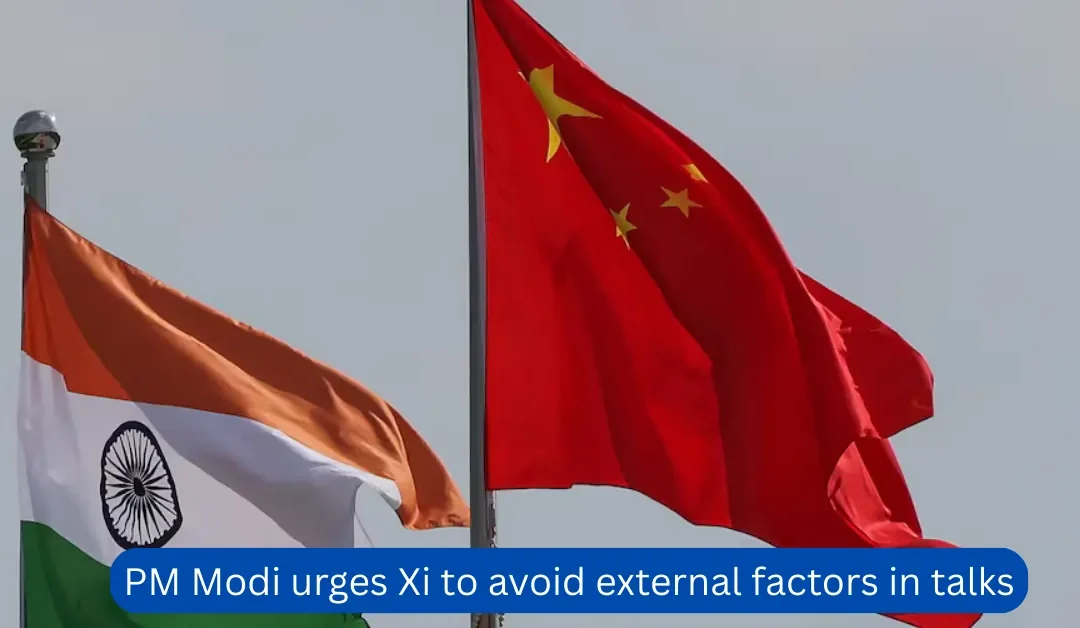
Prime Minister Narendra Modi, after his meeting with Chinese President Xi Jinping in Tianjin on August 31, emphasized that India-China relations should not be viewed through the lens of any third country. His remark appeared to be a subtle reference to the United States and former President Donald Trump’s strict trade policies that have often affected both Asian giants.
The meeting between Modi and Xi was held on the sidelines of the Shanghai Cooperation Organisation (SCO) Summit, marking an important step in rebuilding trust between the two neighbors after years of tension, especially following the 2020 Galwan clash at the border. This was PM Modi’s first visit to China in seven years and came at a time when global power dynamics are shifting rapidly.
Key Highlights of the Meeting
- Strategic Autonomy: Both leaders agreed that India and China should pursue an independent path in shaping their bilateral ties, without outside influence.
- Border Peace: Modi stressed that peace and stability in border regions are crucial for the overall growth of bilateral relations.
- Economic Cooperation: The two sides acknowledged their responsibility to stabilize global trade and work towards fair and transparent systems.
- People-to-People Ties: Direct flights, easier visa systems, and religious visits such as the Kailash Manasarovar Yatra were welcomed as positive developments.
Building Common Ground
According to India’s Ministry of External Affairs (MEA), Modi and Xi discussed expanding cooperation on bilateral, regional, and global issues. These included tackling terrorism, promoting fair trade, and working together on multilateral platforms.
The statement underlined that while differences exist, they must not escalate into disputes. Instead, both nations reaffirmed that they are development partners, not rivals. With a combined population of 2.8 billion people, India and China represent nearly one-third of humanity. Their cooperation, therefore, is vital not only for Asia but also for the balance of global power.
Why This Meeting Matters
The talks carry significant weight because:
- Global Trade Stability – As two of the world’s largest economies, India and China play a crucial role in stabilizing trade flows amid rising global tensions.
- Regional Peace – The Indo-Pacific remains one of the most contested regions in the world. Peaceful India-China relations can reduce friction and ensure stability.
- Border Issues – The two sides discussed the progress made since the disengagement at the Line of Actual Control (LAC) last year, highlighting the need for continued peace in these areas.
- Multilateral Leadership – India and China both stressed the importance of a multipolar world and multipolar Asia, aligning with the changing dynamics of the 21st century.
Looking Ahead
During the meeting, Modi also invited President Xi to the 2026 BRICS Summit, which India will host. Xi expressed support for India’s presidency of BRICS and assured cooperation. Modi also met Cai Qi, a senior Chinese leader, to seek further support in realizing the shared vision of both governments.
The message from both sides was clear: collaboration, not conflict, will define the next phase of India-China ties. As nations with long histories, large populations, and growing economies, they recognize the necessity of working together, even as certain disagreements remain unresolved.
Conclusion
The Modi-Xi meeting in Tianjin has set a cautiously optimistic tone for the future. While past disputes still linger, the commitment to dialogue, border peace, trade cooperation, and people-to-people connections show that both sides are willing to move forward.
For India and China, the real test will be whether these words translate into long-term trust and stability. But for now, the meeting has provided a positive signal to the world that the two Asian powers are ready to cooperate beyond the shadow of external influences.


