
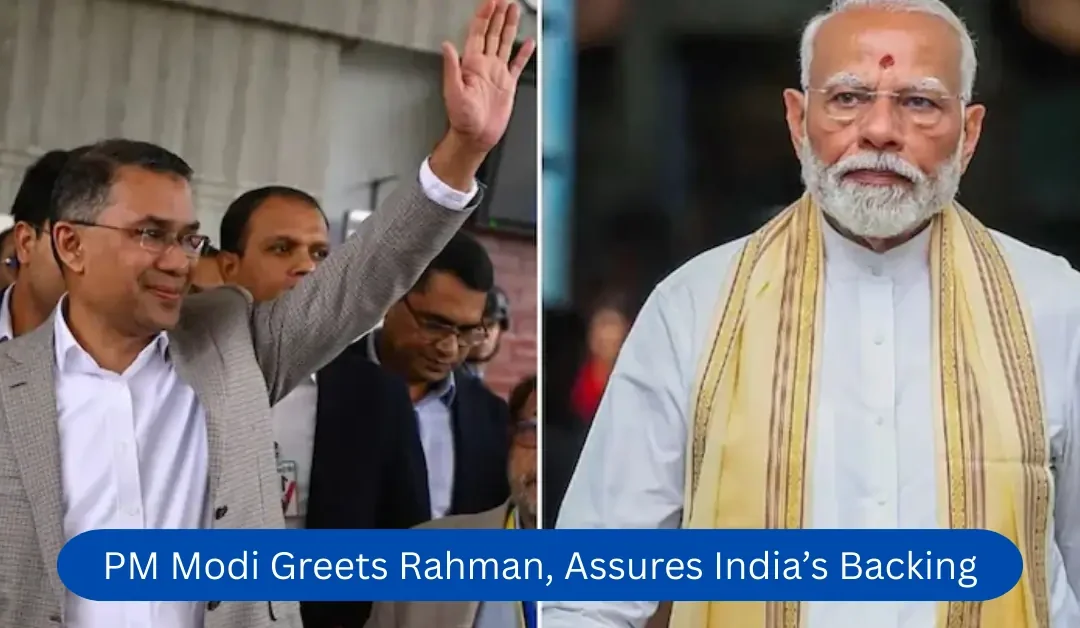
In one of the biggest political developments in South Asia this year, the Bangladesh Nationalist Party (BNP) has claimed a clear victory in the national elections. According to early figures and party statements, BNP chief Tarique Rahman is now set to become the next Prime Minister of Bangladesh. Final counting is still underway, but the political mood in Dhaka already feels decided.
This is being followed closely as Latest News and Breaking News across the region, with many calling it a turning point in India-Bangladesh relations. Social media platforms are filled with updates, and the story is dominating Daily news highlights in both countries.
Prime Minister Narendra Modi was quick to respond. He congratulated Tarique Rahman and the BNP for what he described as a “decisive victory” in the parliamentary elections. In a message posted online, PM Modi said the result shows the trust of the people of Bangladesh in Rahman’s leadership.
He also made it clear that India will continue to stand in support of a “democratic, progressive and inclusive Bangladesh.” His message signals a willingness to move forward positively, even as political changes unfold in Dhaka.
This development comes at a time when global politics is already tense, with issues like the US Election 2026, Israel Gaza conflict updates, Ukraine Russia war, Trump speech headlines, and global economic slowdown dominating world attention. Against this backdrop, Bangladesh’s election result adds another major story to the region’s political map.
1. A Big Political Shift in Bangladesh
The BNP’s claimed victory marks a strong comeback for the party. For many years, the Awami League under Sheikh Hasina had been in power. Hasina fled to India in August 2023 after a student uprising against her government. Since then, Bangladesh has been under an interim leadership led by Muhammad Yunus.
Under this interim period, there were reports of rising border tensions, security concerns, and increasing illegal migration issues. These topics often appeared in Daily news highlights, especially in Indian states like West Bengal and Assam.
Now, with the BNP returning to power, many people are watching to see how the political direction of Bangladesh may change.
Tarique Rahman has promised to lead with a “Bangladesh First” approach. While this message appeals strongly to his supporters at home, it has also raised questions about how close the new government will be to India compared to the previous Awami League administration.
2. PM Modi’s Message: A Sign of Reset
PM Modi’s congratulatory message is important. It suggests that India wants to keep strong and stable ties with Bangladesh, no matter which party is in power.
During Sheikh Hasina’s rule, India and Bangladesh had a close relationship. There were agreements on trade, transport, border management, and water-sharing. Cooperation between the two countries was often seen as a model for regional partnership.
However, in the past, relations were not always smooth under BNP leadership. Between 2001 and 2006, there were concerns in India about cross-border militancy and security challenges. The 2004 Chittagong arms haul case remains a reminder of that tense period.
Because of this history, PM Modi’s quick and positive response is being viewed as an effort to reset ties and avoid past misunderstandings.
He also said he looks forward to working with the new leadership to strengthen relations and advance common development goals. This includes trade, connectivity, and regional stability.

3. Key Issues That Could Shape the New Government
As Bangladesh enters a new political phase, several major issues will likely shape the BNP government’s priorities:
- a) Border Security and Migration
Border security has been a sensitive issue in recent years. Reports of illegal migration have influenced domestic politics in India, especially during state elections. Both countries may need to work closely to manage this situation peacefully. - b) Counterterrorism Cooperation
Tarique Rahman has promised continued cooperation against terrorism. This will be an important test for the new government. Strong coordination can help rebuild trust between Delhi and Dhaka. - c) Teesta Water-Sharing Agreement
The Teesta river water-sharing deal has been pending for years. Many hope the new leadership will push for a practical and fair solution. - d) Protection of Minorities
There have been concerns about the safety of Hindu minorities in Bangladesh, especially after political unrest. The BNP chief has promised protection for minorities, and this will be closely watched both domestically and internationally.
4. What This Means for the Region
Bangladesh is a key player in South Asia. Its political stability affects trade routes, security cooperation, and economic growth in the region.
With global tensions already high due to the Ukraine Russia war and the Israel Gaza conflict updates, South Asia cannot afford instability. That is why this election result is being treated as Breaking News not just in Bangladesh, but across the region.
Economic growth is another important factor. Bangladesh has made strong progress in textiles, exports, and infrastructure over the past decade. Investors will now watch how the new government handles economic reforms and foreign policy.
If BNP delivers on its promises of inclusive governance and balanced diplomacy, it could open a new chapter in India-Bangladesh ties.


