
In today’s Latest News, shocking new documents have raised serious questions about Terje Rod-Larsen, the Norwegian diplomat who played a key role in the 1993 Oslo Accords between Israel and the Palestine Liberation Organization (PLO). Newly released files from the United States Justice Department, along with investigations by Norwegian media, suggest that Rod-Larsen had close ties with convicted sex offender Jeffrey Epstein.
These revelations have quickly become Breaking News across Europe and the Middle East. Many Palestinians are now asking whether the peace process that shaped their political future was influenced by hidden pressure, corruption, or even blackmail.
What the New Documents Reveal
According to reports, Rod-Larsen had a relationship with Epstein that went beyond simple meetings. Investigations by Norwegian broadcaster NRK and newspaper Dagens Næringsliv claim that:
- Epstein loaned Rod-Larsen $130,000 in 2013.
- Epstein’s will reportedly included a clause leaving $5 million each to Rod-Larsen’s two children — a total of $10 million.
- Rod-Larsen allegedly wrote recommendation letters to U.S. authorities to help young Russian women connected to Epstein obtain visas.
In these letters, he described the women as having “extraordinary abilities” suitable for research work at the International Peace Institute (IPI), where he served as president. However, media reports say many of these women were models without academic backgrounds and were later identified as victims of sex trafficking.
One alleged victim told journalists she believed she was sent to Rod-Larsen’s institute to be “manipulated.” Another claimed the visa process was arranged directly after a request from Epstein’s assistant.
These findings have sparked global debate about political corruption, elite influence, and abuse of power — topics currently trending worldwide in political discussions.
Political Fallout in Norway
The scandal has already had major consequences. Mona Juul, Rod-Larsen’s wife and a respected diplomat who also played an important role in the Oslo negotiations, resigned from her position as Norway’s ambassador to Jordan and Iraq. Reports say her security clearance was also revoked.
Norwegian authorities, including the country’s economic crime unit Okokrim, have launched investigations into the matter. The diplomatic community in Norway has been shaken, as Rod-Larsen was once seen as a symbol of successful peace negotiations.
For many Norwegians, this is not just about one person’s actions. It raises larger questions about transparency, accountability, and the integrity of international diplomacy.
Palestinian Leaders React
For Palestinians, the revelations are especially painful. The Oslo Accords were meant to bring peace and lead to a two-state solution. Instead, many Palestinians feel the agreement failed to deliver real independence or security.
Mustafa Barghouti, a senior Palestinian political leader, said he was not surprised by the allegations. He described the Oslo process as “a trap” and suggested that Palestinians were pressured into accepting unfair terms.
Some Palestinian analysts now question whether the negotiations were influenced by hidden forces. They wonder if personal leverage or possible blackmail could have affected key decisions during the secret talks in 1993.
This controversy has once again brought attention to the ongoing Israel-Gaza conflict and the stalled two-state solution, both of which remain major global issues.

Missing Archives and Growing Questions
Another serious concern involves missing documents. Media investigations have found that parts of Rod-Larsen’s private archive related to the 1993 negotiations are not available in Norway’s official Foreign Ministry records.
Specifically, documents from January to September 1993 — the most critical period of the secret Oslo talks — are reportedly missing. Critics argue that these files could contain important details about how agreements were shaped.
Calls are now growing in Norway to open all remaining archives to ensure full transparency. Many believe the public deserves to know whether personal relationships or financial ties influenced diplomatic decisions.
Broader Concerns About Global Influence
The Epstein scandal has already exposed connections between powerful figures around the world. The newly released documents reportedly mention interactions between Epstein and global elites, including former Israeli Prime Minister Ehud Barak.
They also point to Epstein’s financial contributions to Israeli organizations and alleged links to intelligence circles. While no direct evidence has been presented linking diplomatic decisions to criminal acts, the mere association has created deep mistrust.
Some analysts argue that this case highlights a larger issue — how global politics can sometimes be shaped by hidden networks of influence. These concerns are now part of the Daily news highlights, as people question how much power wealthy individuals can have behind closed doors.
What This Means for the Oslo Legacy
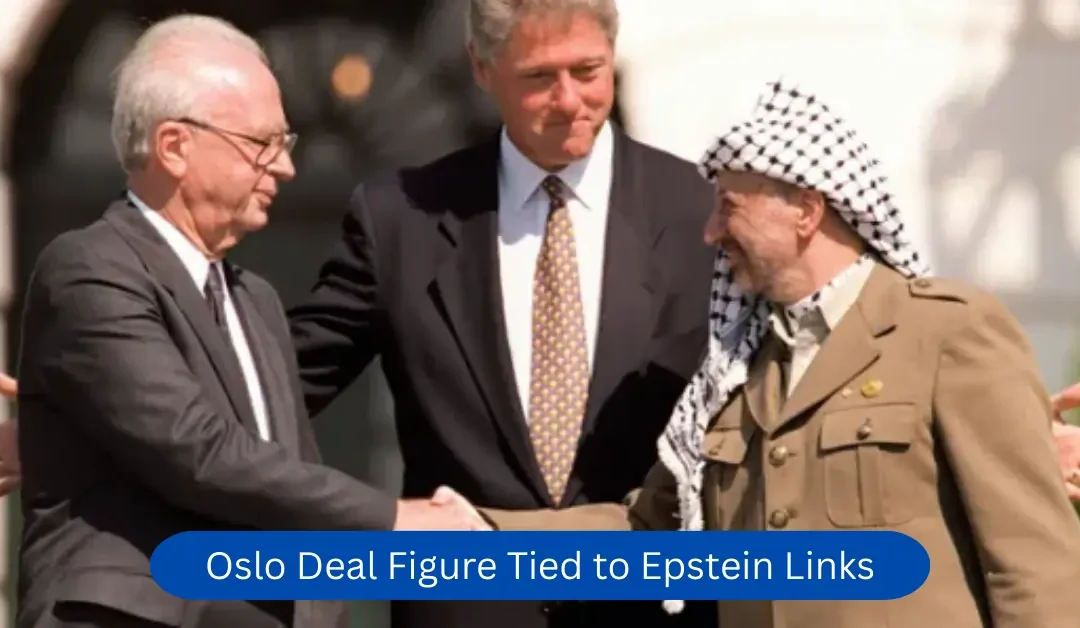
The Oslo Accords were once celebrated as a historic breakthrough. The famous handshake on the White House lawn in 1993 symbolized hope for peace in the Middle East. However, over the past three decades, the agreement has faced criticism for failing to deliver lasting results.
Israeli settlements in the West Bank expanded, tensions increased, and trust between the two sides weakened. Now, with these new allegations, the moral credibility of one of Oslo’s main architects is under serious scrutiny.
For Palestinians living under occupation, this scandal adds another layer of disappointment. For Israelis and international observers, it raises difficult questions about how peace agreements are negotiated and who truly benefits.


