
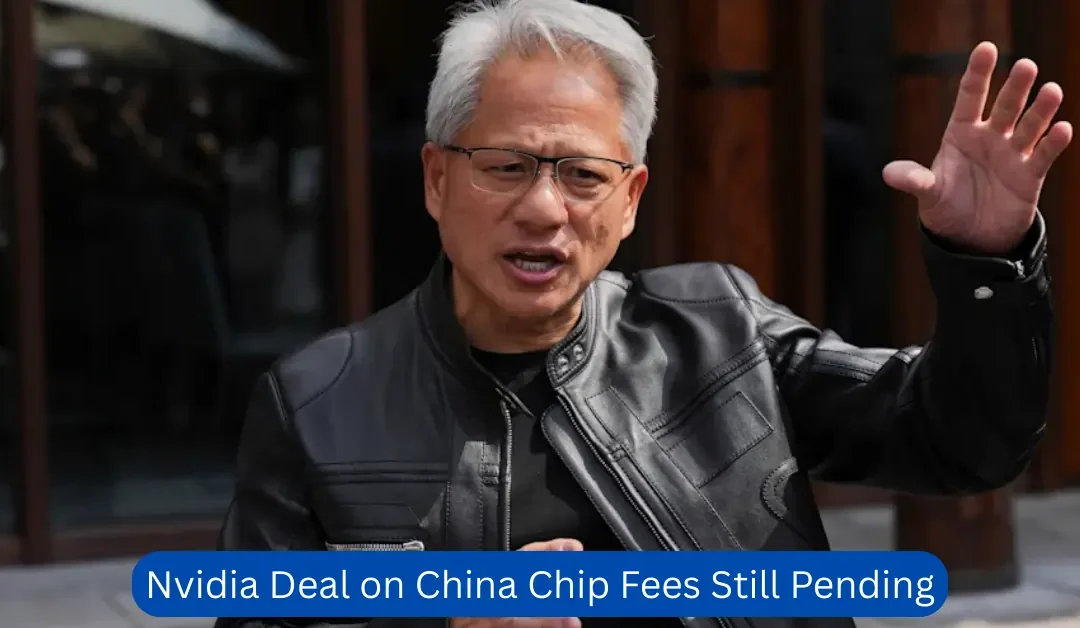
Nvidia Deal with China Chips Still Uncertain
Nvidia (NVDA) announced on Wednesday that its agreement with the US government regarding H20 AI chips for China is not yet finalized. Under the plan, Nvidia would give 15% of revenue from its H20 chip sales to the US government in return for export licenses. However, the US has not officially published any regulation confirming this requirement.
Colette Kress, Nvidia’s CFO, said during a call after the company’s second-quarter earnings report, “Officials expect 15% of revenue from licensed H20 sales, but no formal rule exists yet.”
This is Breaking News in the tech and AI world, showing how geopolitical tensions are affecting major AI chipmakers.
Background: Export Ban and Revenue Impact
In April, Nvidia faced a surprise ban on exporting H20 chips to China. This move caused a $2.5 billion loss in sales and $4.5 billion in unsold inventory for the first quarter.
Later, the Trump administration suggested it could issue export licenses for the chips if Nvidia shared 15% of its revenue from China sales. But this unprecedented deal raises legal questions, as the US Constitution prohibits export taxes. Nvidia warned in its SEC filing that such a requirement could lead to lawsuits, increase costs, and hurt its competitiveness.
Analysts and investors are closely watching the situation. Some worry that competitors not subject to similar rules could gain an advantage, affecting Nvidia’s market share.
Current Sales and Geopolitical Issues
Although a few Chinese customers have received licenses to buy lower-power Nvidia chips recently, no H20 chips have been sold yet under the new arrangement.
Kress explained, “We are still waiting for governments and companies to resolve geopolitical issues. Once that is done, we expect $2 billion to $5 billion in H20 revenue for the third quarter.”
China is Nvidia’s second-largest market after the US. In the second quarter, revenue from China fell sharply to $2.8 billion, down from $5.5 billion in the first quarter. For comparison, China has typically contributed about 15% of Nvidia’s revenue over the last ten quarters, but it dropped to only 5.9% this quarter.
Nvidia’s China Strategy and AI Growth
Despite the hurdles, Nvidia is planning new AI chips for China based on its latest Blackwell architecture. CEO Jensen Huang emphasized the potential of China’s AI market, estimating it to be worth $50 billion this year, with expected growth of around 50% annually.
Huang said, “The China market is the second-largest computing market in the world. We are working with the US administration to ensure American companies can serve it effectively.”
The company also paused some production of H20 chip components temporarily after reports of China ordering companies to stop purchases, highlighting the tense regulatory environment.
Analysts’ Perspective and Market Impact
Analysts note that even if direct H20 sales are restricted, Chinese companies may still acquire Nvidia chips indirectly through resellers in Asia. DA Davidson analyst Gil Luria estimates that up to 40% of Nvidia’s revenue could come this way.
Investors are cautious as Nvidia navigates these complex trade and political challenges. Nvidia stock dropped 3% after the earnings report, as revenue in its data center division slightly missed forecasts.
The ongoing uncertainty underscores the delicate balance between US-China relations, technology exports, and the rapidly growing AI market.
Looking Ahead: Opportunities and Challenges
Nvidia remains focused on expanding AI chip sales in China while managing US regulations and global trade policies. The company expects significant future growth if it can successfully introduce Blackwell AI chips to Chinese firms.
The situation remains a key story in Latest News, Breaking News, and Daily news highlights, showing how geopolitics directly affects the tech industry, AI innovation, and global business strategies.


