
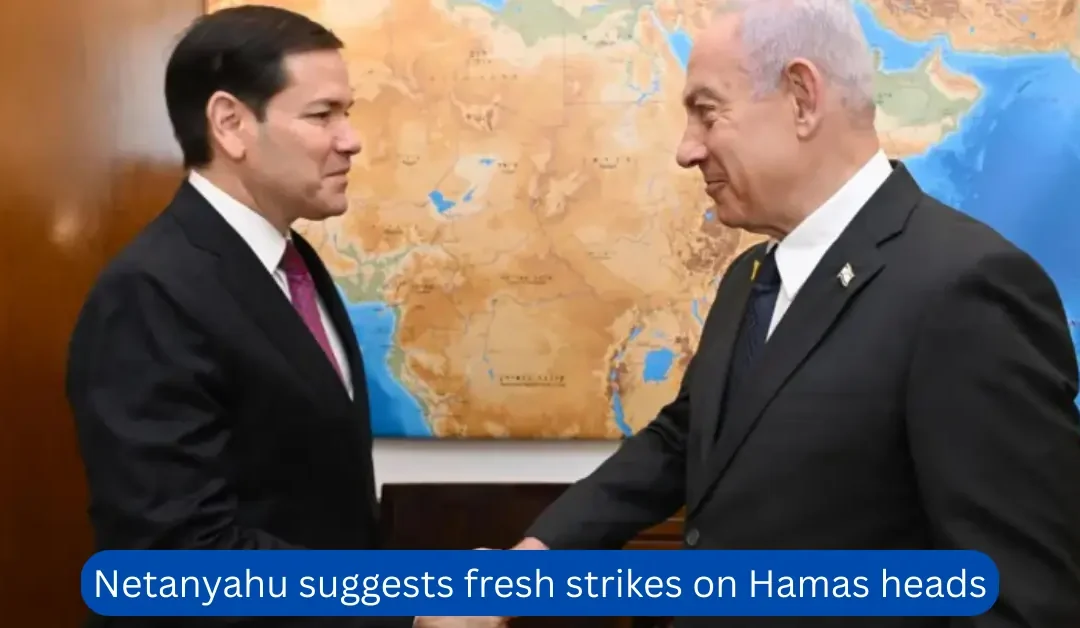
Netanyahu’s Warning After Qatar Attack
In the Latest News, Israeli Prime Minister Benjamin Netanyahu has warned that Hamas leaders are not safe anywhere. Speaking in Jerusalem, he said they will have no immunity “wherever they are.” His remarks came after Israel targeted Hamas leaders in Qatar, a close US ally.
- Netanyahu defended Israel’s right “to defend itself beyond its borders.”
- He made it clear Israel acted alone, saying firmly: “We did it on our own. Period.”
- Hamas reported six deaths in the strike, but its senior leaders survived.
This strong statement has become one of today’s Daily news highlights, raising fears of more conflict in the region.
Global Reaction and US Position
The strike in Qatar has drawn global criticism, including from US President Donald Trump. Qatar hosts a major American airbase and plays a key role in peace talks.
- Arab leaders are now holding a summit to back Qatar.
- Qatar’s prime minister called for an end to “double standards” and urged punishment for Israel.
- US Secretary of State Marco Rubio, standing with Netanyahu, said America’s ties with Gulf allies remain strong.
Despite criticism, Netanyahu insists Israel will keep defending itself. His words add tension at a time when the Breaking News focus is already on Gaza and the West Bank.
Military Moves in Gaza City
The Israeli military continues its operations in Gaza City, one of today’s most urgent Daily news highlights.
- Israel is demolishing homes and preparing for ground operations in western Gaza.
- The army has ordered people to move south. Around 250,000 Palestinians have already left.
- Many remain because they cannot afford to leave, or they feel the south is unsafe due to air strikes there too.
Reports also say some families tried to move south but returned because they had nowhere safe to stay.
Debate Over the West Bank and Palestinian Statehood
Alongside the Gaza crisis, there is rising debate over the West Bank. Israel’s government has approved new settlement projects that many believe will block the creation of a Palestinian state.
- The E1 settlement plan east of Jerusalem would split the West Bank into two parts.
- Finance Minister Bezalel Smotrich has called for annexing four-fifths of the West Bank.
- About 700,000 Israeli settlers now live in the occupied West Bank and East Jerusalem, alongside 3.3 million Palestinians.
International law says the settlements are illegal, but Israel continues expanding them. These decisions are shaping the future of the region.
What Comes Next at the UN
Next week, the United Nations General Assembly will meet. Several key US allies – including the UK, France, Canada, Australia, and Belgium – are expected to recognise a Palestinian state.
- This could spark new political battles inside Israel.
- Netanyahu’s government argues only annexation can stop a Palestinian state.
- At the same time, Netanyahu stresses the US-Israel alliance is “as durable as the stones in the Western Wall.”
Meanwhile, US Secretary of State Marco Rubio is visiting symbolic sites in Jerusalem, including the City of David archaeological park. Critics say projects like this are political and harm Palestinian residents.
Final Thought
These events are shaping global discussions on war, peace, and human rights. From Breaking News in Gaza to political fights in the West Bank, the world is watching closely. People are following updates not only on TV but also through WhatsApp groups, YouTube videos, Amazon news alerts, Weather reports in refugee areas, and even AI tools like ChatGPT for the Latest News analysis.
The story of Israel, Hamas, and Palestine remains one of today’s most important Daily news highlights.


