
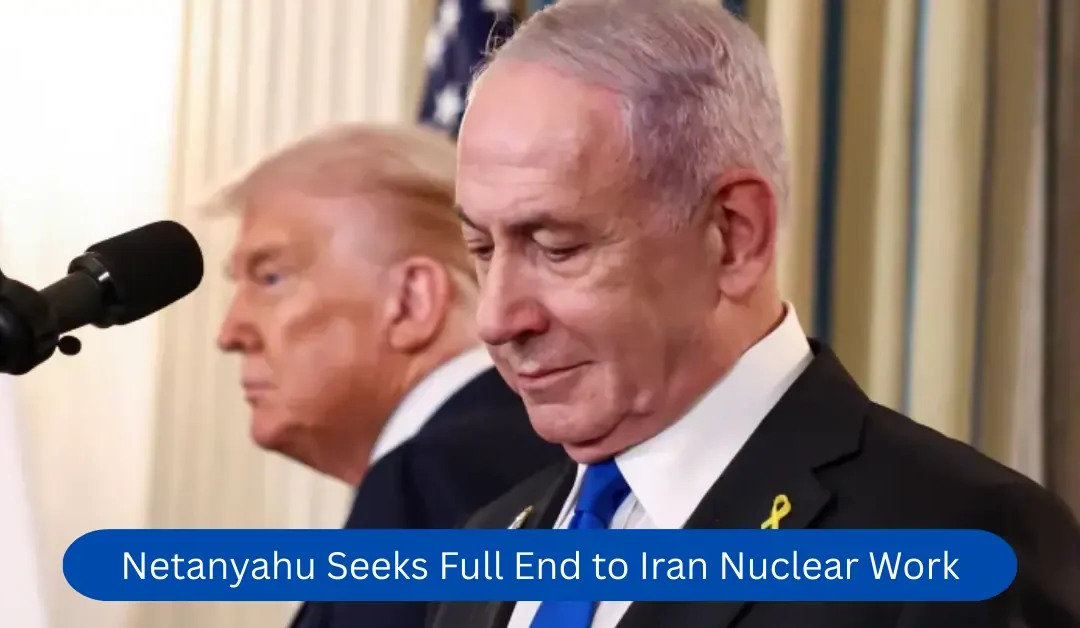
Israeli Prime Minister Benjamin Netanyahu has clearly said what he wants from any future nuclear deal between the United States and Iran. He believes that Iran’s entire nuclear program must be dismantled if there is to be a real agreement.
His comments came as Iran’s Foreign Minister Abbas Araghchi traveled to Geneva, Switzerland for a second round of nuclear talks with the United States. The new discussions are being closely watched around the world and are part of today’s Breaking News coverage.
What Netanyahu Is Demanding
Speaking at a major Jewish leaders’ conference in the US, Netanyahu said he had already shared his views with US President Donald Trump. According to him, any deal must include strict and clear conditions.
Here are his main demands:
1. All Enriched Uranium Must Leave Iran
Netanyahu said that Iran should not keep any enriched nuclear material. He believes all such material must be removed from the country.
2. No Nuclear Enrichment Capability
He said it is not enough to pause enrichment. Instead, the machines and infrastructure used to enrich uranium must be fully dismantled.
3. Ballistic Missile Issue Must Be Solved
Netanyahu also wants limits on Iran’s ballistic missile program. He believes missiles capable of carrying nuclear weapons are a serious threat.
4. Strong and Real Inspections
He called for strict inspections of Iran’s nuclear sites. He said inspections should be immediate and effective, without advance warning.
These strong conditions show that Israel wants a very tough agreement. Netanyahu has made it clear that he does not trust a weak deal.
Background: Why Talks Restarted
The United States and Iran recently restarted negotiations in Oman on February 6. Earlier talks had collapsed after Israel launched heavy airstrikes on Iran last year. That conflict lasted 12 days and increased tensions across the Middle East.
The US also joined those strikes, targeting three Iranian nuclear facilities. Since then, relations between the two countries have remained tense.
Now, both sides are trying diplomacy again. This effort is part of ongoing Latest News updates about global security and the Middle East crisis.
Trump and Netanyahu: Same Goal, Different Approach
Netanyahu met Trump last week in Washington, DC. It was their seventh meeting since Trump returned to office. After the meeting, Trump told reporters that no final decision had been made, but negotiations would continue.
According to reports, both leaders agree on one final goal: Iran should not be able to build nuclear weapons. However, they disagree on how to reach that goal.
- Netanyahu believes a strong deal may not be possible.
- Trump believes negotiations still have a chance to succeed.
Trump reportedly said, “Let’s give it a shot.” This shows he is open to trying diplomacy before taking stronger action.

Sanctions and Pressure on Iran
Reports suggest that the US and Israel may increase economic pressure on Iran. Much of Iran’s oil is sold to China, which buys more than 80% of its oil exports. Limiting these sales could hurt Iran’s economy.
Economic sanctions have long been used as a tool against Iran. The US believes financial pressure could force Iran to accept stricter nuclear limits.
This topic has appeared in many Daily news highlights, as energy markets and global politics are directly affected.
Iran’s Position
Iran has repeatedly said it does not want nuclear weapons. Iranian leaders say their nuclear program is for peaceful purposes like energy and research.
However, Iran is willing to discuss limits on its nuclear activities if economic sanctions are lifted. At the same time, Iran has refused to link its missile program to nuclear negotiations.
Iran has also warned that it will respond strongly to any attack. Officials have said they could target US military bases in the Middle East if conflict breaks out.
Rising Military Tensions
Diplomatic talks are happening alongside military moves. Recently, the US sent aircraft carriers to the Middle East. Trump said more forces would be ready “in case we don’t make a deal.”
He even suggested that a change in Iran’s government “might be the best thing” if negotiations fail. These comments have increased tensions.
Meanwhile, fear of a larger regional war is growing. Neighboring countries are watching closely. Many experts worry that one wrong move could lead to wider conflict.
Why This Matters Globally
This situation is important for several reasons:
- It affects global oil prices.
- It impacts Middle East stability.
- It could influence global security policies.
- It shapes US foreign policy during Trump’s presidency.
The outcome of these talks may decide whether the region moves toward peace or further conflict.
What Happens Next?
The second round of talks in Geneva will be crucial. If progress is made, negotiations could continue. If talks fail, tensions may rise even more.
For now, Netanyahu stands firm on his demands. Trump is willing to test diplomacy. Iran says it wants sanctions relief but will not give up certain programs.


