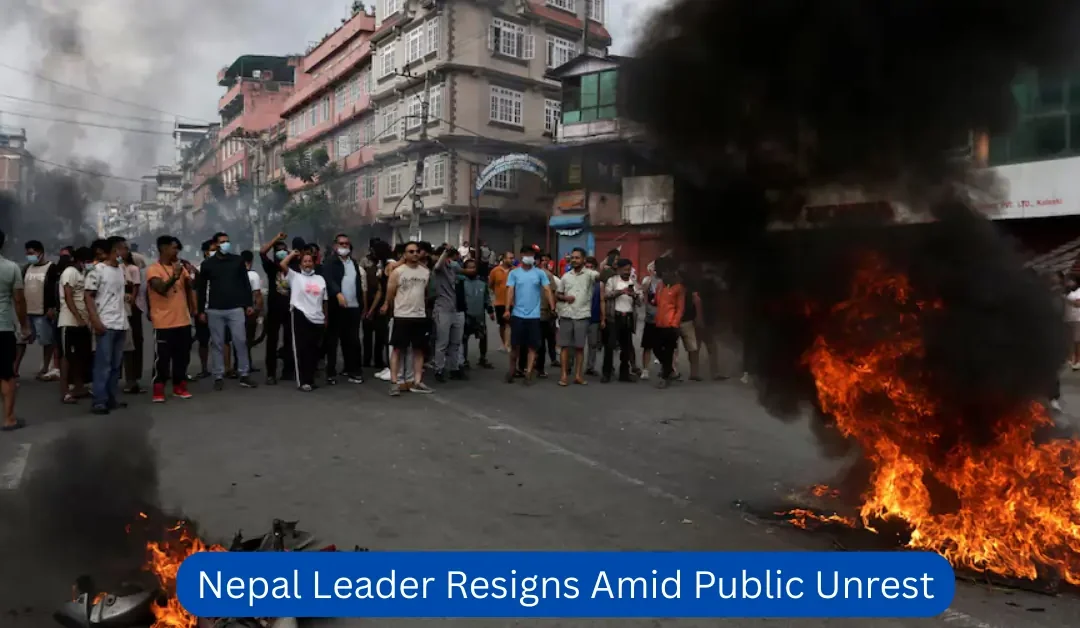
In a dramatic turn of events, Nepal’s Prime Minister K.P. Sharma Oli resigned on Tuesday after the country was shaken by huge anti-corruption protests. Demonstrators ignored an indefinite curfew and clashed with police, just a day after violent unrest left 19 people dead and over 100 injured. This Latest News marks one of the biggest political crises in Nepal in decades.
The protests began when Oli’s government imposed a social media ban, blocking popular platforms. Instead of controlling the unrest, the ban triggered even bigger demonstrations. Facing pressure and violence on the streets, the government lifted the ban, but it was too late to calm public anger.
From Social Media Ban to Street Violence
The situation escalated quickly:
- Police used tear gas and rubber bullets to stop protesters from entering parliament on Monday.
- Nineteen people lost their lives, and more than 100 were injured.
- By Tuesday, demonstrators returned in even larger numbers, forcing Oli to resign.
- Youth protesters celebrated outside parliament, chanting slogans and painting victory signs on its walls.
Many young Nepalis, often referred to as “Gen Z protesters”, are at the heart of this movement. They are angry at what they see as a corruption scandal inside the government and the lack of real opportunities in jobs, education, and economy.
Oli’s Resignation and Political Fallout
In his resignation letter to President Ramchandra Paudel, Oli wrote that he was stepping down “to help solve the problem and resolve it politically in accordance with the constitution.”
- Oli, 73, had been sworn in for his fourth term as prime minister just last year in July.
- Two cabinet ministers also resigned earlier this week, saying they could not continue “on moral grounds.”
- The president’s office confirmed that Oli’s resignation had been accepted, and discussions have begun to find a new leader.
Even though Oli tried to call for peace and dialogue, he never directly addressed the protesters’ main demand: action against corruption. This silence fueled even more anger on the streets.
Violence in Kathmandu: Parliament and PM’s Home Attacked
The protests turned increasingly violent in Kathmandu and surrounding areas.
- Parliament House: Protesters stormed the compound, smashed windows, broke furniture, and even set parts of the building on fire.
- Oli’s Private Residence: Witnesses said the prime minister’s home was attacked and set ablaze while security forces stood back, appearing outnumbered.
- Politicians Targeted: Some politicians’ homes were also burned. Local media reported that ministers were evacuated by military helicopters for safety.
- High-Profile Attacks: Videos circulating online showed protesters attacking former Prime Minister Sher Bahadur Deuba and his wife, though the footage has not been verified.
The Singha Durbar area, home to Nepal’s major ministries, was also badly damaged, with flames and smoke rising from government offices.
Airport Closed and Protests Spread Nationwide
Another major development was the closure of Kathmandu Airport, Nepal’s main international gateway. Authorities said smoke from burning tires and buildings nearby made it unsafe for flights to land or take off.
- This shutdown left many passengers stranded, disrupting international travel.
- Flights between Dubai and Nepal, already affected earlier this week, faced further cancellations.
- Organizers of the movement stressed that this was a youth-driven protest and described it as a fight against corruption, unemployment, and unfair government policies.
Protests also spread to other cities across Nepal. Demonstrators set tires on fire, threw stones at riot police, and recorded videos of the clashes to share online once the social media ban was lifted.
Youth Anger and Nepal’s Future
The ongoing unrest is the worst in decades for Nepal, a country still struggling with political stability since its monarchy was abolished in 2008.
- Many young Nepalis say they are frustrated by the luxurious lifestyles of corrupt politicians and their families.
- The social media ban was seen as an attempt to silence free speech, which only fueled the movement further.
- For years, Nepal has faced economic challenges as it tries to balance its position between India and China, two powerful neighbors.
Analysts believe the protests reflect a deeper frustration among Gen Z citizens who feel ignored by the ruling class. They want stronger action against corruption and more opportunities for jobs, education, and innovation.
Nepal at a Crossroads
This Breaking News about Oli’s resignation has brought temporary celebration on the streets, but Nepal is now facing new uncertainty. The search for a new leader will be crucial for stability, yet protesters have made it clear they will not stop until real changes are made.
The Daily news highlights from Nepal show a country at a crossroads: caught between old political struggles and a new generation demanding transparency, fairness, and opportunities. Whether Nepal’s leaders can meet these expectations will decide the nation’s future in the coming months.


