
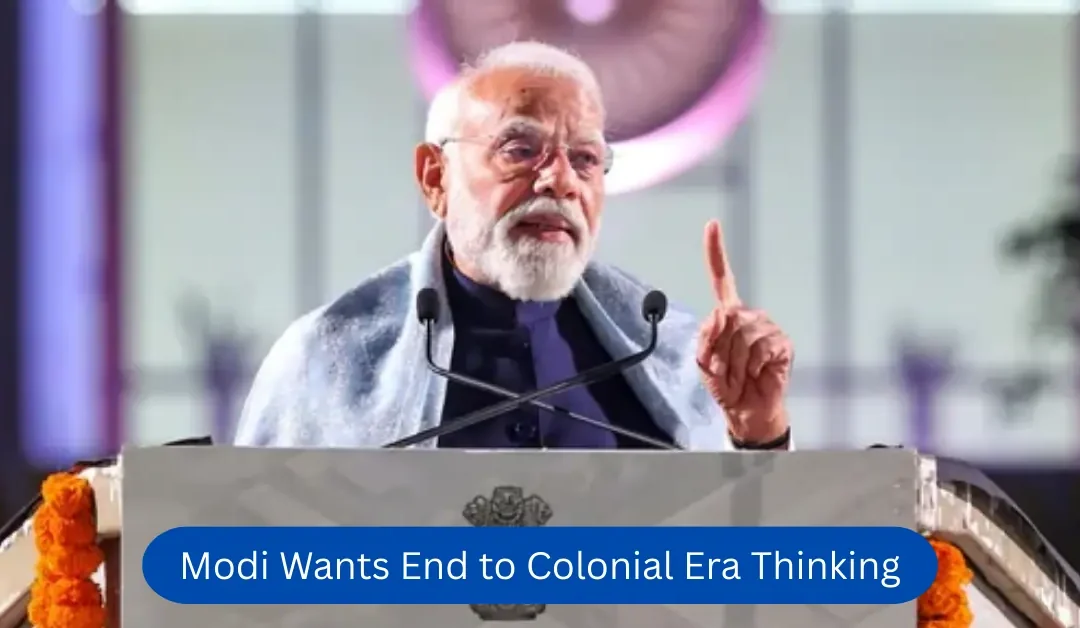
The Prime Minister explained that the newly built complexes are more than simple government offices. He said they symbolize the beginning of a fresh phase in India’s path toward becoming a fully developed country by 2047, a vision often described as “Viksit Bharat.” He added that the main aim behind these projects is to build a governance system that puts citizens at the center and works directly for their welfare and progress.
A Step Towards Viksit Bharat
Modi said the opening of Seva Teerth and Kartavya Bhavan 1 and 2 is an important milestone. He described them as symbols of modern India’s growth and confidence.
He highlighted a few key points:
- Citizen-Centric Governance: The new offices are designed to make governance more efficient and accessible to people.
- Modern Infrastructure: With better technology and improved facilities, officials can work more effectively.
- Long-Term Vision: The buildings reflect the country’s dream of becoming a developed nation by 2047.
The Prime Minister said that as India completes the first quarter of the 21st century, it is important that progress is visible not only in policies but also in workplaces and infrastructure.
Moving Beyond Colonial Symbols
In his speech, Modi spoke about how many important decisions after Independence were made in the historic North Block and South Block buildings. These structures were originally built during British rule and were meant to show the power of the British Empire.
He pointed out that Raisina Hill was chosen for those buildings so they would stand above everything else, symbolizing authority and control. In contrast, the new Seva Teerth complex is built in a way that feels more connected to the people.
According to him:
- The old buildings reflected a colonial mindset.
- The new buildings represent service and responsibility.
- Decisions taken there will focus on the hopes of 140 crore Indians, not the wishes of any ruler.
He stressed that India must remove every trace of colonial thinking as it moves forward.
Big Policy Decisions Announced
The inauguration day was not only about buildings. Important policy decisions were also announced, which became part of the day’s Daily news highlights.
Some major announcements included:
- Lakhpati Didi Scheme Expansion: The government doubled the target to reach 60 million women. This scheme helps women in Self-Help Groups earn at least ₹1 lakh per year.
- Agriculture Infrastructure Fund Boost: The target was increased to ₹2 lakh crore to support farmers and improve agricultural facilities.
- Startup India Fund: A new ₹10,000 crore fund was approved to support startups and young entrepreneurs.
These steps, the Prime Minister said, are meant to strengthen women empowerment, farmer income, and innovation in the country.

Reducing Costs and Improving Efficiency
Another important issue raised by Modi was the scattered nature of government offices in Delhi. He said that even decades after Independence, many ministries were functioning from more than 50 different locations.
This led to several problems:
- High rental costs of around ₹1,500 crore every year.
- Loss of time due to travel between offices.
- Limited space and outdated facilities in old buildings.
The new central secretariat aims to solve these problems. By bringing departments together in one place, the government expects to save money and improve coordination among ministries.
Changing Names, Changing Mindset
The Prime Minister also spoke about the symbolic changes made in recent years. For example, Race Course Road was renamed Lok Kalyan Marg. Rajpath was renamed Kartavya Path. He said these changes are not just about names but about changing attitudes.
He mentioned the creation of the National War Memorial and the Police Memorial as steps to honor soldiers and police personnel who sacrificed their lives. According to him, independent India should have its own identity and not continue carrying symbols of colonial rule.
He said that after 2014, the government decided to actively work toward removing colonial influences from public spaces and institutions.
A Message for the Future
Throughout his speech, Modi repeated that India’s growth story must be built on confidence and self-respect. He said that the places from where the country is governed should inspire both officials and citizens.
He also pointed out that old buildings were facing problems due to age, space shortages, and difficulty in adapting to new technology. With rapid digital growth and modern tools, the government needs infrastructure that matches today’s needs.
The Prime Minister concluded by saying that the new Seva Teerth and Kartavya Bhavans are not just construction projects. They are symbols of a new mindset—one that focuses on service, efficiency, and national pride.


