
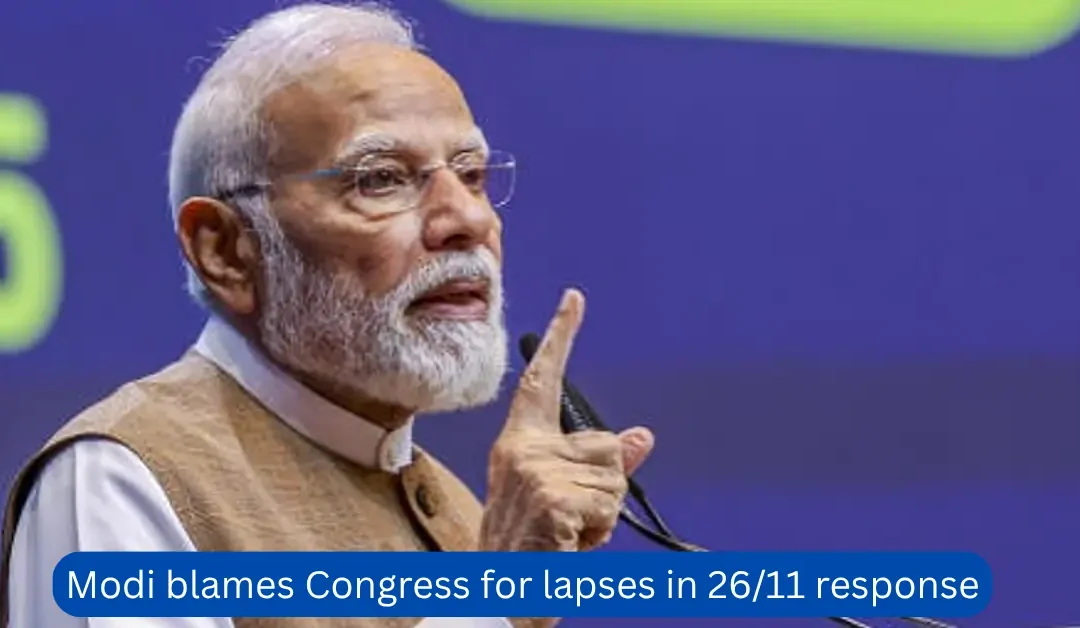
In the Latest News, Prime Minister Narendra Modi sharply criticized the Congress party over how it handled the 26/11 Mumbai terror attacks. Speaking in Mumbai, he invoked remarks by former Union minister P. Chidambaram, claiming that when Congress was in power, it weakened India’s fight against terrorism. This statement immediately became part of the Daily news highlights across news portals and social media trends.
Modi was in Mumbai to inaugurate several big projects — the first phase of the Navi Mumbai International Airport, the Aqua Line of the Mumbai metro, and others. While doing so, he turned the spotlight onto Congress and its actions (or inaction) after the 2008 terror attack.
What Modi Claimed & the Context
Here are the main points Modi made:
- He said the Congress-led UPA government succumbed to international pressure and decided not to retaliate against Pakistan after 26/11.
- He referred specifically to Chidambaram, who had said that India was ready to strike back, but didn’t, because of global pressure.
- Modi asked Congress to clarify: “Which country or group prevented our defense forces from responding?”
- He stressed that Mumbai is a major financial and vibrant city, so it was a natural target for terrorists — and the past government’s weak response made things worse.
This attack by Modi is part of a larger political battle — using past decisions and statements to challenge the credibility and strength of the Congress in national security.
Key Background: Chidambaram’s Remark & Debate
To understand why the issue is rising now, we need a bit of background:
- Chidambaram said that after the 2008 Mumbai attacks, the country was prepared to retaliate. But the UPA government decided against it due to pressure from foreign nations and diplomatic constraints.
- He claimed that “the whole world descended upon Delhi to tell us ‘don’t start a war’” and that U.S. Secretary of State Condoleezza Rice visited and asked India not to react.
- Congress and its leaders, including Manish Tewari, have defended the earlier government’s decisions, saying that military action was considered but then diplomatic solutions were chosen after weighing all options.
- Some Congress voices say Chidambaram was misquoted or taken out of context, and that the media is fueling online outrage over it.
Why This Matters — Beyond Politics
This issue has several layers, and they matter to a wide audience. Key things to watch:
- Credibility on national security — For any government, how it handles terror links deeply with public trust.
- Legacy battles — Parties often use past decisions to attack opponents. Modi’s criticism is part of that.
- Media and viral impact — Clips of Modi’s speech, Chidambaram’s quotes, and social media commentary can make this a viral video moment, influencing public perception.
- Diplomatic constraints — Even when countries want to respond to terrorism, international relations, alliances, and global pressure play a strong role.
What to Expect Next
Here are some likely developments in the coming days:
- Congress may issue a formal explanation or rebuttal about Chidambaram’s remarks.
- Debates on media responsibility — Did the media misquote or exaggerate the remarks? Congress may push that line.
- Public & social media reaction will likely push this story into news portals and trend across platforms.
- Political fallout — This becomes another lever for Modi and BJP to question Congress’s past performance on security.
- Historical reassessments — Analysts and historians will dig into the events of 2008, what options were available then, and whether decisions then were justified.
This episode is now a Breaking News story—one that mixes politics, history, security, and public perception. It will be widely covered on news portals and discussed in social media trends, commentaries, and even tech news outlets (because of how fast this spreads online).


