
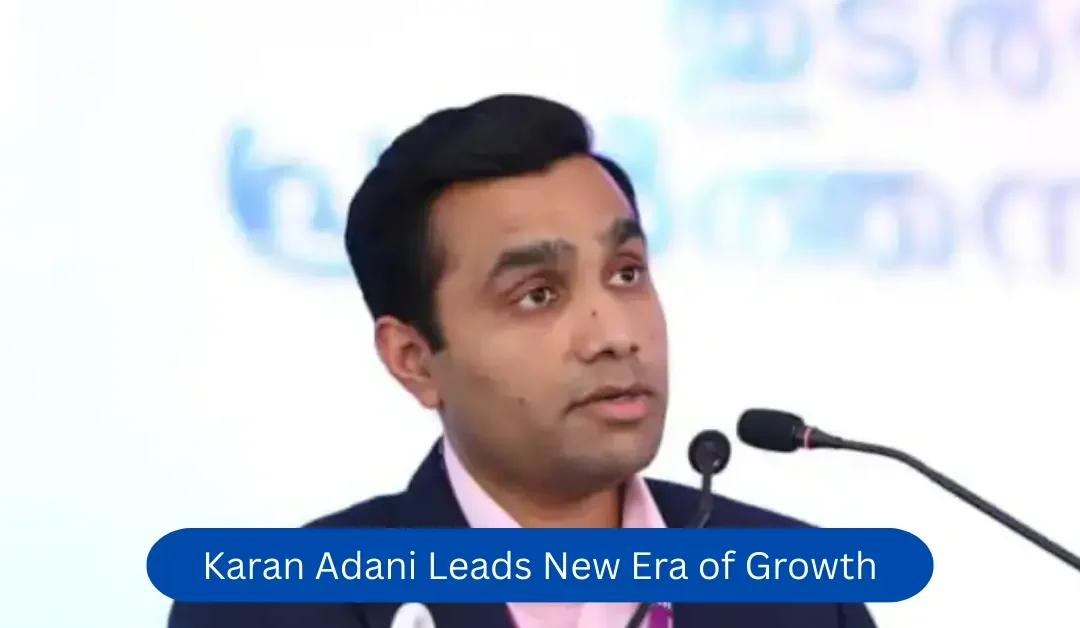
In the Latest News from New Delhi, Karan Adani spoke openly about how the Adani Group is planning its next phase of growth. He shared his thoughts during a special event held to celebrate the platinum jubilee of All India Management Association (AIMA). The session became one of the Daily news highlights, as he explained how the group is managing rapid expansion while focusing on national priorities.
Karan Adani, Managing Director of Adani Ports and Special Economic Zone and Director at Adani Cement, said the company’s investments are carefully planned. He made it clear that the group wants to support India’s long-term development while also improving its internal systems. His comments quickly turned into Breaking News in business circles.
Below are the key points he discussed:
1. Focus on Core Sectors: Energy, Logistics and Materials
Karan Adani said the group’s investments are built around three main pillars:
- Energy infrastructure
- Logistics and transport systems
- Core materials needed for national growth
He explained that energy remains a top priority. This includes city gas distribution, power transmission lines, and renewable energy projects. The company has also shown interest in digital infrastructure like data centres, which are becoming more important in the era of Artificial Intelligence and digital transformation.
He reminded the audience that the group recently announced a massive $100 billion investment plan to build renewable energy-powered infrastructure by 2035. This move supports India’s clean energy goals and also prepares the company for the future of AI-driven industries.
With India pushing for self-reliance and modern infrastructure, these investments are closely linked to the country’s economic roadmap.
2. Defence and Aviation Ecosystem
Another major topic in this Latest News discussion was defence manufacturing. Karan Adani said that indigenisation, or building products within India, is a national priority.
He highlighted maintenance, repair, and overhaul (MRO) services as a strong opportunity. He also mentioned a recent partnership with Embraer, which strengthens the group’s aviation presence.
According to him, India can become part of global supply chains by combining domestic manufacturing with international partnerships. This will not only boost defence capabilities but also create jobs and bring advanced technology into the country.
He stressed that building a strong aviation and defence ecosystem is not just about profits. It is about long-term national capability.
3. Managing Rapid Expansion and Governance
As the Adani Group grows, it also faces challenges. Karan Adani admitted that rapid expansion has added more management layers, which sometimes slow down decision-making.
He said one of the company’s goals now is to:
- Reduce structural complexity
- Improve speed in decision-making
- Maintain scalability as the group grows
Governance and credibility were also discussed during the event. After facing regulatory scrutiny and intense media attention in recent times, the group understands the importance of transparency.
Karan Adani said strong operating fundamentals are the backbone of resilience. He added that communication plays a key role in global markets. In today’s world, managing the narrative is as important as managing operations.
He described infrastructure assets like ports and airports as structural strengths because they generate recurring revenue. However, he admitted that concentration risks existed earlier, and the group is now working towards better diversification and institutional systems.
4. People, AI and Organisational Change
A big part of the Daily news highlights from the event was about workforce transformation.
Karan Adani said the average employee age in the group is currently 38, and the company wants to bring it down. A younger workforce, he believes, will help accelerate AI adoption and digital innovation.
Artificial Intelligence is not just a buzzword. It is becoming central to infrastructure management, logistics tracking, and operational efficiency. The group’s long-term investments are designed to support this AI-driven future.
He also shared some positive social changes inside the company:
- Female workforce participation has increased from 2% to 15%.
- Around 80% of leadership roles are filled by internal talent.
- Employees are encouraged to move across ports, airports, cement, and mining businesses.
This internal mobility helps build experienced leaders who understand multiple sectors.

5. Sustainability and Green Transition
On environmental issues, Karan Adani rejected the idea that sustainability reduces profits. He said green initiatives can go hand in hand with financial growth.
For example, port operations are shifting truck fleets from diesel to greener fuel options this year. Such steps reduce emissions and improve long-term efficiency.
With climate change and renewable energy dominating global conversations, these moves are important for both reputation and responsibility. Sustainability is no longer optional for large corporations; it is a necessity.
6. Formula One and Infrastructure Ambitions
In an interesting part of the conversation, Karan Adani spoke about reviving Formula One racing in India. After acquiring assets linked to the Buddh International Circuit in Greater Noida, the group is exploring possibilities.
He said that if Formula One returns, it should meet global standards and showcase India’s infrastructure strength. Hosting such international events could boost tourism, global visibility, and investor confidence.
Personal Reflection and Leadership Style
Karan Adani also shared a personal story from his early career. He said he worked on the ground at Mundra Port without special treatment. That experience shaped his operational mindset more than classroom education.
The conversation was moderated by Sunil Kant Munjal, Chairman of Hero Enterprise and former President of AIMA. The session offered rare insights into the thinking of one of India’s leading business families.


