
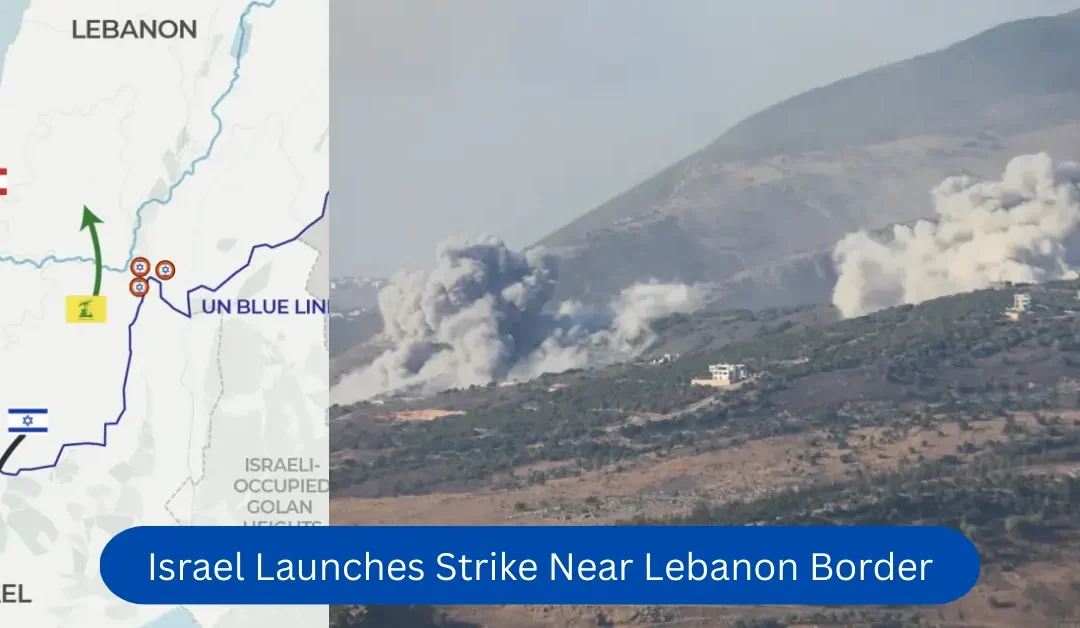
In major Breaking News from the Middle East, fresh Israeli air strikes have hit areas in southern Lebanon, raising concerns that the fragile ceasefire with Hezbollah is once again under serious pressure. The Israeli military says it is targeting Hezbollah sites, but local media and residents report that civilian areas and infrastructure are also being affected.
This situation is now part of the Latest News cycle across global media, and it continues to dominate Daily news highlights as tensions grow along the Israel-Lebanon border.
1. Fresh Air Strikes in Southern Lebanon
According to reports from the ground, Israeli air raids struck Blat and Wadi Barghouti in the Iqlim al-Tuffah region. Warplanes were seen flying low over forests and hills, and multiple explosions were heard.
The Israeli army said:
- The attacks were aimed at Hezbollah infrastructure.
- The targets were linked to military activity.
- Operations were part of ongoing security measures.
However, local sources said that some of the areas hit were open land and civilian surroundings. So far, there have been no confirmed casualties from these specific strikes, but fear is spreading among residents.
Lebanese broadcaster Al-Mayadeen reported that the heights of the al-Tuffah region were struck several times. Meanwhile, Hezbollah’s Al-Manar TV said Israeli drones dropped explosives in the town of Markaba for the third time.
The repeated air activity has created panic among families living in nearby villages.
2. Previous Attacks and Civilian Casualties
The latest strikes come just days after deadly attacks in Lebanon’s Bekaa Valley. On Thursday, one person was killed and 29 others were injured in Israeli air raids in that region.
Lebanon’s Health Ministry confirmed that a 16-year-old Syrian boy named Hussein Mohsen al-Khalaf was killed in a strike near Baalbek. His death has drawn strong reactions across Lebanon, especially because he was a minor.
Over the past week:
- At least 12 people were killed in separate Israeli strikes.
- Areas like Ein el-Hilweh refugee camp near Sidon were targeted.
- Israel claimed it was hitting Hezbollah and Hamas command centers.
These incidents have added to rising anger among Lebanese citizens who say civilian lives are being put at risk.
3. Ceasefire Under Strain
In November 2024, Israel and Hezbollah agreed to a ceasefire after more than a year of fighting. The agreement was meant to reduce violence and bring stability to the region.
However, since that agreement:
- More than 300 people have reportedly been killed.
- At least 127 of them were civilians, according to United Nations figures.
- Near-daily air raids have continued in parts of southern Lebanon.
The war between Israel and Lebanon began in October 2023 and intensified into a full-scale conflict in September 2024. During that period, over 4,000 people were killed and around 17,000 were injured in Lebanon.
Now, many fear that the ceasefire is close to collapsing.

4. Disarmament Dispute Between Lebanon and Hezbollah
Another major issue is the question of disarming Hezbollah fighters south of the Litani River.
The Lebanese government says:
- It has nearly completed its first phase of ceasefire commitments.
- It plans to finish the second phase within four months.
- The goal is to reduce weapons presence near the border.
However, Hezbollah strongly disagrees with parts of this plan. The group argues that disarmament only applies to areas south of the Litani River and not beyond. It has also stated that it will not give up its weapons while Israel continues to carry out air strikes and occupy certain border areas.
This disagreement has created political tension inside Lebanon as well.
5. Ongoing Occupation and Reconstruction Delays
Another concern is that Israel continues to occupy parts of southern Lebanon. Because of this:
- Many displaced families cannot return to their homes.
- Border villages remain damaged and unrepaired.
- Reconstruction efforts are moving slowly.
Local leaders say rebuilding homes and infrastructure is difficult while air strikes and military activity continue.
Residents in affected villages say they are living in fear. Some families have already moved to safer areas, worried that violence may increase again.
6. Regional Impact and Global Attention
The conflict between Israel and Hezbollah is not just a local issue. It affects the entire Middle East. Any escalation could draw in other regional powers and create a wider crisis.
Global media outlets are closely tracking:
- Military developments on both sides.
- Statements from Israeli and Lebanese officials.
- Possible diplomatic efforts to save the ceasefire.
This situation remains one of the top Latest News stories internationally, especially as tensions across the region continue to rise.
Experts warn that even small incidents can quickly turn into larger clashes if communication breaks down.


