
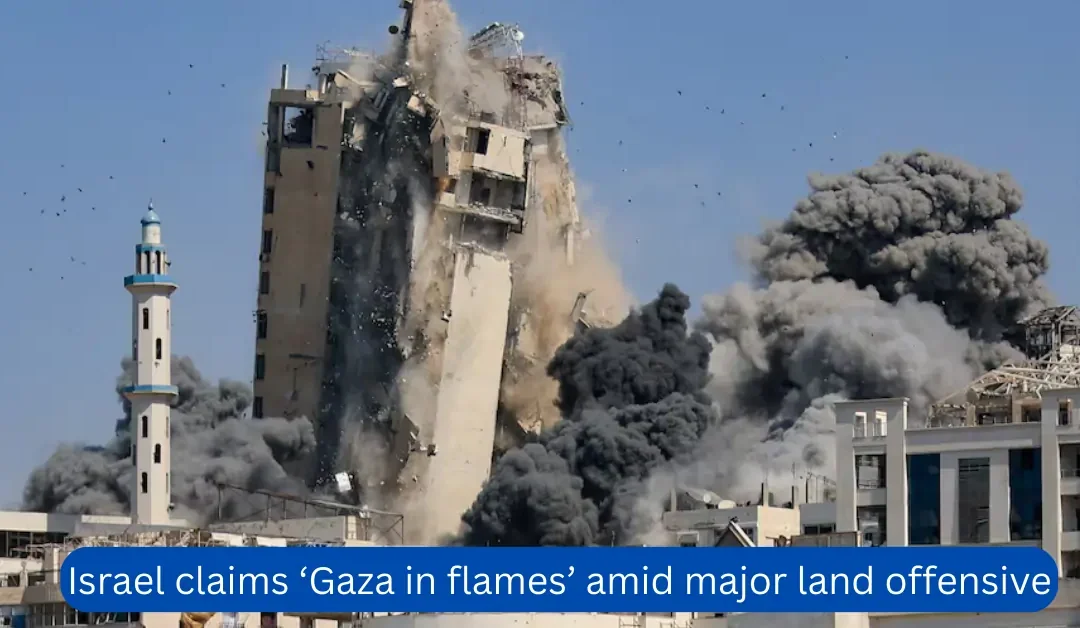
Latest News from Gaza City: Israel has started the ground attack it promised many times. They say “Gaza is burning.” Many Palestinians say this is the strongest shelling they’ve seen in the two years of war. The Israeli Defence Forces (IDF) say their soldiers are entering the city and that more troops will come in the next days. They believe up to 3,000 Hamas fighters are still in the city.
What Israel Says and Their Reasons
- Defence Minister Israel Katz posted on X: “The IDF strikes with an iron fist at the terrorist infrastructure.” He said they are fighting to free hostages and defeat Hamas.
- The Israeli government pushed ahead even though European leaders threatened sanctions. Some of their own generals warned it might be a big mistake. But the USA supported Israel’s move; Secretary of State Marco Rubio gave what looked like approval.
Impact on Civilians: Fear, Death, and Displacement
People in Gaza are suffering a lot, as told in the Daily news highlights:
- Health officials report at least 40 killed so far—mostly in Gaza City. Tanks and air strikes are destroying buildings.
- Under the rubble of destroyed homes, people are stuck. Parents are trying to rescue children from broken concrete blocks, even in the night.
- Thousands are fleeing the city. Some walk, others use donkey carts, rickshaws, or old trucks. They move south or west—away from the violence.
- Many say the attacks are not only physical—they are destroying their memories: homes, schools, mosques, and roads.
International Reactions & Global Pressure
- A United Nations Commission found that leaders in Israel, including Prime Minister Netanyahu, may have committed genocide. Israel called the claim false and scandalous.
- The EU is planning new sanctions. Britain called the assaults “reckless and appalling.” France and the UK might soon recognize Palestine’s independence as a response.
- The U.S. says it prefers a diplomatic solution but warns that might not be possible.
Crises & Risks: What May Get Worse
Here are serious risks people are warning about:
- Starvation and malnutrition
- Gaza’s health ministry says people are now dying of hunger and lack of medicines. Over 400 deaths from hunger have been recorded.
- Aid is lacking; food and clean water are falling short for many.
- Hostage danger and military concerns
- Some top Israeli officers believe the attack could trap soldiers or risk hostage lives.
- Calls for a ceasefire are growing from families of hostages and civilians alike.
- Forced displacement & humanitarian disaster
- Almost 350,000 people have left Gaza City; many more have no safe place to go.
- Camps further south may become overcrowded. Sanitation, shelter, and healthcare are scarce.
Why It Matters: Connecting to Wider Trends
This event is part of bigger global patterns. It links to AI in how information spreads, to Climate change in how conflict worsens disaster, to Wildfires as another example of destruction, to YouTube and social media where videos of crisis go viral, to ChatGPT and other platforms where people try to understand what is happening.
- People worldwide follow what’s happening through viral videos on YouTube and social media.
- AI platforms like ChatGPT are being used to update people, fact check claims, and help activists or journalists interpret events.
- Climate change makes conflicts worse by increasing scarcity of water and crops; under harsh conditions, civilians suffer more when regions are already stressed.
Final Thoughts: Urgent Need for Action
In this Breaking News moment, many are calling for a ceasefire. Aid groups demand access, the UN warns of a man-made famine, and families want the safe return of hostages.
This is more than just war. It is a humanitarian crisis. For the world watching, for the millions affected, the decisions made in the next hours and days will be remembered. If there is going to be peace, then urgent help, dialogue, and protection of civilians must come first.


