
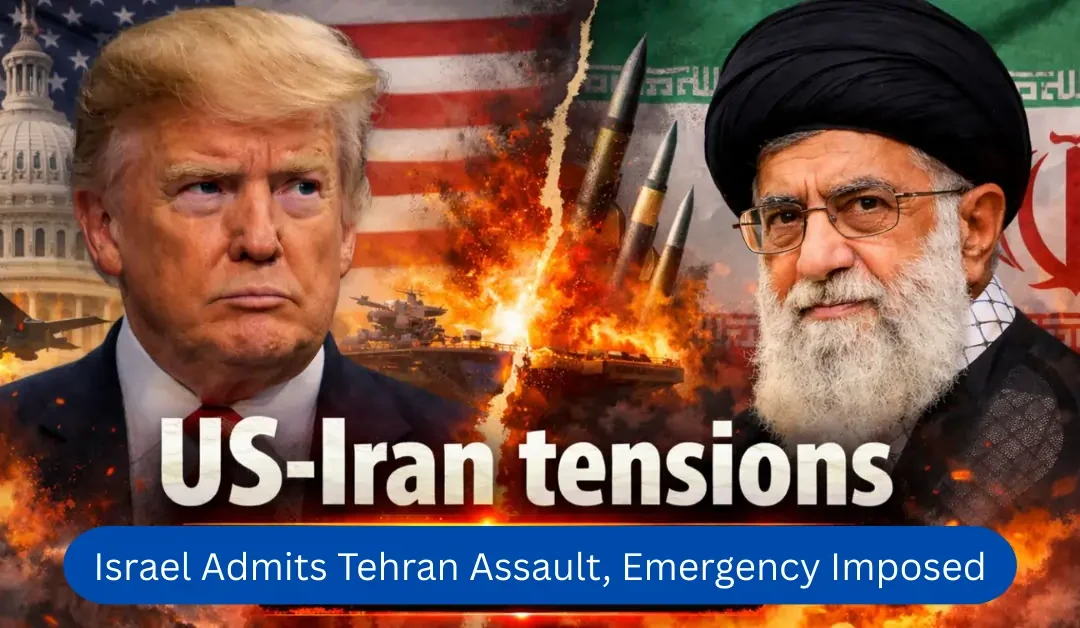
In major Breaking News from the Middle East, fresh tensions have erupted after Israel carried out a daylight strike in Tehran, the capital of Iran. Thick smoke was seen rising from the city’s downtown area, and witnesses reported hearing multiple explosions. The situation is developing quickly and has become one of the biggest Latest News stories around the world.
At the same time, talks between the United States and Iran over the nuclear issue are continuing, though without a final agreement so far. The crisis has raised fears of a larger regional conflict.
1. What Happened in Tehran?
On Saturday, Israel launched what officials described as a military operation in Tehran. Smoke was seen near an area close to the offices of Iran’s Supreme Leader, Ali Khamenei. Iranian state television confirmed that an explosion had taken place but did not give full details.
It is still unclear:
- What exact building or facility was targeted
- Whether senior Iranian leaders were present
- How much damage was caused
Witnesses said they heard loud blasts across parts of the capital. Soon after the attack, Iran closed its airspace as a safety measure. Flights were delayed or canceled.
Meanwhile, sirens sounded across Israel. Israeli authorities warned citizens about the “possibility of missiles” being launched toward their country. Israel’s Defense Minister Israel Katz declared a state of emergency, asking people to stay alert.
This sudden escalation has increased fears of a direct war between the two countries.
2. US-Iran Nuclear Talks: No Final Deal Yet
While military action grabbed headlines, diplomatic talks are still ongoing. US President Donald Trump said he is not fully satisfied with how negotiations are progressing but is still giving diplomacy a chance.
Key points about the talks:
- Meetings between US and Iranian officials were held in Geneva.
- Oman’s Foreign Minister, Badr al-Busaidi, acted as a mediator.
- Both sides agreed to continue technical discussions next week.
Iran says it has the right to enrich uranium for peaceful energy purposes. The US, however, wants strict limits to make sure Iran does not develop nuclear weapons.
Talks are expected to continue in Vienna soon. The head of the International Atomic Energy Agency (IAEA), Rafael Grossi, also met US officials to discuss nuclear inspections. There are concerns that international inspectors have not been given full access to some Iranian sites.
Despite tensions, mediators remain cautiously hopeful that an agreement is still possible.
3. Rising Military Presence in the Region
Even as diplomacy continues, military movements are increasing in the Middle East. The United States has strengthened its presence in the region as a precaution.
US Secretary of State Marco Rubio is expected to visit Israel soon. The goal of the visit is to discuss security concerns and regional stability.
Other important developments include:
- Several embassies advising their citizens to leave high-risk areas.
- Reports of naval activity near the Strait of Hormuz, a key oil shipping route.
- Emergency preparedness steps taken by both Israel and Iran.
President Trump said he prefers peace but admitted that military conflict always carries risks. When asked about oil prices, he said he is more concerned about saving lives than about market impact.
Still, global markets are watching closely. Any disruption in the region could affect oil supply and the world economy.

4. Political Reactions and Strong Statements
In the United States, political leaders have reacted strongly. President Trump said America faces a “very big decision” regarding Iran. He stressed that any agreement must be meaningful and not weak.
Meanwhile, Senator Jim Risch praised the decision to label Iran as the first “State Sponsor of Wrongful Detention.” This refers to cases where American citizens have been detained in Iran.
Iran has not yet issued a detailed military response publicly, but officials have warned that any attack will not go unanswered.
The situation remains tense, and the world is closely monitoring each statement from both sides.
5. What Could Happen Next?
Experts say there are several possible outcomes:
- Diplomacy could succeed, reducing tensions.
- Limited strikes could continue without full war.
- A larger regional conflict could break out if retaliation escalates.
Much depends on upcoming talks in Vienna and how both governments react in the coming days.
For now, the region remains on high alert. Airspace closures, military warnings, and emergency declarations show how serious the situation has become.


