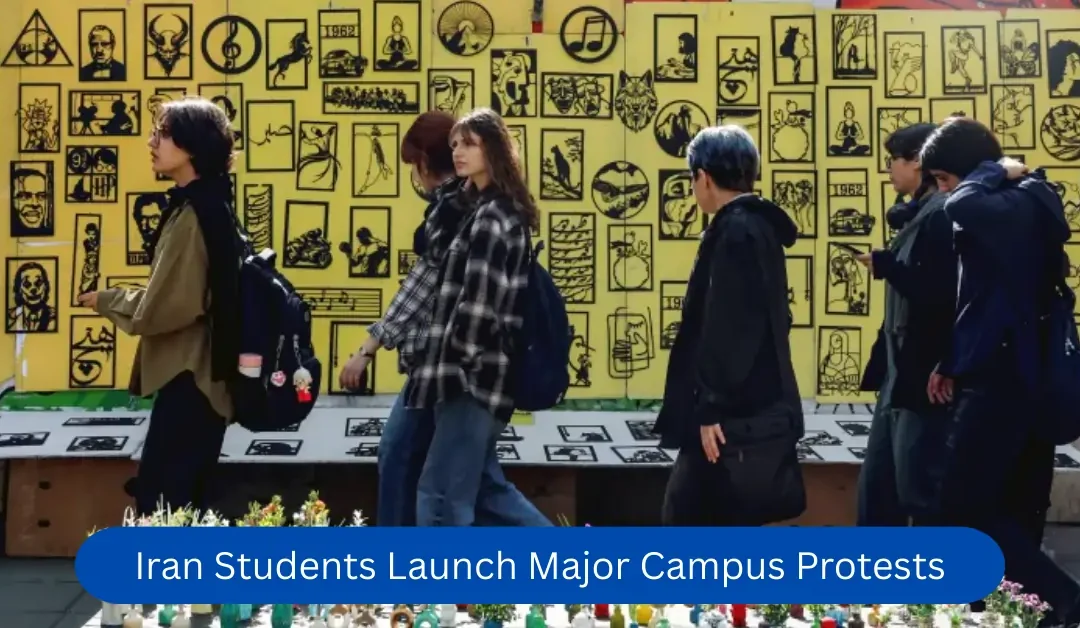
In today’s Latest News, students across Iran have once again stepped into the spotlight. Large groups gathered at major universities to protest against the government. These are the first big demonstrations since last month’s deadly crackdown, which shocked the country and became one of the biggest Daily news highlights around the world.
The new protests happened at a tense time. Iran is facing internal anger, economic problems, and rising global pressure over its nuclear programme. At the same time, the world is watching closely as US-Iran tensions grow stronger. Some experts even warn about the risk of a Middle East conflict if diplomacy fails.
Below is a clear look at what is happening and why it matters.
1. Protests Return to University Campuses
Students gathered at several well-known universities in Tehran and other cities. Verified videos showed hundreds of young people marching peacefully at the start of the new semester.
At Sharif University of Technology, students walked together carrying Iranian flags. They chanted slogans against the government and called for change. Nearby, a smaller group of pro-government supporters also gathered. Later, arguments turned into small scuffles between the two sides.
At Shahid Beheshti University, students organised a peaceful sit-in protest. They sat together on campus grounds to honour thousands of people who were reportedly killed during January’s mass protests.
Similar scenes were reported at Amir Kabir University of Technology, where students chanted against the authorities. In Mashhad, Iran’s second-largest city, students shouted slogans calling for freedom and equal rights.
These gatherings quickly became Breaking News, as many believed fear after last month’s violence would stop people from protesting again.
2. Remembering the Deadly Crackdown
The January protests started because of economic problems. Rising prices, unemployment, and financial hardship pushed people into the streets. But the protests soon grew into wider anti-government demonstrations — the largest since the 1979 Islamic Revolution.
Human rights groups reported thousands of deaths during the crackdown. The US-based Human Rights Activists News Agency claimed that more than 6,000 people were killed, including children and protesters. Iranian authorities, however, gave lower figures and said many of the dead were security personnel or bystanders attacked by what they called “rioters.”
Because of these painful memories, many were surprised to see students protesting again. It shows that anger and frustration remain strong among young people.
At the moment, it is not clear whether arrests were made during the latest demonstrations. In the past, security forces have responded quickly to large gatherings.
3. Growing US-Iran Tensions and Nuclear Talks
These student protests are happening during a sensitive moment in international politics. US-Iran tensions have increased sharply in recent weeks.
The United States and its European allies believe Iran may be moving closer to developing a nuclear weapon. Iran has always denied this claim and says its nuclear programme is for peaceful energy purposes.
Recently, US and Iranian officials met in Switzerland to discuss Iran’s nuclear programme. Both sides said progress had been made. However, US President Donald Trump later warned that the world would soon know whether a deal would be reached — or whether military action would follow.
The US has also increased its military presence near Iran. This has raised fears of a possible Middle East conflict, especially if talks fail.
For many Iranians, this global pressure adds more uncertainty to daily life. Some opposition groups living outside the country are asking the US to take strong action against the Iranian government. Others strongly oppose foreign military involvement, saying change must come from within.

4. The Role of Social Media and Disinformation
Another important issue is the information battle happening online. Supporters and opponents of the government are using social media to share videos, photos, and opinions.
Some posts encourage more protests, while others claim the demonstrations are small or exaggerated. This online fight has created confusion about what most Iranian people really want.
Disinformation campaigns from different sides are shaping global opinion. As a result, many news organisations are carefully verifying footage before reporting it. Verified videos from university campuses have helped confirm that the protests are real and significant.
5. Why Students Are Leading Again
University students have often played a strong role in Iran’s political history. Young people are usually more active in demanding reforms and freedoms. They are also more connected to global trends through technology and education.
This time, their protests show:
- Continued anger over economic hardship
- Frustration with political restrictions
- Fear about the country’s future
- Concern about possible war
Many students say they are not only protesting for themselves, but for the future of Iran.
What Happens Next?
It is still unclear how the government will respond. Authorities may allow small protests to avoid further international criticism. On the other hand, they may act strongly to prevent the movement from spreading.
Much will also depend on nuclear talks between Iran and world powers. If negotiations succeed, tensions may calm down. If they fail, the situation could become more serious.
For now, these campus rallies have become one of the biggest Daily news highlights in the region. They show that even after a deadly crackdown, public frustration has not disappeared.
As the story develops, it will remain in Latest News updates across global media. Whether this movement grows into something larger or fades under pressure is still unknown. But one thing is clear — the voices of Iran’s students are once again being heard, both at home and around the world.


