
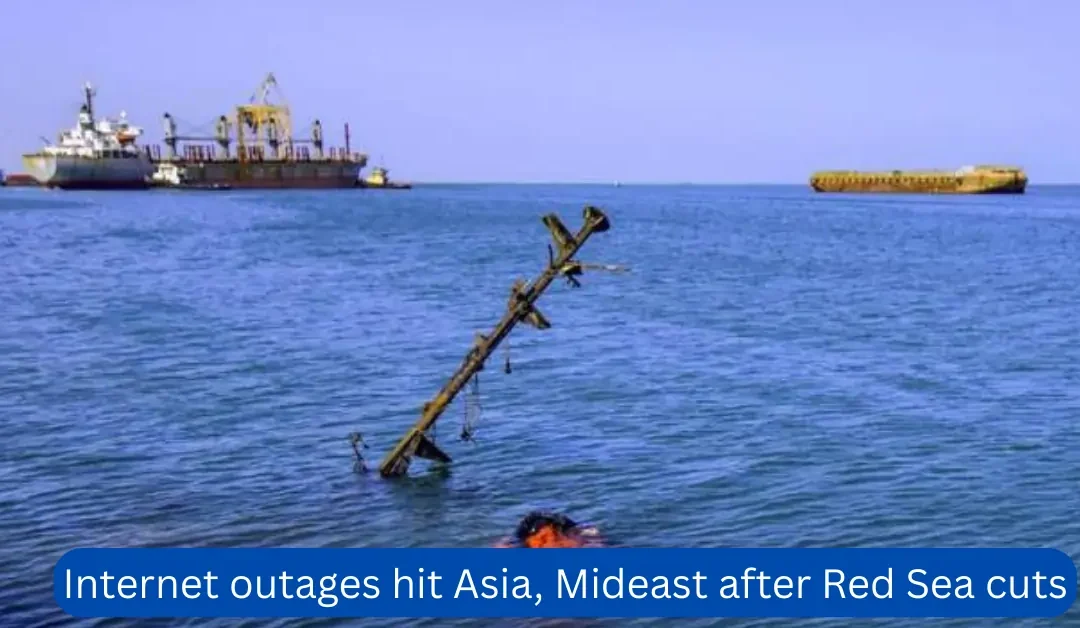
Internet services across parts of Asia and the Middle East were disrupted this week after major undersea cables in the Red Sea were cut. The exact reason behind the damage is still unclear, but experts say it has affected millions of users in countries like India, Pakistan, Saudi Arabia, and the UAE.
The disruption raised fresh concerns about the security of global Internet networks, especially as tensions remain high in the region due to the Middle East conflict.
What Happened in the Red Sea?
- Multiple undersea Internet cables were damaged near Jeddah, Saudi Arabia.
- These cables are critical because they connect Asia, the Middle East, and Europe.
- The cuts slowed down Internet speeds in several countries and caused frustration for businesses and individuals alike.
Undersea cables are often called the backbone of the Internet. They work alongside land-based connections and satellites to keep the world online. When one or more cables are damaged, Internet providers usually re-route traffic through other connections, but this often leads to slow browsing, video buffering, and reduced speeds.
Impact on Countries and Companies
- India and Pakistan: Internet watchdog NetBlocks confirmed connectivity issues, blaming the damage to the SMW4 and IMEWE cables. Pakistan’s leading telecom operator also acknowledged the disruption.
- Saudi Arabia: Authorities did not immediately comment on the issue, though experts confirmed the cables were affected near Jeddah.
- United Arab Emirates: Users on Du and Etisalat, the state-owned telecom companies, complained of slower speeds in Dubai and Abu Dhabi.
Meanwhile, Microsoft confirmed on its service status website that customers in the Middle East might face “increased latency” due to the fiber cuts. However, traffic routed outside the region was not affected.
This is a strong reminder of how dependent the world has become on global connectivity and how fragile it can be when key infrastructure is damaged.
Who Could Be Behind It?
One big question remains: what caused the cuts?
- Some experts believe the damage could be accidental, possibly caused by ship anchors
- Others fear it could be intentional, as the Houthis in Yemen have been linked to past threats against undersea cables.
- The Houthis deny responsibility, but their role in regional conflicts has raised suspicions.
From late 2023 through 2024, the Iran-backed Houthis targeted more than 100 ships in the Red Sea using drones and missiles. They claimed the attacks were aimed at pressuring Israel to end its war against Hamas in Gaza.
Although they have not admitted to targeting the cables directly, the timing of the damage during ongoing Red Sea crisis has fueled speculation.
Why Are Undersea Cables So Important?
- Undersea cables carry over 95% of the world’s Internet traffic.
- They are faster and more reliable than satellites for moving large amounts of data.
- Damage to just one cable can affect millions of people across several countries.
- Repairing these cables is difficult and may take weeks. Special ships and crews need to locate the exact point of damage under the sea before fixing it.
In today’s world of cybersecurity risks and regional wars, undersea cables are increasingly seen as strategic targets.
Political Tensions Around the Incident
The cable cuts add a new layer to the already complicated Middle East conflict.
- Israel continues its military campaign in Gaza.
- Houthis, backed by Iran, say their attacks are in response to Israel’s actions.
- The United States has carried out strikes against Houthi targets and is also involved in ceasefire talks.
At the same time, negotiations over Iran’s nuclear program remain stuck, especially after Israel carried out strikes on Iranian sites. This has left the region tense and uncertain.
Daily news highlights show that Internet disruptions caused by such conflicts not only affect governments but also hurt ordinary people, businesses, and economies.
What’s Next for Internet Users?
Experts warn that if the damage was intentional, global Internet security could face new risks in the future. This is because:
- Subsea cables are extremely hard to protect due to their vast length.
- Attacks or accidents can quickly slow Internet for millions.
- Global companies like Microsoft, Google, and telecom giants depend on these lines.
For now, Internet providers are rerouting traffic, but full speed and stability may not return for weeks until repairs are completed.
Conclusion
The Red Sea cable cuts are more than just a technical problem. They show how fragile global Internet systems are in a time of extreme geopolitical conflict.
For millions across Asia and the Middle East, slower connections are a daily reminder that wars and political struggles are no longer limited to battlefields — they now directly affect global connectivity, cybersecurity, and economic stability.
Breaking News: As repairs continue, the world will be watching whether this incident was an accident or part of a broader strategy in the ongoing Red Sea crisis.


