
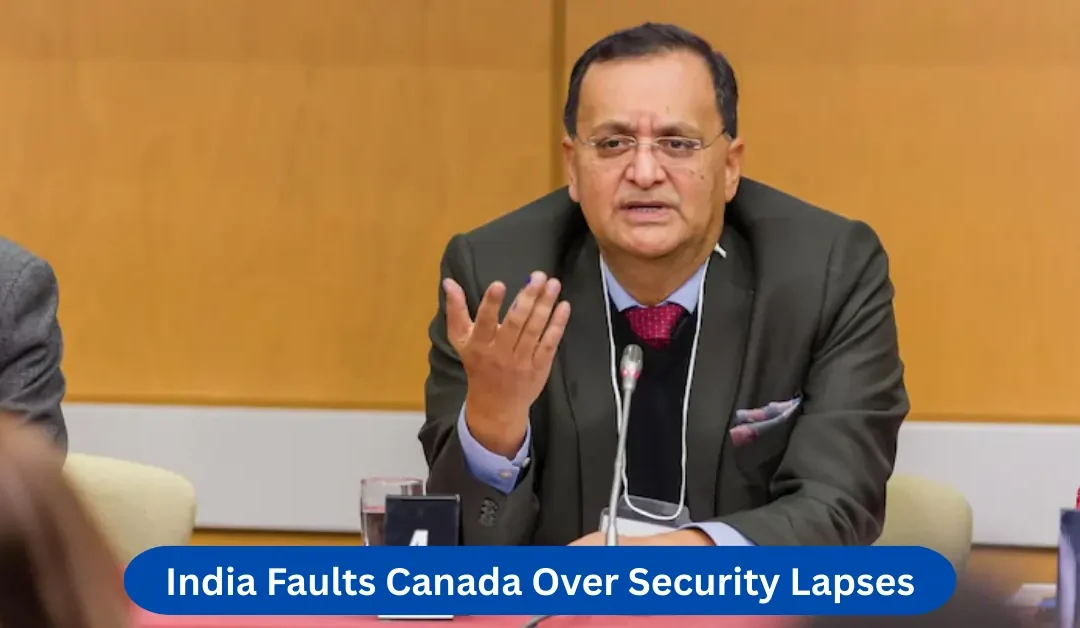
In the Latest News from New Delhi and Ottawa, India’s High Commissioner to Canada, Dinesh Patnaik, has strongly criticized the Canadian government for what he described as decades of failure to act against terrorist groups operating within its borders. Speaking in a direct and sometimes tense interview on Canada’s public broadcaster CBC, Patnaik said Canada’s long inaction has allowed extremism to grow and has harmed India’s security interests.The interview quickly became a major topic in Breaking News, as it touched on one of the most sensitive issues between the two countries—terrorism and trust.
Strong Words on a Public Platform
During the interview, Patnaik said that Canada has failed to take meaningful action against extremist elements for nearly 40 years. According to him, this lack of action has created a safe environment for people who promote violence against India from Canadian soil.
He pointed out that India has repeatedly raised concerns about such groups, but Canadian authorities have often responded by saying there is not enough evidence to move forward. Patnaik questioned why similar standards are not applied when allegations are made against India.
This exchange has become part of the Daily news highlights, especially as global attention remains focused on international relations, geopolitics, and counterterrorism efforts.
Dispute Over Nijjar Killing Allegations
A major part of the interview focused on allegations related to the killing of Khalistani extremist Hardeep Singh Nijjar. Canadian media and officials have claimed they have “credible information” linking Indian agents to the case.
Patnaik firmly rejected these claims and repeatedly asked for proof. He said accusations without solid evidence should not be treated as facts. According to him, it is easy to make claims, but far more difficult to support them with real legal proof.
He reminded viewers that the current legal case in Canada is against four individuals, not against the Indian government. He asked a direct question: if there is no case against the Indian state, why is India being blamed publicly?

Patnaik also referred to the 1985 Air India bombing, which killed 329 people, most of whom were Canadian citizens. He said the case remains a painful reminder of Canada’s failure to bring justice even after so many years.
According to him, not a single person has been fully held accountable despite decades of investigation. He used this example to show how terrorism-related cases involving India have not been handled with urgency in Canada.
This issue continues to affect India-Canada diplomacy and remains relevant in discussions around global security and terrorism.
India Rejects Double Standards
One of the strongest points made by the Indian envoy was about what he called “double standards.” He said that when India shares intelligence about known extremists in Canada, it is told the evidence is insufficient. However, when Canada makes allegations against India, it expects immediate answers.
Patnaik stressed that India believes in the rule of law. He said that if any Indian official were ever proven guilty based on solid evidence, India would take action on its own. He added clearly that India does not need outside pressure to uphold its laws.
Referendums Not the Core Issue
The High Commissioner also clarified that India is not against freedom of expression or peaceful referendums. He said India’s concern is not about voting or political opinions, but about individuals who are wanted for crimes or are involved in violent activities abroad.
According to him, the focus should be on stopping terrorism, not protecting people who misuse democratic freedoms to promote violence.
This clarification comes at a time when issues like human rights, free speech, and national security are widely debated across the world.
Timing Matters for Bilateral Relations
The timing of the interview is important. British Columbia Premier David Eby is currently leading a trade mission to India, and Canadian leaders have signaled interest in improving relations with New Delhi. There is also talk of restarting trade talks and strengthening economic cooperation.
Patnaik acknowledged that both sides are trying to move forward after a difficult period. However, he made it clear that any real improvement in ties must include serious action against terrorism.
He said that India and Canada are “catching up” after a pause, but trust cannot be rebuilt unless security concerns are addressed honestly.


