
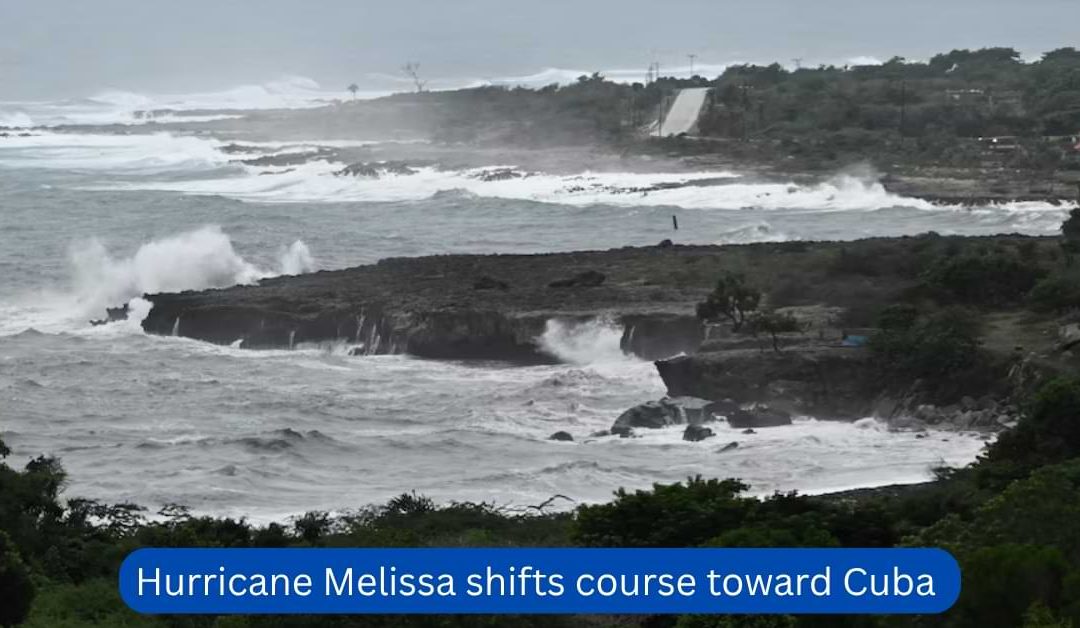
The Caribbean is facing one of its most powerful storms in history. Hurricane Melissa, which hit Jamaica as a strong Category 4 storm, is now moving toward Cuba. The storm has already caused massive destruction, power cuts, and flooding across Jamaica.
Jamaica Faces Its Strongest Storm Ever
On Tuesday, Hurricane Melissa made landfall near New Hope in southwestern Jamaica, bringing winds of up to 185 mph (295 kph) — stronger than many Category 5 storms. According to the U.S. National Hurricane Center (NHC), it is the strongest storm ever recorded to hit Jamaica.
- Over 500,000 people were left without electricity.
- Large parts of St. Elizabeth Parish were completely underwater.
- Homes, schools, and hospitals were badly damaged.
- Roads and bridges were destroyed, making rescue work difficult.
Prime Minister Andrew Holness said the country had suffered “significant damage to property and infrastructure.” While no confirmed deaths were reported yet, the government fears that casualties may still emerge once communication is restored in rural areas.
Storm Weakens Slightly but Still Dangerous
After crossing Jamaica, Hurricane Melissa’s winds dropped to 145 mph (233 kph), but it still remained a dangerous Category 4 storm. It moved slowly toward Cuba’s second-largest city, Santiago de Cuba, with heavy rain and strong winds continuing through the night.
Cuban President Miguel Díaz-Canel urged citizens to evacuate low-lying areas immediately, warning, “We should already be feeling its main influence this afternoon and evening. This cyclone will cause significant damage.”
- Around 500,000 Cubans were moved to higher ground.
- In the Bahamas, the government ordered evacuations as the storm approached from the southwest.
- The Dominican Republic and Haiti also faced deadly floods earlier in the week, with at least four reported deaths.

Jamaica’s “Storm of the Century”
Experts are calling Hurricane Melissa the “storm of the century” for Jamaica. Meteorologists said it is the third most intense storm ever recorded in the Caribbean, after Hurricane Wilma (2005) and Hurricane Gilbert (1988).
Anne-Claire Fontan from the World Meteorological Organization warned that storm surges could reach 4 meters high, flooding entire coastal communities.
People across Jamaica described terrifying scenes:
- Loud explosions as power lines snapped.
- Roofs torn away by the wind.
- Trees and cars swept away by floods.
One local, Colin Bogle, who works with the aid group Mercy Corps, said, “People are scared. This feels like Hurricane Gilbert all over again. Jamaica keeps suffering from a climate crisis we didn’t create.”
Climate Change and Rising Storm Intensity
Scientists have long warned that climate change is making storms stronger and more unpredictable. Warmer ocean waters provide extra energy for hurricanes, allowing them to grow faster and hit harder.
Many Caribbean leaders are now demanding climate reparations — financial help from wealthy nations that contribute most to global pollution.
- Warmer waters fueled Hurricane Melissa’s rapid growth.
- Slow-moving storms like Melissa often cause long-lasting damage.
- Jamaica’s rich agricultural areas were hit hard, threatening food supply.
Prime Minister Holness said the government had $33 million in emergency funds ready for recovery, but it will not be enough. “We will need international aid,” he said.
Rescue Efforts and Human Impact
In St. Elizabeth Parish, Jamaica’s only public hospital lost power and suffered structural damage. Several families were trapped by floodwaters, but rescue teams managed to reach them — including one group with four babies.
By Tuesday evening:
- 15,000 Jamaicans were staying in temporary shelters.
- The government had ordered 28,000 evacuations, though many refused to leave their homes.
- The Red Cross estimated that 1.5 million people could be directly affected.
One retiree, Collin McDonald, told reporters, “It’s like a roaring lion. The sound is terrifying, but our concrete roof is holding.”
A Long Road Ahead
As Cuba and the Bahamas brace for impact, the Caribbean prepares for long recovery work. Many regions are still cut off from aid, and the full damage is not yet known. Jamaica has appealed for help with food, tools, and farm supplies to rebuild communities.
This disaster serves as a strong reminder of how extreme weather events are becoming more frequent due to global warming. Leaders across the region are urging the world to take immediate action.


