
The world’s oceans are in trouble, and most of the problems come from human activity. From rising global temperatures to plastic pollution, the health of the oceans is getting worse every year. This is not just an environmental issue—it directly affects people’s lives, food supply, and even the air we breathe. According to the United Nations, oceans cover about 70% of Earth’s surface and give us half of the oxygen we need to live. They also act as the planet’s main climate regulator, absorbing heat and carbon dioxide.
But here’s the Breaking News: the oceans are reaching their limit. With more climate change, ocean pollution, and destructive human practices, the balance is being lost. In today’s Latest News, scientists and conservationists are warning that if we don’t act now, we may damage the oceans beyond repair.
Below are the five biggest threats facing our oceans today and the solutions experts believe could help. These are also some of the Daily news highlights being discussed around the world.
1. Global Warming and Rising Seas
The biggest threat to our oceans is global warming. When humans burn coal, oil, and gas, greenhouse gases trap heat in the atmosphere. This heat also gets absorbed by the ocean, causing rising sea temperatures.
- Melting glaciers and ice caps are causing sea levels to rise.
- Coastal communities are at risk, with nearly 40% of the world’s population living near coastlines.
- Warmer water disrupts marine life, harming corals, fish, and other species that cannot adapt quickly.
This is one of the most urgent sustainability challenges. Scientists say if countries continue to delay action, more floods, storms, and habitat loss are inevitable.
2. Pollution from Land and Industry
More than 80% of ocean pollution comes from land. Chemicals, plastics, and untreated sewage all find their way into the sea.
- Agricultural pesticides damage marine plants and kill fish populations.
- Industrial waste adds toxic chemicals that change ocean chemistry, causing problems like coral bleaching.
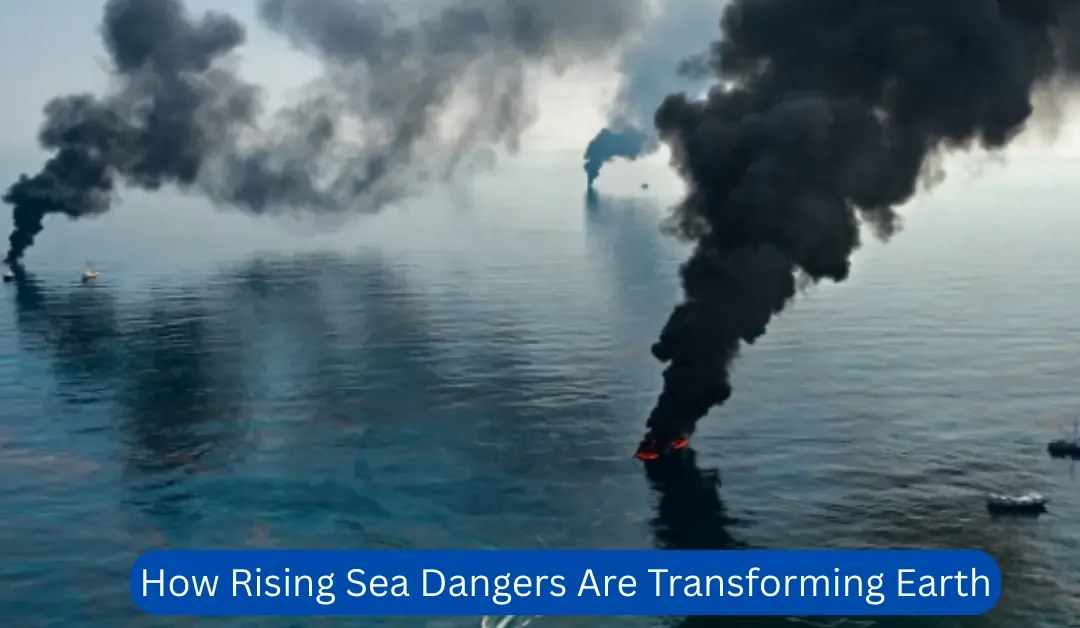
- Oil spills are rare but devastating. They smother animals, poison fish, and leave long-term scars on ecosystems.
Air pollution also plays a role. Pollutants in the atmosphere mix with water and make oceans more acidic, weakening corals and shell-forming species. This cycle shows how deeply connected our activities are with ocean health.
3. Overfishing and Invasive Species
Fishing is important for human survival, but overfishing is emptying our oceans at an alarming rate.
- According to the UN, the number of overfished populations has tripled in the last 50 years.
- Some fishing methods, like deep-sea trawling, destroy marine habitats while catching more fish than the ocean can replace.
- Invasive species, often carried by ships, disrupt local ecosystems and create imbalance in food chains.
Experts suggest using smarter technology, such as artificial intelligence, to reduce destructive fishing practices. Supporting local fishing communities is also key to balancing economy and environment.
4. Plastic Waste: A Global Disaster
Every year, around 8 million tons of plastic enter the ocean. From bottles and bags to fishing nets, plastic pollution has become one of the biggest Breaking News topics worldwide.
- More than 2,000 species are harmed by plastic. Many animals choke, starve, or get trapped.
- Microplastics—tiny plastic particles—are now found in seafood and even drinking water, raising health concerns for humans.
- Plastic pollution spreads across all oceans, from the Arctic to the Pacific.
Reducing single-use plastics, recycling more, and supporting renewable energy alternatives for production can help slow this disaster.
5. Solutions: How We Can Protect the Oceans
While the situation looks serious, there are solutions that can bring hope. Conservationists, scientists, and governments are working on several strategies:
- Marine Protected Areas (MPAs): Only 8% of oceans are currently protected. Expanding these zones can help save marine life and habitats.
- Reducing Pollution: Governments must regulate industries, but individuals can also help by cutting single-use plastics and supporting eco-friendly products.
- Sustainable Fishing: Using safer nets, avoiding overfished species, and supporting small-scale fishers can reduce damage.
- Renewable Energy: Shifting from fossil fuels to clean energy sources will reduce global warming and protect oceans in the long run.
- Public Awareness: Encouraging more people to join conservation projects, like coastal clean-ups or volunteer science, spreads responsibility across communities.
Final Thoughts
The ocean gives us life, but it is now crying for help. From global warming to ocean pollution, every challenge is linked to human behavior. The Latest News and Daily news highlights remind us daily that we must act quickly to secure a sustainable future.
Saving the ocean is not only about protecting fish and coral; it’s about protecting ourselves. If we don’t take action now, the ocean’s threats will soon become our biggest human crisis.


