
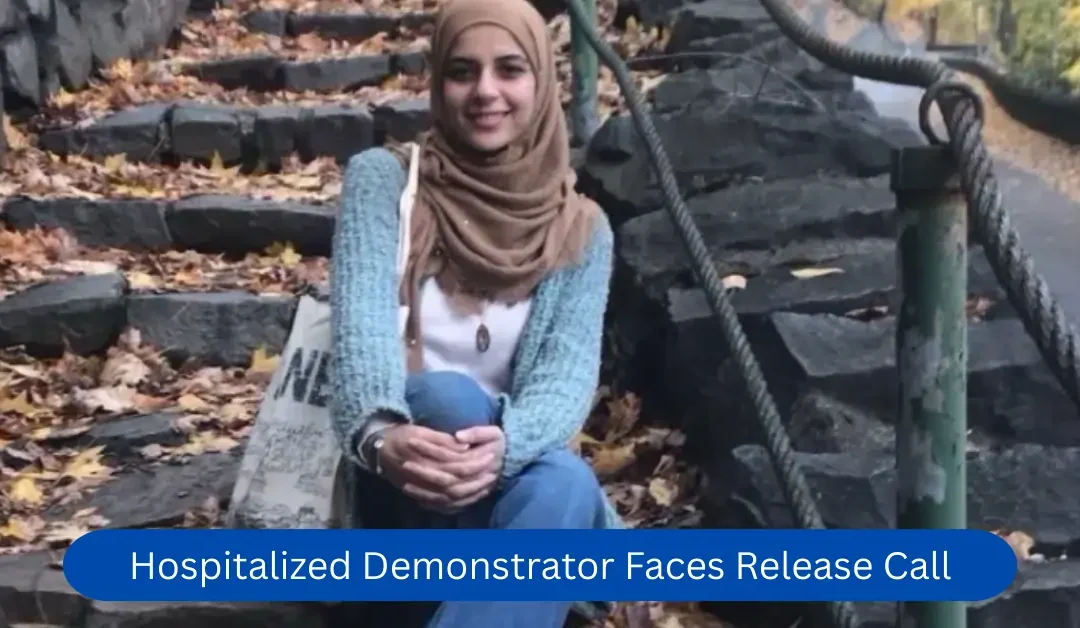
In major Breaking News, the family of Leqaa Kordia, a 33-year-old pro-Palestine protester, says they were left without answers after she was rushed from a Texas immigration detention centre to a hospital. For more than 12 hours, they say immigration officials refused to share information about her condition or even confirm where she was.
This case has quickly become part of the Latest News cycle and one of the important Daily news highlights, as human rights groups and activists call for her immediate release.
1. Family Says They Were “Stonewalled”
Leqaa Kordia’s cousin, Hamzah Abushaban, said the family felt completely shut out when she was taken to the hospital after suffering a seizure.
According to the family:
- They were not told where she had been taken.
- They were not informed about her medical condition.
- They struggled for over 12 hours to get basic answers.
Abushaban said the silence was frightening. Some relatives even feared the worst.
“Many people in her family thought she might have died,” he said, explaining that the lack of communication made the situation even more stressful.
By Tuesday, her family confirmed she had been released from the hospital. However, they have only had very brief contact with her since the medical emergency.
Her loved ones say this situation shows why she should not remain in detention.
2. Nearly a Year in Immigration Detention
Kordia has been in immigration detention for almost a year. She was first detained after participating in pro-Palestine protests at Columbia University in 2024.
She is now the only person connected to those demonstrations who remains in immigration custody. Others who were detained have since been released.
Her protest activity was deeply personal. Nearly 200 members of her extended family have reportedly been killed during the war in Gaza. Those losses inspired her to speak out publicly.
Human rights groups say that protesting is a basic right protected by free speech laws. They argue that detaining her for nearly a year over immigration technicalities is unfair and excessive.
3. Amnesty International Calls for Immediate Release
On Monday, Amnesty International joined the growing calls for her release. The organization described her detention as “arbitrary.”
Justin Mazzola, Amnesty International USA’s deputy director of research, said she has been held for over ten months simply for exercising her right to protest.
He criticized what he called political games being played with her life and demanded accountability for what he described as violations of her human rights.
Her legal team also says she has been treated unfairly. According to her lawyers:
- Two federal judges ruled she was eligible for release on bond.
- Each time, immigration officials blocked her release.
- Officials filed “discretionary stay” requests to keep her detained during appeals.
Her supporters argue that this shows a pattern of keeping her in custody despite court rulings.
4. Government’s Position on the Case
Immigration officials maintain that Kordia was detained because she overstayed her student visa, not because of her activism.
Kordia originally came to the United States in 2016 from Ramallah in the occupied West Bank. She first entered on a visitor’s visa, then switched to a student visa. Later, she applied for permanent residency through her mother, who is a US citizen living in New Jersey.
Her legal team says she was wrongly advised by a trusted mentor that her initial residency approval meant she had legal status. Because of that advice, she allowed her student visa to expire.
However, when the Department of Homeland Security first announced her arrest in March 2025, officials linked her case to pro-Palestine advocacy.
Homeland Security Secretary Kristi Noem said at the time that visas are a privilege and that anyone advocating violence or terrorism should not remain in the country.
Supporters argue that peaceful protest should not be described in such terms and say her activism has been misrepresented.

5. Health Concerns Inside Detention
Kordia has been held at the Prairieland Detention Facility in Texas, about 2,400 kilometers away from her family in New Jersey. The distance has made it difficult for relatives to visit her regularly.
Family members and lawyers say her health has worsened during detention. They report that she has experienced:
- Dizziness
- Fainting spells
- Poor nutrition
- Weight loss
Author and advocate Laila El-Haddad visited her in December and described her as very thin. She said the detention centre felt overcrowded and unsanitary.
According to El-Haddad, Kordia described the environment as “intentionally dehumanising,” saying it strips detainees of dignity and humanity.
Despite these conditions, El-Haddad said Kordia remained strong and supportive of other detainees.
6. Wider Crackdown on Student Activists
Since March 2025, several student activists have faced deportation proceedings. Among them were Mahmoud Khalil, Mohsen Mahdawi, and Rumeysa Ozturk.
All of them were eventually released as their immigration cases continued. However, courts have indicated they could still be taken back into custody.
Kordia remains the only individual from that group who is still detained.
This has raised concerns among civil rights organizations about whether protest activity is being treated differently under current immigration policies.
Growing National Attention
As this story continues to unfold, it remains one of the most talked-about issues in Latest News discussions across the country. Human rights advocates, immigration lawyers, and community members are closely watching what happens next.
For her family, the focus is simple: they want her home and safe.
They believe her recent medical emergency proves that keeping her detained puts her health at risk. Supporters are calling for transparency, fairness, and immediate action.
This case has become more than just an immigration issue. For many, it represents broader questions about free speech, protest rights, and how detainees are treated.


