
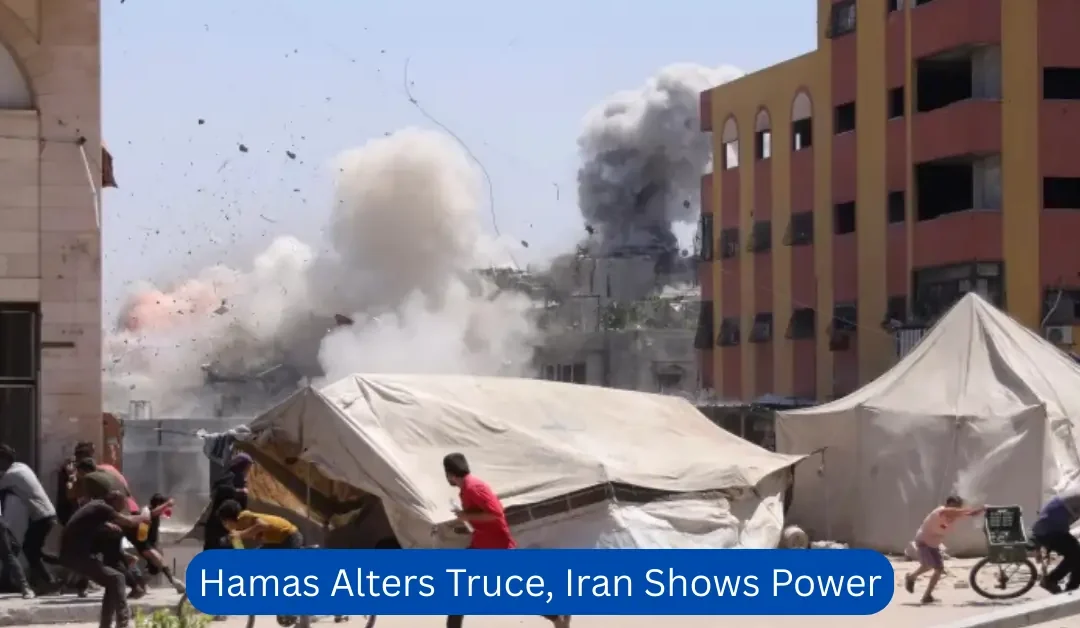
Tensions remain high in the Middle East as Hamas calls for Israeli forces to withdraw from certain areas in Gaza. This demand is part of the ongoing ceasefire discussions aimed at bringing some peace to the war-torn region.
What Hamas Wants in the Gaza Ceasefire
Hamas leaders are asking Israeli troops to move back 800 meters away from residential areas in Gaza. They say this step is very important for a long-term truce. The pullback is seen as a way to:
- Reduce tension between Israeli soldiers and local civilians
- Allow families to return to their homes safely
- Prevent future clashes in busy neighborhoods
- Build trust before more serious peace talks begin
This request comes after several rounds of talks that have not yet led to a full ceasefire. Hamas believes that if Israel agrees to this demand, it could open the door to more negotiations and possibly a larger peace plan in the future.
Iran’s IRGC Says It’s Now Stronger Than Before the War
In other Latest News from the region, Iran’s Islamic Revolutionary Guard Corps (IRGC) has made a bold statement. A top commander announced that the IRGC is “stronger now than before the war with Israel started.”
- The IRGC has reportedly improved its military strategies
- It has increased coordination with allied groups in Syria, Iraq, and Lebanon
- The group says it has better weapons and more public support
- Iran continues to see itself as a major player in regional politics
This message is being closely watched by Israel and the United States, who have long viewed the IRGC as a major security threat in the Middle East. Iran’s growing confidence could also impact future peace talks or military actions in the region.
Pope Leo Plans to Visit Lebanon in 2025
In a rare positive development, Daily news highlights include an expected visit by Pope Leo to Lebanon later this year. The Vatican has not yet announced the exact date, but the trip is being planned as a sign of support for the Lebanese people.
Lebanon has faced many problems recently, including:
- A long-running political crisis
- A severe economic collapse
- Social tensions made worse by refugee pressures
- Continued recovery from the 2020 Beirut port explosion
The Pope’s visit could bring hope and international attention to Lebanon’s ongoing struggles. Religious leaders and community groups are already preparing to welcome him warmly.
Why This Matters
These three stories show how different parts of the Middle East are facing unique challenges:
- Gaza is still suffering from war, and a small pullback by Israeli troops could be a step toward peace
- Iran is flexing its muscles, claiming that it is now stronger and more united
- Lebanon is hoping for healing and unity through a visit from one of the world’s most important religious figures
Together, these stories show how complex the situation in the Middle East remains in 2025. The combination of war, diplomacy, religion, and local politics creates a very delicate balance.


