
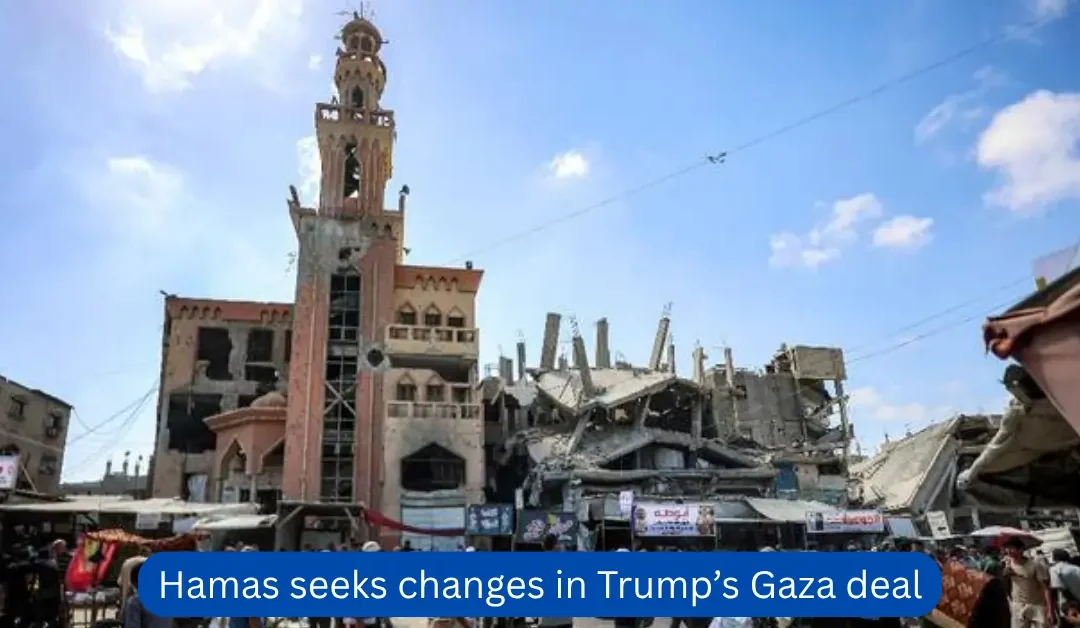
Latest News: Hamas leaders are asking for changes in US President Donald Trump’s Gaza peace plan. A source close to the group’s leadership told AFP that the main issue is the disarmament clause, which Hamas does not want in its current form. This demand has brought new attention to the ongoing peace efforts in the region.
Talks With Regional Mediators
According to the source, Hamas negotiators met with officials from Turkey, Egypt, and Qatar in Doha on Tuesday. These countries have been important mediators in the Gaza conflict. Hamas asked for two or three more days to give their official response to the proposal.
- Breaking News: Trump’s plan includes several key points:
- A ceasefire between Israel and Hamas.
- The release of hostages by Hamas within 72 hours.
- Hamas disarming completely.
- A gradual Israeli withdrawal from Gaza.
While some of these terms are acceptable to Hamas, the group strongly disagrees with the demand to give up weapons and expel its members.
Key Demands from Hamas
The Palestinian source explained that Hamas wants to add new conditions to the peace plan. These include:
- International guarantees of a full Israeli withdrawal from Gaza.
- Promises that no assassinations of Hamas leaders will take place inside or outside Gaza.
- Clarifications that do not criminalize the resistance factions.
For Hamas, these changes are important because they do not want to be left vulnerable without weapons, and they want the international community to make sure Israel respects any deal.
Internal Divisions Within Hamas
Interestingly, not all Hamas leaders share the same opinion on Trump’s plan. Another source told AFP that there are two main groups within Hamas:
- Supporters of Approval – This group wants to accept the plan quickly because it guarantees a ceasefire. They believe that as long as the United States and regional mediators ensure Israel follows the deal, it could bring immediate relief to people in Gaza.
- Opponents of Disarmament – This group has strong objections to the disarmament clause. They argue that without weapons, Gaza will remain weak, and the resistance will lose its ability to protect Palestinians. They also reject the idea of Palestinians being expelled from Gaza.
Recent Violence Raises Tensions
The situation became even more complicated after an Israeli attack killed six Hamas officials in Doha last month. These leaders were also holding discussions about an earlier ceasefire proposal. The attack has increased mistrust between both sides, making negotiations more difficult.
- Daily news highlights: Despite these challenges, Hamas continues to stay in touch with Arab and regional powers to seek broader support for its demands.
Looking Ahead
The next few days are critical. Hamas leaders are expected to finalize their response soon, but divisions inside the group may delay a clear decision. For now, it seems:
- Some factions want an immediate ceasefire, even if it means compromise.
- Others want guarantees that Gaza’s resistance will not be weakened or criminalized.
- Mediators like Egypt, Turkey, and Qatar will play a key role in shaping the outcome.
The bigger question is whether Trump’s plan can actually bring peace or whether it will create further disagreements. For many Palestinians, the concern is that the plan could legitimize Israel’s occupation of Gaza while punishing resistance groups.


