
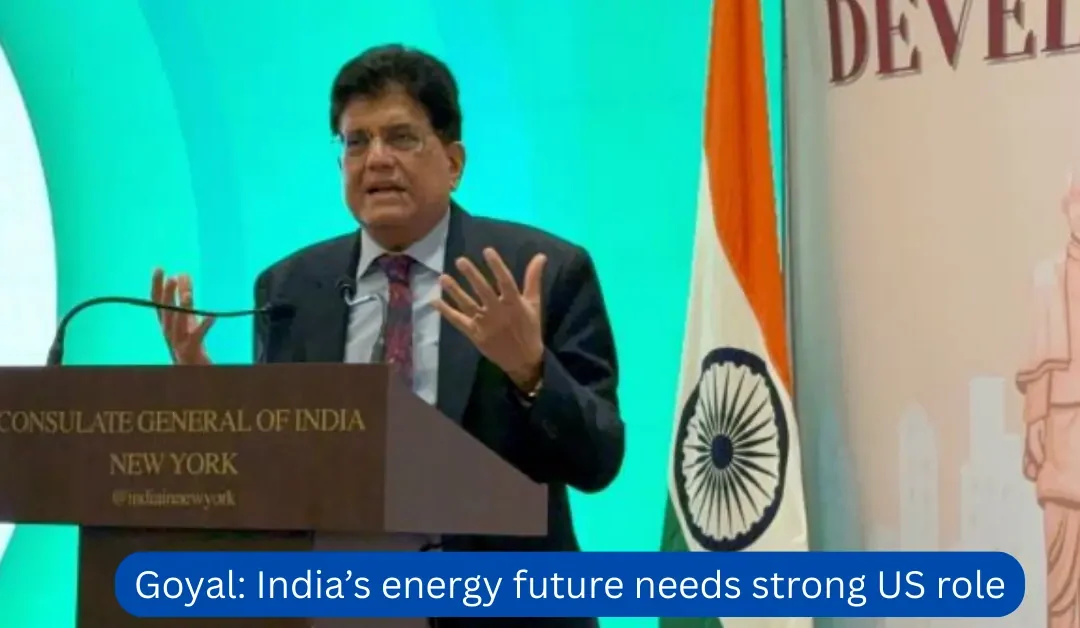
India’s Commerce Minister Piyush Goyal has said that the country’s future energy security will depend heavily on the United States. Speaking in New York at the India-US Strategic Forum, Goyal explained that as India is one of the world’s largest energy importers, its trade and security goals in this sector will have “a very high element” of US involvement in the years ahead.
This statement comes at a time when India and the US are trying to ease trade tensions and work together on multiple energy fronts, including oil, liquefied natural gas (LNG), and nuclear power.
Why US Energy Matters for India
India is the third-largest consumer of crude oil in the world and imports almost 88% of its oil needs. It is also among the biggest importers of LNG (liquefied natural gas), with nearly half of its natural gas requirement coming from imports.
- The US has become the fifth-largest supplier of crude oil to India.
- It is also the second-largest supplier of LNG to India.
- Indian refiners have recently increased their oil imports from the US as a sign of deeper cooperation.
Goyal highlighted that both countries are “natural partners” and will continue to expand this cooperation in the years to come.
Nuclear Energy: A New Area of Cooperation
Another major focus of India-US ties is nuclear energy. For many years, discussions around civil nuclear cooperation were slow due to concerns over India’s nuclear liability laws. But now both sides are trying to resolve these issues.
- India is supporting private sector projects on nuclear power.
- There is special interest in small modular reactors (SMRs) developed in the US.
- Legal changes are being considered in India’s Civil Liability for Nuclear Damage Act (2010) to make investments easier and safer.
According to Goyal, this cooperation will help India increase clean energy use while ensuring strong energy security.
Russian Oil, US Tariffs, and Trade Pressures
India’s reliance on Russian crude oil has created friction with Washington. The US has already imposed 25% extra tariffs on Indian goods as a reaction to India’s Russian oil imports.
- Despite American pressure, India has not stopped buying Russian crude because it remains cheaper and commercially viable.
- India has argued that the US and Europe themselves encouraged these imports after Russia’s 2022 invasion of Ukraine.
- Washington sees oil sales as Russia’s biggest revenue source and wants India to cut back to help end the Ukraine war.
For now, India has said it will balance imports based on price and commercial needs, while also increasing US energy imports to reduce trade tensions.
The Cost of Shipping US Oil
Experts say that while India is ready to buy more US LNG, crude oil is a bigger challenge.
- Shipping costs of US oil to India are more than double compared to oil from West Asia.
- Indian refineries are used to processing Middle Eastern and Russian crude, though they have the capacity to handle most crude grades.
- For US oil to compete, prices must be attractive and efficient for Indian refiners.
This shows that while cooperation is growing, there are still hurdles to overcome.
Signs of Thaw in India-US Trade Relations
Despite the disagreements, both governments have shown signs of working together again. Earlier this month, Donald Trump said that the US and India were continuing negotiations to resolve trade barriers. Prime Minister Narendra Modi also called the US and India “natural partners” and said both sides will work for a “brighter, more prosperous future.”
But challenges remain:
- The US has asked G7 nations to pressure countries like India that buy Russian oil.
- Visa fees for H-1B professionals have been raised, impacting Indian workers.
- Trade talks are moving forward but are still sensitive in areas like energy, tariffs, and technology.
Looking Ahead
For India, the partnership with the US is not just about buying more oil or gas—it’s about ensuring long-term energy stability, cleaner nuclear solutions, and stronger global partnerships. With both countries pushing ahead despite differences, the coming years may see a much larger US role in India’s energy sector.
This development is now one of the key Daily news highlights as the world watches how two of the largest democracies handle trade, energy, and global security issues together.


