
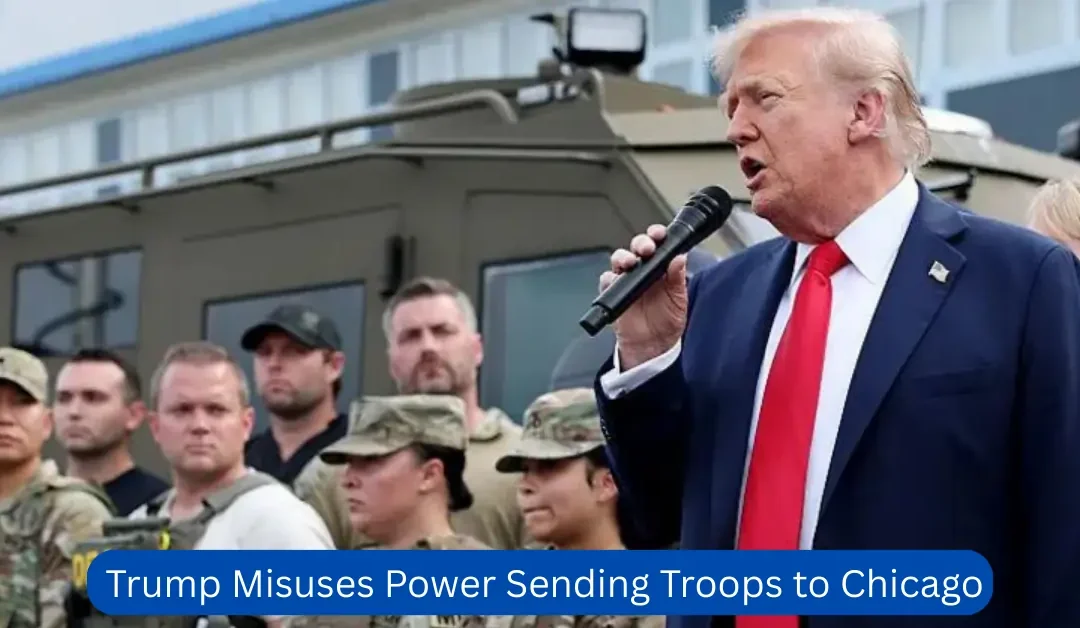
The latest news from the United States shows growing tension over President Donald Trump’s plan to send troops to Chicago. Illinois Governor JB Pritzker called the move an abuse of power, saying there is no emergency that requires the National Guard in the state. He accused Trump of trying to “manufacture a crisis,” highlighting rising political friction between the White House and Democratic-led cities.
This development is part of the daily news highlights in U.S. politics and is stirring national debate over federal authority, public safety, and local governance.
1. Federal Troop Deployments in Major Cities
Trump has already sent around 2,000 troops to Washington DC, a city also controlled by Democrats, claiming the move is to fight “out-of-control” crime. On Friday, he announced plans to expand the policy to Chicago and New York.
Chicago’s Mayor Brandon Johnson responded, saying the city had not received official information about the National Guard deployment. Johnson called the plan “uncoordinated, uncalled for, and unsound,” warning it could inflame tensions between residents and police.
The controversy highlights the clash between federal authority and local control, making it one of the breaking news stories that Americans are closely following.
2. Troop Roles and Controversy
In Washington DC, National Guard troops have been stationed near key landmarks like the National Mall and Union Station. Initially, they were unarmed, but U.S. Defense Secretary Pete Hegseth recently ordered them to carry weapons.
Despite this change, the troops have not actively participated in law enforcement operations. Local police and federal officers continue to handle crime control and investigations. Many residents see the armed presence as unnecessary, with polls showing deep opposition to the deployment. Nearly 80% of Washingtonians disapproved of both the federal takeover and National Guard presence.
The situation raises questions about whether these troops are serving as a real crime deterrent or simply as a political statement.
3. President Trump’s Statements and Goals
Trump has repeatedly claimed the mission has made Washington “totally safe,” saying the city was once a “hellhole” but is now under control. He also suggested that if needed, he might declare a national emergency to keep troops in the city beyond the current 30-day limit.
Additionally, Trump mentioned requesting $2 billion from Congress to “beautify” Washington, even though the city’s budget was cut by $1.1 billion earlier this year. The president has also praised arrests made since the deployment, including over 700 arrests and the seizure of 91 illegal firearms, presenting the operation as a public safety success.
4. Local Leaders Push Back
Local officials, including Mayor Muriel Bowser of Washington and Mayor Johnson of Chicago, have criticized the plan. Bowser highlighted that violent crime in Washington has dropped to a 30-year low, questioning the need for federal troops.
Similarly, Mayor Johnson emphasized that sending troops without coordination could undermine progress in crime reduction and increase tensions between residents and law enforcement. Critics argue that federal intervention may create political rather than practical benefits, and residents remain divided over the approach.
5. Wider Implications and Reactions
The troop deployment is expected to expand to 19 states, with Texas contributing the most personnel. Some troops may support Immigration and Customs Enforcement (ICE) operations, while others serve as a visible presence to deter crime.
Several Republican-led states, including South Carolina and West Virginia, have contributed forces. Yet the plan remains highly controversial, sparking debates on political authority, civil rights, and public safety nationwide.
The story continues to dominate breaking news updates and daily news highlights, showing the growing tension between federal and local governments in U.S. cities.


