
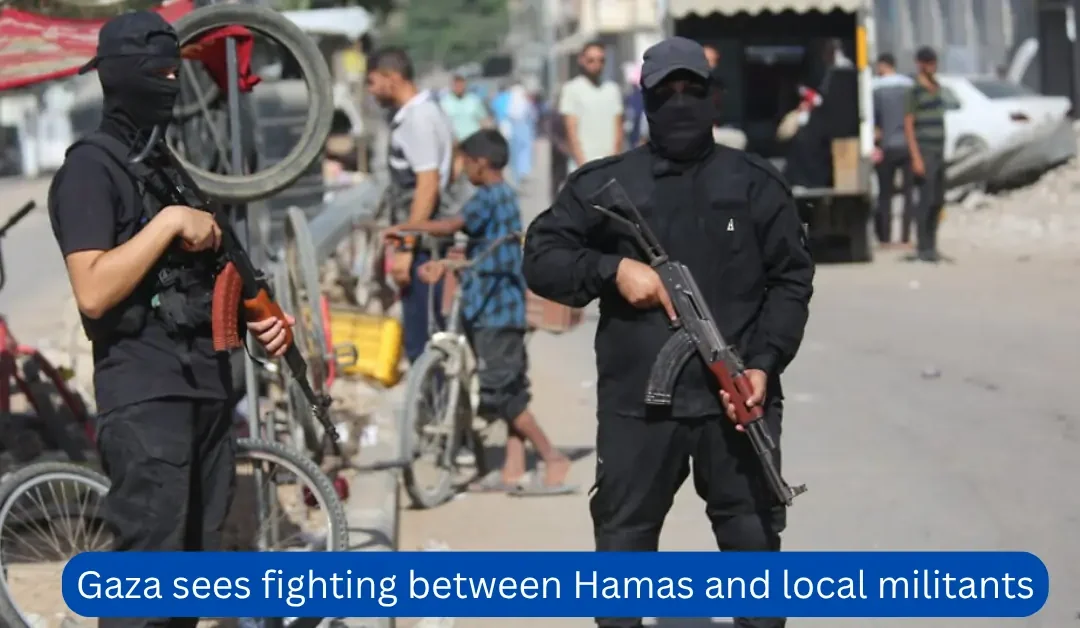
In one of the most violent internal conflicts since Israeli forces withdrew from Gaza, at least 27 people have been killed in fierce clashes between Hamas security forces and armed members of the Dughmush family. This deadly confrontation has sparked panic among residents and raised fresh concerns about Gaza’s fragile internal security situation.
Violent Clashes in Gaza City
According to Latest News reports, the fighting began near the Jordanian Hospital area in Gaza City, where masked Hamas fighters engaged in heavy gunfire with the Dughmush clan. Witnesses described scenes of chaos as families fled through clouds of dust and smoke, leaving behind destroyed homes and belongings.
- Hamas security forces surrounded the area and launched a major operation to arrest the clan members.
- The Hamas-run interior ministry confirmed that eight of its officers were killed in what it called “an armed assault by a militia.”
- Medical officials said 19 Dughmush family members also lost their lives in the intense exchange of fire.
One eyewitness described the terrifying moments, saying, “People were not running from Israeli attacks this time; they were running from their own people.”
How the Conflict Started
The clashes reportedly broke out in the Tel al-Hawa neighbourhood in southern Gaza City after over 300 Hamas fighters surrounded a residential block where members of the Dughmush family had taken shelter.
- The Dughmush family is one of Gaza’s most influential clans, known for its long-standing tensions with Hamas.
- Past disputes between the two sides have occasionally turned violent, but locals say this time the fighting was more intense than ever.
- Residents said dozens of families, already displaced by the war, were forced to flee once again due to heavy shooting and shelling.
Tensions and Accusations
Both sides have blamed each other for starting the conflict.
- Hamas accused Dughmush fighters of killing two Hamas members and injuring five others, claiming it had no choice but to respond.
- However, a representative from the Dughmush family told local media that Hamas attacked their shelter at a former Jordanian Hospital, where clan members had been living since their homes were destroyed during earlier Israeli attacks.
- The family claimed Hamas wanted to take over the building and turn it into a new military base.
Hamas Moves to Reassert Control
Following the fighting, Daily news highlights indicate that Hamas has recalled around 7,000 members of its security forces to strengthen control over areas vacated by Israeli troops.
- Local reports say that Hamas units have been deployed across several neighbourhoods, some dressed in civilian clothes while others wear police uniforms.
- The Hamas media office denied that it was sending fighters into the streets, insisting that its actions are focused on restoring law and order.
The Hamas-run interior ministry also issued a stern warning, saying, “Any armed activity outside the framework of the resistance will be dealt with firmly.”
Concerns Over Internal Stability
This latest outbreak of violence shows how unstable Gaza remains even after the ceasefire with Israel. Many citizens, still recovering from years of war, now fear internal conflicts could worsen living conditions and delay rebuilding efforts.
Analysts say Hamas is struggling to manage both the political and social challenges in Gaza, as families like the Dughmush clan continue to resist its authority.
- Local humanitarian workers have warned that civilians are paying the highest price, caught between armed factions and a collapsing infrastructure.
- With thousands still displaced, food and medical supplies remain limited despite international aid promises.
The Road Ahead
While the violence has temporarily subsided, tensions remain high. Residents of Gaza City are urging leaders to prioritize peace and unity. For many, the latest fighting is a painful reminder that internal divisions can be just as destructive as external wars.
The Breaking News from Gaza highlights that stability in the region will depend not just on foreign ceasefires, but also on whether Hamas and other local groups can find a way to coexist peacefully.


