
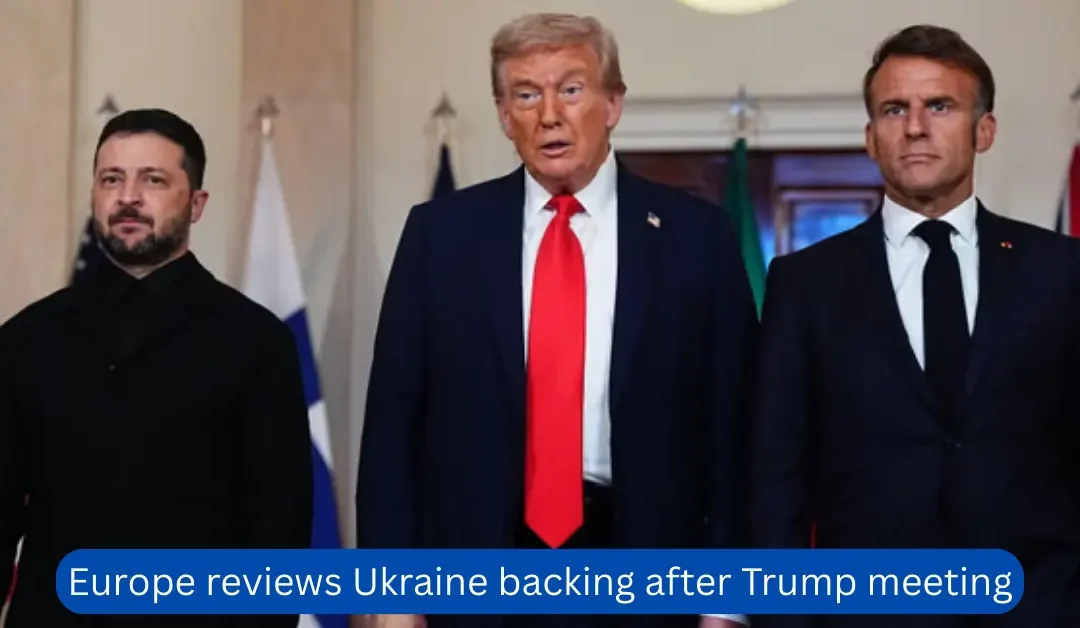
In the Latest News from Europe, leaders across the continent are once again holding high-level talks about Ukraine’s future. These meetings come just days after their visit to the White House with Ukrainian President Volodymyr Zelenskyy, where discussions centered on how to deal with Russia’s ongoing war.
The big question remains: Is Vladimir Putin truly ready to sit down with Zelenskyy for direct peace talks?
A New Round of Meetings
European leaders are moving quickly to keep up the diplomatic momentum:
- UK Prime Minister Keir Starmer and French President Emmanuel Macron co-chaired an initial online meeting.
- Later, they joined a larger video call hosted by European Council President António Costa.
- The goal was to prepare a united strategy before any face-to-face negotiations involving Putin, Trump, and Zelenskyy.
For now, Europe’s efforts are focused on pushing Donald Trump to take a tougher stance on Russia. This comes after Trump recently held a surprisingly friendly summit with Putin in Alaska.
Trump, Putin, and the Zelenskyy Question
During the White House talks, Trump suggested that Putin had agreed to meet Zelenskyy in the coming weeks. If true, it would be the first direct meeting between the two presidents since Russia invaded Ukraine over three years ago.
- Macron has already proposed Geneva as a neutral location.
- A US official mentioned that Hungary might also be in the running.
- Moscow, however, has not confirmed any such meeting.
Kremlin officials have kept their statements vague, only saying that discussions about “raising the level of representatives” are underway. Russia’s Foreign Minister Sergei Lavrov stressed that any talks must be “prepared very thoroughly,” signaling caution from Moscow.
What Ukraine Wants: Security Guarantees
For Zelenskyy, the issue of security guarantees is non-negotiable. He described it as “the starting point towards ending the war.”
According to Zelenskyy:
- Security promises could be formalized within the next 7 to 10 days.
- The US is expected to play the role of “coordinator” in these guarantees.
- Ukraine insists that its armed forces must remain strong and unrestricted.
Several European nations have floated the idea of a “reassurance force” — an international unit that could be stationed in Ukraine after a peace deal to deter further Russian attacks.
However, Moscow quickly rejected this. Russia’s foreign ministry said it would never accept NATO troops in Ukraine, calling such a move a “categorical opposition.”
Western Allies Offer Alternatives
Even though NATO membership for Ukraine is not on the table right now, other options are being explored:
- Some leaders support an Article 5-style protection — meaning an attack on Ukraine would trigger support from all allies.
- Italy’s Prime Minister Giorgia Meloni suggested a “collective security clause” where the US and European partners would pledge to defend Ukraine if it were attacked again.
These ideas aim to give Ukraine strong protections without officially admitting it into NATO, something Putin has long opposed.
Putin’s Red Lines and the Gaps in Diplomacy
While Trump spoke optimistically at the White House, big differences remain:
- Russia’s demands: Putin has called for Ukraine to withdraw from Donetsk and Luhansk.
- Ukraine’s position: Zelenskyy refuses to give up more land or legitimize Russia’s control over occupied territories.
Some diplomats fear that Trump exaggerated Moscow’s willingness to compromise during his Alaska talks. Critics say there’s little evidence that Putin is ready to make real concessions.
Former French ambassador Gérard Araud summed it up bluntly on X (formerly Twitter):
“Nothing happened in Anchorage. Nothing happened in Washington. Leaders were just relieved Trump didn’t make hasty decisions. It was all empty promises.”
The Bigger Picture: What Comes Next?
For now, Ukraine remains caught in the middle of global power struggles. The talks in Washington gave little clarity on how the war will end, but they highlighted:
- Europe’s determination to stay united.
- Trump’s influence as a potential dealmaker — or dealbreaker.
- Russia’s cautious, often vague responses.
As the situation develops, security guarantees for Ukraine could become the central bargaining chip in future peace negotiations.


