
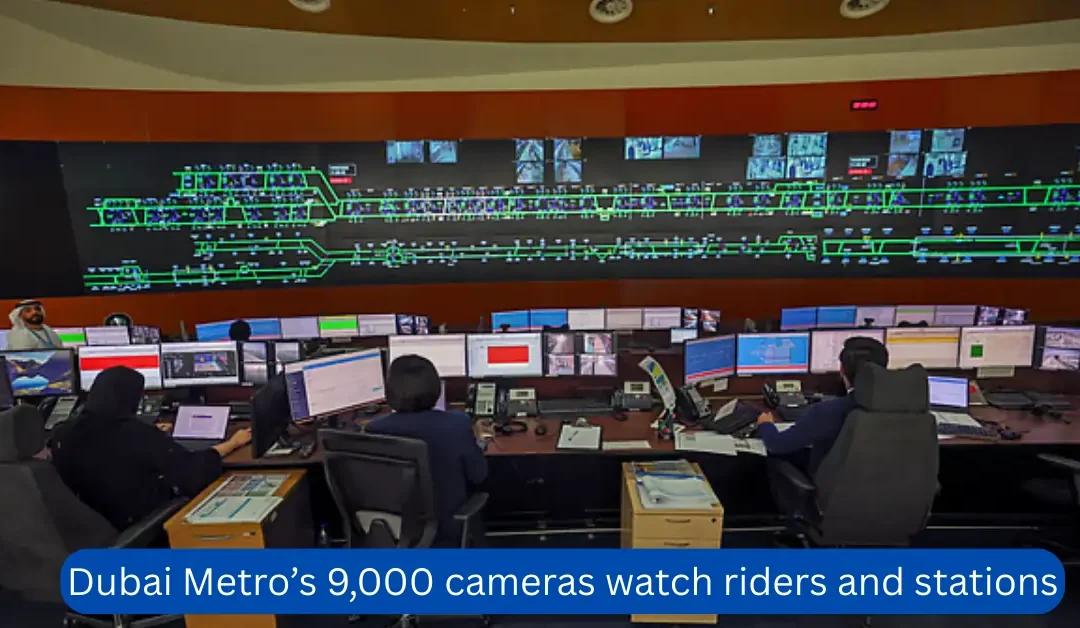
Dubai Metro is one of the most advanced and busiest driverless train systems in the world. Every single day, it carries around 850,000 passengers through 101 trains and 55 stations. Behind the smooth operations is the Operations Control Centre (OCC) in Rashidiya, where just 20 skilled staff members monitor the system 24/7 using over 9,000 live surveillance cameras.
In the Latest News from Dubai, media representatives were given a rare tour of this nerve centre. They learned how technology, teamwork, and safety procedures come together to keep the city’s transport moving.
1. The Heart of Dubai Metro: OCC Operations
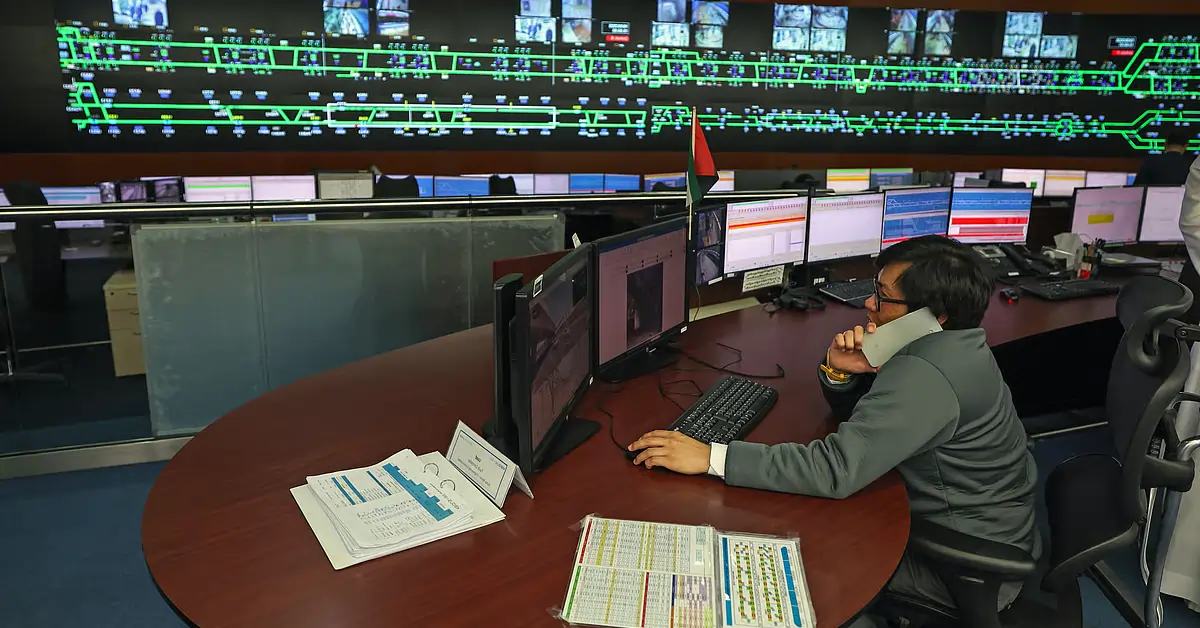
The OCC works round-the-clock with strict precision to make sure trains run safely and on time. The system is divided into three layers:
- Layer 1 – Daily Monitoring: Staff keep watch from 5 am to midnight (1 am on weekends and special occasions). They track train movements, stations, and passenger safety. If something goes wrong, they follow strict procedures to restore service quickly.
- Layer 2 – Depot Operations: This team monitors train depots, maintenance areas, and alarms across the entire network.
- Layer 3 – Duty Managers: Senior staff who supervise everything, making sure daily service runs smoothly.
This system ensures Dubai Metro achieves a 99.7% on-time performance rate, placing it among the world’s top five metro systems.
2. Smart Security with Dubai Police
Safety is a top priority. Inside the OCC is another high-security control room run by Dubai Police. Although access is restricted, officials confirmed that police coordinate directly with metro staff to handle Breaking News incidents like emergencies, passenger safety issues, or accidents.
- Instant Response: If a problem happens, police and staff work together immediately.
- Surveillance Power: More than 9,000 cameras monitor trains, stations, and passenger movements in real time.
- Public Trust: This partnership makes Dubai Metro one of the safest public transport systems worldwide.
3. Advanced Technology and AI Support
Dubai Metro uses cutting-edge AI technology and predictive tools to prevent problems before they occur.
- Remote Condition Monitoring: Sensors detect possible failures in train systems and station equipment.
- AI Predictions: The system forecasts when maintenance is needed, avoiding sudden breakdowns.
- Smart City Innovation: Environmental sensors check temperature, fire safety, lifts, and lighting across all stations.
This smart city approach ensures comfort for passengers while improving efficiency.
4. Lessons from Extreme Weather: Flood Preparedness
In April 2024, Dubai faced its heaviest rainfall in 75 years, which caused major flooding. Some metro stations on both Red and Green lines had to shut down temporarily. This event became a turning point for Dubai Metro’s emergency planning.
- Flood Challenges: It was the biggest disruption in the system’s 16-year history.
- New Emergency Plans: After the floods, RTA redesigned its response strategy for natural disasters like rain, wind, or climate change effects.
- Regular Testing: These new protocols are tested often to ensure services can continue during bad weather.
This shows how Dubai Metro adapts quickly to extreme weather events to protect passengers.
5. The Future of Dubai Metro
Since its launch on 09/09/09, Dubai Metro has transported more than 2.4 billion riders over 4.3 million journeys. In just the first half of 2025, 143.9 million people used the Red and Green Lines.
- Efficient Management: Despite its scale, only 20 OCC staff run operations, supported by 1,800 team members across safety and maintenance.
- Flexible Services: More trains run during peak hours, and fewer during quiet times to balance passenger comfort.
- Future Plans: Dubai is preparing to expand the network with the new Blue Line, while maintaining world-class service on the Red and Green lines.
The Daily news highlights remind us that Dubai Metro is not only about transport — it’s about innovation, safety, and planning for the future.


