
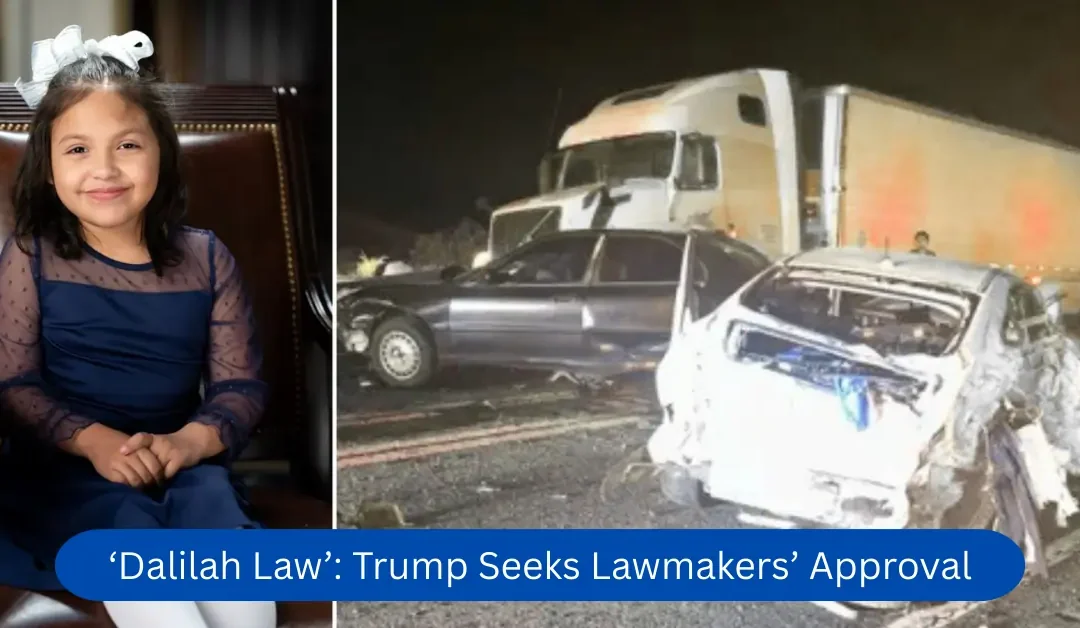
In a major political moment that quickly became Breaking News, President Donald Trump announced a new proposal during his State of the Union address. He called it the “Dalilah Law.” According to Trump, this proposed law would stop states from giving commercial driver’s licences (CDLs) to undocumented immigrants in the United States.
The announcement has sparked strong reactions across the country. Supporters say it is about public safety and border security. Critics argue it could create more division in the ongoing immigration debate. In today’s Latest News, this proposal has become one of the most talked-about topics in American politics.
What Trump Said in His Speech
During his speech, Trump focused heavily on immigration reform and border security. He said many undocumented immigrants do not speak English fluently and may not be able to read basic road signs. Because of this, he argued, allowing them to hold commercial driving licences could create safety risks.
Trump directly called on Congress to pass the Dalilah Law. He described it as a necessary step to protect American families and prevent future accidents. His statement quickly made headlines and dominated Daily news highlights across major media outlets.
What Is the Dalilah Law?
The Dalilah Law is named after a young girl, Dalilah Coleman, who was seriously injured in a traffic accident in June. The White House explained that the law aims to prevent states from issuing commercial driver’s licences to people who are in the country illegally.
Here are the main goals of the proposed law:
- Stop CDL Issuance to Undocumented Immigrants
The law would create a federal rule stopping any state from granting commercial driving licences to people without legal status. - Improve Public Safety
Supporters believe stricter rules will reduce road accidents involving large commercial vehicles. - Discourage Illegal Employment
By limiting access to CDLs, the law hopes to reduce job opportunities in sectors like logistics and trucking for undocumented workers. - Strengthen Immigration Enforcement
The proposal is also linked to broader immigration reform efforts and border control policies.
The plan connects immigration policy with road safety, making it part of a larger national discussion.
The Accident That Inspired the Law
Dalilah Coleman, a first-grade student from Bakersfield, California, was badly hurt in a multi-vehicle crash. The accident involved a semi-truck that allegedly caused a pile-up on the highway.
The truck driver, identified as Partap Singh, reportedly held a commercial driver’s licence issued in California. According to officials, he had entered the United States in 2022.
The California Highway Patrol reported that the truck was traveling at an unsafe speed and did not slow down in a construction zone. The crash sent multiple people to the hospital.
Dalilah was airlifted in critical condition. She suffered:
- A traumatic brain injury
- Multiple skull fractures
- A broken femur
She was in a coma for three weeks and remained hospitalized for six months. During treatment, she underwent a craniectomy and lived without part of her skull for several months.
Doctors later diagnosed her with cerebral palsy and global developmental delay. Her father has said she will need lifelong therapy and medical care. She is currently unable to walk, speak properly, or attend school as planned.
This tragic incident became central to Trump’s argument for the new law.
The Political Debate Around the Proposal
The Dalilah Law has quickly become part of the wider immigration debate in the United States. Immigration reform has long been a key issue in American politics, especially during election seasons.
Supporters of the proposal argue:
- Road safety must come first.
- Commercial truck drivers should meet strict language and legal requirements.
- Federal rules should override state decisions if public safety is involved.
Opponents argue:
- States traditionally control driver’s licence policies.
- Not all undocumented immigrants are unsafe drivers.
- The issue may be used to score political points rather than solve systemic problems.
The debate also touches on border security, asylum policies, and federal versus state authority.

Impact on Immigration and the Trucking Industry
If passed, the Dalilah Law could affect thousands of drivers across the country. The trucking industry plays a major role in the US economy, especially in logistics and supply chains.
Possible impacts include:
- Driver Shortages
The trucking industry already faces worker shortages. Restricting CDLs could increase pressure on companies. - Stronger ID Verification
States may need stricter systems to verify immigration status before issuing licences. - Legal Challenges
Some states might challenge the law in court, arguing it interferes with their rights. - Immigration Reform Discussions
The law could become part of larger immigration reform bills in Congress.
Because of these factors, experts say the proposal may lead to intense discussions in Washington.
What Happens Next?
For the Dalilah Law to become reality, Congress must pass it. That means both the House of Representatives and the Senate must approve the bill. Lawmakers are expected to debate its legal and practical impacts in the coming weeks.
Political observers believe the proposal may also influence upcoming campaigns, especially if immigration remains a top issue among voters.
In the meantime, the story continues to dominate Daily news highlights, with reactions coming from both sides of the political spectrum.


