
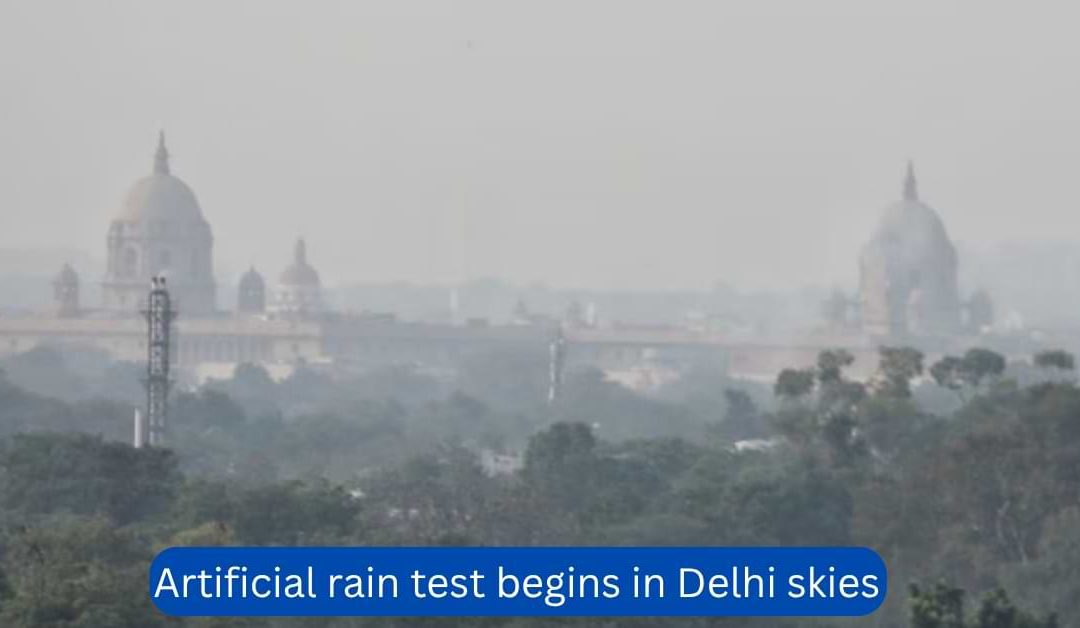
Delhi is now testing artificial rain through cloud seeding in an urgent effort to fight its dangerous air pollution. The first trial has been completed over parts of the city, officials confirmed on Tuesday afternoon. The aircraft used for this experiment returned to its base in Kanpur, Uttar Pradesh, after completing the mission. The capital, currently choking under a thick layer of smog, is now hoping that this technology can bring some relief in the coming hours.
However, experts said there might not be any rainfall before 5 p.m. because the clouds above the city currently have less than 20% moisture. Such low moisture levels make it very difficult for rain to form naturally or even through artificial stimulation. If weather conditions improve later in the day, a second flight could be launched from Kanpur to attempt another round of seeding.
What is Cloud Seeding?
Cloud seeding is a weather modification process designed to artificially create rain. In this technique, scientists release substances such as silver iodide nanoparticles, iodised salt, or dry ice into clouds to help them form water droplets. These droplets then combine to produce rainfall.
- Cloud seeding can be done through airplanes, rockets, or machines installed on the ground.
- It is often used in regions facing water scarcity, severe droughts, or persistent pollution problems.
- Several countries, including China, the UAE, and the U.S., have used this technique to reduce smog or increase rainfall during dry seasons.
Delhi’s Plan for Artificial Rain
The Delhi government signed an agreement with the Indian Institute of Technology (IIT) in September to conduct five cloud-seeding trials. These operations are scheduled between October 1 and November 30 and will mainly take place in northwest Delhi. The total cost of the project is around ₹3.21 crore.
Officials say that the success of these trials could provide a temporary but much-needed solution to Delhi’s worsening air quality crisis. If the initial tests show positive results, the government may extend the project to other parts of the city in the coming weeks.

Why Delhi Needs Artificial Rain
Delhi’s air quality has once again reached dangerous levels, with the city trapped under a thick gray haze. Despite efforts to control pollution, toxic air continues to threaten millions of residents.
Here are the main reasons behind the current crisis:
- Farm fires: Smoke from crop residue burning in Punjab and Haryana adds massive amounts of pollutants to Delhi’s air.
- Firecrackers during Diwali: Although the Supreme Court allowed only ‘green crackers’, rules were widely ignored, worsening the air quality.
- Winter weather: Cold temperatures and stagnant winds prevent pollutants from dispersing, trapping them close to the ground.
This year, even though farm fires dropped by nearly 77.5%, Delhi recorded its worst post-Diwali air quality in five years. The Air Quality Index (AQI) reached severe levels, with PM2.5 concentrations climbing to 488 micrograms per cubic meter—almost 100 times higher than the limit set by the World Health Organization (WHO).
Health Impact and Urgency
According to a report by the Energy Policy Institute at the University of Chicago, the toxic air in Delhi is reducing the average life expectancy of residents by nearly 12 years compared to WHO standards. Doctors have warned of a sharp rise in respiratory problems, especially among children and the elderly.
Authorities hope that the artificial rain will temporarily clear the air by washing away fine pollutants and bringing down AQI levels. Environmental experts, however, stress that this is not a permanent solution — stronger policies, strict enforcement, and cleaner energy transitions are essential for long-term improvement.
The Way Forward
If the first cloud-seeding trial succeeds, Delhi could see light to moderate rainfall later this week. The government plans to continue experiments throughout November to determine how effectively cloud seeding can reduce air pollution in urban areas.
Officials from IIT and the Delhi environment department said the trials could also help develop new weather intervention technologies for other polluted cities in India.
This move marks a new chapter in India’s fight against air pollution — a combination of science, innovation, and urgency to protect public health.


